Sightlines · a mini film course
The Camera Knows First: Twelve Nights in Noir
Every film in this set runs on the same delicious imbalance: the camera knows more than the people it's watching. Sometimes it knows a man is doomed before he does. Sometimes it knows a woman can't be read no matter how hard the men around her stare. Sometimes it knows the past isn't behind anyone — it's waiting up the road. These twelve films span eighty years, but they share a craft vocabulary: light used as a moral statement, shadow allowed to be genuinely black, confession and flashback used not to explain but to entrap, and a camera that watches rather than chases. Taken in order, they show a style being invented, perfected, exhausted, teased, and resurrected. Here's what to look for.
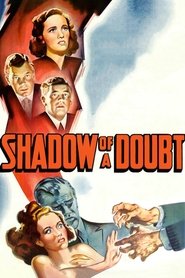
Shadow of a Doubt (1943)
Hitchcock shoots the small California town with almost documentary plainness — flat light, wide, friendly views — and then lets shadow slide sideways into those sunlit rooms whenever one particular family member enters. Notice that the suspense almost never lives in a deed; it lives in who knows what, and what each person knows about the other's knowing. Watch how a warm household becomes a place where knowledge itself is the danger.

Double Indemnity (1944)
The film opens with a man already confessing into a machine, so everything you see afterward happens under a verdict that's already in. Watch the famous venetian-blind shadows striping faces and bodies — prison bars printed on people who haven't been arrested yet — and watch how ordinary places (a house, a supermarket, an office) are staged to look open while quietly closing like traps. This is the picture that consolidated the whole style; you'll recognize its fingerprints on everything else here.
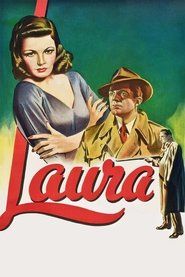
Laura (1944)
A detective investigates a death by living inside the victim's apartment — her letters, her things, and above all her portrait, which Preminger lights a half-shade warmer than the room around it, so the painting seems more alive than the furniture. The lighting here is elegant rather than harsh: it sculpts Gene Tierney's face into an ideal, which is exactly the point. Watch a film about falling in love with an image that keeps showing you how images get made.
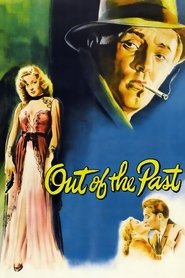
Out of the Past (1947)
Nicholas Musuraca lights with a single low, raking key and lets the rest of the frame fall into real black — no soft studio grays — so faces are constantly split in half by shadow. The story opens in a mountain town with trout streams and a quiet life, until a black sedan rolls in carrying a face from somewhere else; the flashback and voice-over that follow don't explain the past so much as reveal it as a live thing, hunting. Notice how the hero seems to know where everything leads before we do.

The Lady from Shanghai (1947)
Welles does something perverse: he shoots much of this in bright, open sunlight that feels deliberately wrong for a crime story — and the wrongness is the theme. Everything here is about appearance versus reality, told by a narrator who admits his own helplessness, in a world where mirrors and reflections multiply until you can't tell the thing from its double. Watch the surfaces; they're lying, and they know it.

In a Lonely Place (1950)
No femme fatale, no heist — the threat comes from inside the man and inside the romance. Burnett Guffey lights Bogart's face so it can shift, within a single setup, from charm to menace as the light catches the hardness around his eyes; the star persona you trust from a dozen other films is used as bait. Watch the hands, and watch how violence here is demonstrated — performed, staged, shown — which is somehow more chilling than violence done.
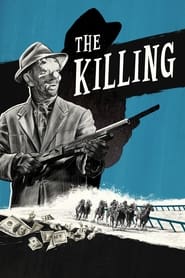
The Killing (1956)
Kubrick builds a heist picture as clockwork: a tidy, official-sounding narrator, a chronology chopped up and reassembled, the same window of time revisited from different angles. The theme is control versus chance — a rational plan against a world of resentments, prejudices, and accidents — and the film's own precision mirrors the planner's ambition to master time. Watch the deep-focus tracking shots gliding through apartments (Kubrick fought his veteran cinematographer over the exact lens to get them), and ask whether the tidy structure is on the plan's side or laughing at it.
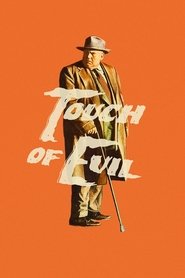
Touch of Evil (1958)
The opening is one of the most famous shots ever made: a bomb goes into a trunk, and the camera lifts off the ground and threads three unbroken minutes of traffic, neon, and music before the cut. From there, Welles builds scenes not from back-and-forth editing but from long wide-angle takes where actors move toward and away from the lens — emphasis by proximity, faces swelling into grotesques, ceilings pressing down. This is the classic cycle's terminal statement: every noir element pushed to gorgeous excess.
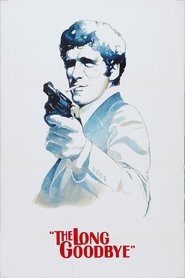
The Long Goodbye (1973)
Altman hands the opening minutes of a murder mystery to a man trying to fool his cat with the wrong brand of cat food — and that errand is the whole film folded small. The camera never sits still: it drifts, zooms, repositions, behaving like a curious bystander with its own attention span rather than a guide. Watch the gap between the detective's old-fashioned code — loyalty, effort, seeing the job through — and a sun-blasted Los Angeles that has quietly stopped keeping score.
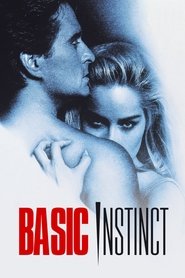
Basic Instinct (1992)
Jan de Bont's camera glides in cool blues and bleached whites, and its smoothness is the point: this is noir re-upholstered as an early-'90s erotic thriller, with Hitchcock's San Francisco as its haunted map. Watch the interrogation scene — five men circling one woman in white — and notice how, without a single cut announcing it, the questioning runs backward: the people asking become the people being read. The film's real subject is unreadability: confession, evidence, even sex might all be performances.
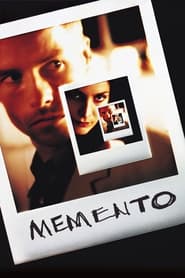
Memento (2000)
Nolan takes noir's confessional voice-over and its doomed, self-narrating hero and rebuilds them as architecture: the color scenes run in reverse order, each ending where the last began, while a black-and-white strand runs forward until the two meet. The effect is that every scene drops you in with no memory of how you got there — the film doesn't describe its hero's condition, it installs it in you. Wally Pfister's photography stays deliberately clean and legible, because the structure is doing all the disorienting.
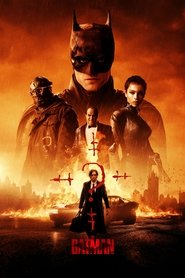
The Batman (2022)
Greig Fraser lights this like the old masters — radically underexposed by