Sightlines · a mini film course
The Long Shadow of the Professional: Crime, Codes, and the Faces That Won't Talk
Every film in this set is a crime picture, and not one of them is really about crime. What binds them is a fascination with people who have organized their entire lives around a discipline — the thief, the hit man, the cop, the con artist, the preacher who preys — and with what happens when that discipline meets something it can't process: love, grief, a past that won't stay buried, a self that won't hold together. Watch how often these films slow down to study a face, a ritual, a shadow on a wall. The heists and chases are the pretext. The real subject is the gap between what a person does and what they can't stop feeling — and each of these directors has invented a different way to film that gap.
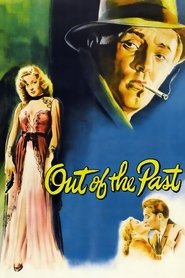
Out of the Past (1947)
Watch the light — or rather, the dark. Nicholas Musuraca lights with a single low, raking source and lets the rest of the frame fall into genuine black, so faces are split by shadow and rooms feel half-swallowed. Tourneur learned this suggestive method on horror films like Cat People, where the menace stayed off-screen, and here he applies the same grammar to a story told largely in flashback, with Robert Mitchum's voice carrying you between then and now. Notice how the structure makes the past feel less like memory than like a verdict — it doesn't lie behind the hero, it waits up ahead.
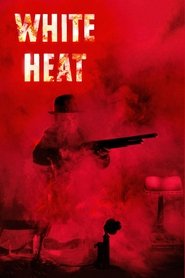
White Heat (1949)
Two visual languages collide here, and the collision is the point: documentary-bright daylight procedure on one side, deep noir shadow in the prisons and hideouts on the other. Watch Cagney, who plays Cody Jarrett not as a schemer but as a creature of raw compulsion — a man whose crimes seem less like decisions than eruptions. Keep an eye out for a scene in a prison mess hall where news travels down a long table like a current through water: it's one of the great pieces of staged shock in American cinema, and everyone in the room, like you, can only watch.
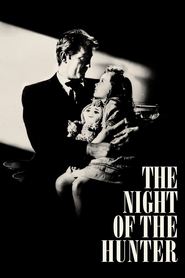
The Night of the Hunter (1955)
An actor's only film as director, and it looks like nothing else — a thriller that thinks the way a frightened child thinks, in pictures too large and too clear. Stanley Cortez builds the villain out of shapes: a silhouette thrown enormous on a bedroom wall, the conical shadow of a hat, a black cut-out advancing like something from a silent horror film (the debt to Nosferatu is deliberate). Notice the storybook, almost painted quality of the settings; Laughton is reaching back past realism to Griffith-era silent cinema, and casting Lillian Gish is part of the homage.
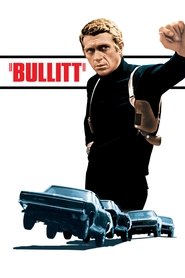
Bullitt (1968)
Yes, the car chase — but watch what surrounds it. Yates shoots San Francisco in available light, real interiors, real fog, and lets long stretches be nothing but a competent man working: waiting in corridors, reading a hotel room, buying frozen dinners at 2 a.m. The ordinary thriller treats these passages as filler; Yates treats them as the film itself. And just before the chase, watch for the smallest gesture in McQueen's whole performance — a hand reaching for a seatbelt. No music, no dialogue. That's the movie in miniature.
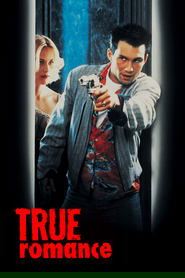
True Romance (1993)
Tony Scott shoots everything — including a conversation with Elvis in a bathroom mirror — in the same saturated, perfume-ad register: bruised blues, molten ambers, no wavy-screen signals telling you what's real. The hero is a man assembled entirely out of pop culture, a direct descendant of Godard's Bogart-worshipping hoodlum in Breathless, and the film's wager is that a self built from movies can still love for real. Watch how it holds extreme violence and extreme tenderness in the same frame without flinching at either.
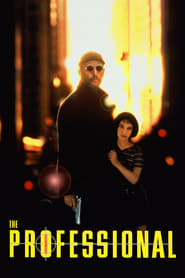
Léon: The Professional (1994)
Before anyone is killed on screen, you watch a hit man drink milk, do sit-ups in the dark, and water a houseplant he calls his only friend. The whole film lives in that gap between the trade and the tenderness. Watch Jean Reno's face behind those round black glasses — a nearly immobile surface holding one steady note — and notice how Thierry Arbogast's camera keeps the refuges warm amber and gold while the violent, institutional spaces go cool. The lineage runs straight back to Melville's monastic assassins: procedure as character, stillness as speech.
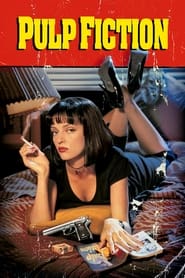
Pulp Fiction (1994)
The famous move is the shuffled timeline — three chapters and a bookend deliberately out of order, so that "before" and "after" become rooms you can enter in any sequence. But notice how calm the camera is: long takes, static or slowly drifting frames, medium shots that let conversations breathe without editorial pushing. The style's real subject is the collision of the mundane and the mortal — fast food and foot massages discussed in the intervals between lethal acts — and the film insists on holding both registers at once.
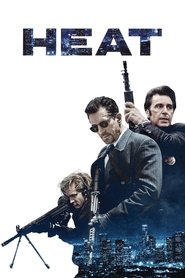
Heat (1995)
Dante Spinotti shoots Los Angeles in anamorphic widescreen as a cold horizontal sprawl — deep blues and grey-greens at night, warm domestic interiors registering as fragile exceptions. The city isn't a backdrop; it's the pressure the characters live under. Watch for a coffee-shop scene between the two leads: room noise pushed low, no music, no action possible — the one still point in a 170-minute action film, and its center of gravity. The heist sequences descend from Melville and Rififi: professionals at work, observed with procedural precision and no sentiment.
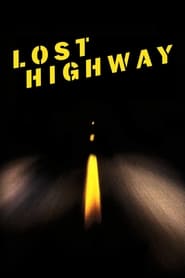
Lost Highway (1997)
Lynch and cinematographer Peter Deming build a house out of darkness — rooms defined by what you can't see, characters walking into blackness and dematerializing — set against bleached, sun-struck exteriors. This is a noir with the explanations surgically removed: the fatale, the gangster, the surveillance are all here, but motive and detection are not. Don't try to solve it; watch how it uses doubling (one actress, two women — or one?) and a looping structure descended from Persona and Last Year at Marienbad. Let the dread do the navigating.
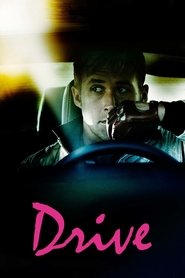
Drive (2011)
Two registers in deliberate tension: surveillance-camera closeness to Gosling's face, held past the point of comfort, and the city as vast indifferent space. The Driver has no name, no past, no stated want — pure occupation, in the tradition of Le Samouraï and The Driver — and the film inhabits the myth of the cool loner so fully that its costs become visible. Watch the elevator scene: a kiss and an act of violence in one unbroken breath, with no transition between them. That missing transition is the whole film.
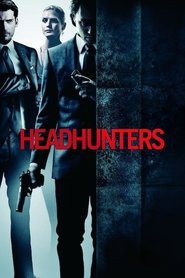
Headhunters (2011)
A Nordic thriller built with Hitchcock's toolkit: watch how innocuous first-act details — an object, a habit, a piece of technology — are planted and then return as lethal mechanisms, in the North by Northwest tradition of plant and payoff. John Andreas Andersen shoots the hero's gleaming corporate world with aspirational clarity, all the better to strip it away; the film is a machine for taking a man who has curated an image of himself and reducing him to an animal improvising survival. It's also very funny, in the horrifying Blood Simple register where cross-purpose plans compound catastrophically.
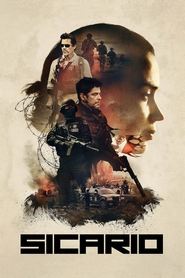
Sicario (2015)
Watch where Villeneuve keeps placing Emily Blunt: in doorways, in back seats, at the edges of briefings where the real decisions happen somewhere else. The blocking is the argument — a competent agent who perceives clearly and can change almost nothing, in a genre that promises the opposite. Roger Deakins shoots the border landscape geologically, wide frames dwarfing human figures, refusing the Western's mythic glow, while Jóhann Jóhannsson's score turns even a traffic jam into dread. This is the thriller as an anatomy of complicity.
Watched together, these films become a conversation across seventy years. You'll see Melville's silent professionals reincarnated in Léon, Heat, Drive, and Pulp Fiction; German Expressionist shadow passed from Out of the Past through The Night of the Hunter to Lost Highway; the location realism of Bullitt hardening into the institutional chill of Sicario. But the deeper reward is watching directors solve the same problem in opposite ways: how do you film a person whose code is their whole identity? Some answer with shadow, some with stillness, some with a shuffled clock, some with a face held so long it stops being a performance and becomes a landscape. Pay attention to the quiet passages — the seatbelt, the glass of milk, the coffee shop, the houseplant. In this tradition, that's where the movies actually live.