Sightlines · a mini film course
The Cinema of Watching: Twelve Films Where Seeing Outruns Doing
Most movies run on a simple engine: a character spots a problem, acts, and the world changes. The films on this list are made by directors who quietly unplugged that engine. Their characters — mostly children, teenagers, and people the world has decided not to help — perceive everything around them with terrible clarity, but the situation is bigger than any deed available to them. So the filmmaking changes. The camera watches rather than chases. Neighborhoods, institutions, and cities stop being backdrops and start pressing in like weather. Time is allowed to stretch until an ordinary moment — a boy standing still in a field, a man holding a child in the sea — carries more weight than any plot turn. Watch these together and you'll start to see a whole tradition passing a torch, hand to hand, across continents and decades.
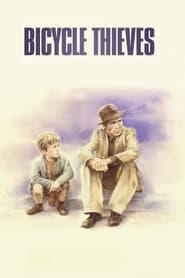
Bicycle Thieves (1948)
This is the wellspring — the film nearly everything else here descends from, made with real Roman streets, non-professional actors, and a story pared down to one small, essential object. Notice how the framing refuses drama: no tilted angles, no expressive shadows, just bodies placed inside social space and held there, with close-ups saved for moments of real interior pressure. Watch the father and son walk, and watch how much the film trusts walking. It taught cinema that a search could matter more than a solution.

The Young and the Damned (1950)
Buñuel takes the neorealist street-kids film and detonates something surreal inside it. Watch for the moment the film slips into a slow-motion dream — hunger for food and hunger for love fused into a single floating image — and notice how the "realistic" slum scenes carry that same raw appetite just under the surface. Buñuel deliberately curbed his great cinematographer Gabriel Figueroa's instinct for pictorial beauty; the flatness is the point. Poverty here is not a subject for pity but a furnace of drives.

Pather Panchali (1955)
Ray's first film, shot by a still photographer who had never worked in movies, and it shows in the best way: a patience with weather, surfaces, rain on a pond, wind in the grass. The young boy Apu is played largely as a pair of watching eyes — follow his gaze and you follow the film. Wait for the famous sequence with two children in a field of white grass, chasing a sound. Nothing "happens," and it is one of the most important shots in cinema history.
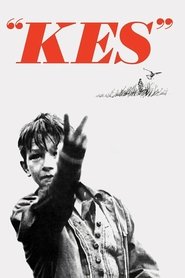
Kes (1970)
Ken Loach and cinematographer Chris Menges invent a whole British style here: long lenses, the camera standing back across a room or a field so the actors never feel watched, so behavior can simply unfold. The film's world is a boy who flinches through every institution he passes through — home, school, the future already decided for him. Then watch what happens to his body when he works with the kestrel: the stillness is the performance. This is Bicycle Thieves' direct English heir.
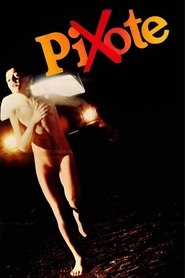
Pixote (1980)
Babenco sets his camera at the children's height, so adult and institutional spaces literally loom, and casts real street kids whose faces haven't been trained to perform. Watch the young lead's watchfulness — not shock, not tears, but a kind of waiting — and notice how the film reads survival in a child's stillness. A trained actor would have softened it; the flatness is the film's honesty.

Salaam Bombay! (1988)
Mira Nair, working with a documentary cinematographer, keeps her boy hero small inside crowded frames — adults registering as legs, hips, hands taking tea glasses. Notice how the composition almost loses him on purpose: the city is rendered as enveloping density, never picturesque. The film gives Krishna a goal as clean as any Hollywood plot — a specific sum of money — then shows how motion and effort don't automatically add up to progress. Watch it alongside Pixote, its closest kin.
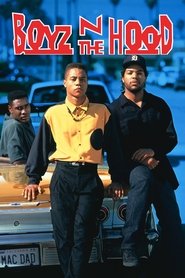
Boyz n the Hood (1991)
Listen before you look: a helicopter is almost always somewhere overhead, its drone running under barbecues, porch talk, everything. Singleton and cinematographer Charles Mills keep the camera steady and warm in the daytime household scenes, lending real weight to ordinary domestic life and refusing to turn violence into spectacle. Notice how consistently bodies are framed inside the architecture of the neighborhood — yards, fences, corners — until the geography itself becomes a character pressing on everyone in it.
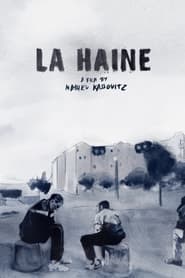
La Haine (1995)
A single day, black-and-white widescreen, inter-titles clocking off the hours. Pierre Aïm's photography turns concrete towers into something monumental and harsh at once — the visual debt to Raging Bull is deliberate. Watch for a young man performing De Niro's mirror routine: borrowed movie selfhood as armor. And notice how much of the film is waiting, wandering, missing trains — three friends who see everything and are given a whole day in which to do almost nothing about it.
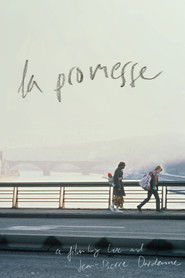
La Promesse (1996)
The Dardenne brothers' camera rides inches behind a fifteen-year-old's neck — through stairwells, muddy lots, back rooms — and never grants you an overview. You know only what the boy is close enough to know; the frame is the film's whole moral argument. Watch how the drama lives in tiny physical adjustments: a glance held a beat too long, a hand hesitating over money. No score, no speeches — just what a body does when a promise starts to weigh on it.

Dancer in the Dark (2000)
Von Trier's demolition-job musical, shot by the great Robby Müller working deliberately against his own lyricism: jittery handheld, washed-out color for the everyday scenes. Then listen for the switch — the moment industrial noise (a factory press, train wheels) tips over into rhythm and the grey world becomes a stage. The gap between those two registers, drab reality and the consolation of song, is the entire film. Deneuve's presence is a loaded quotation of the classic musicals being dismantled.
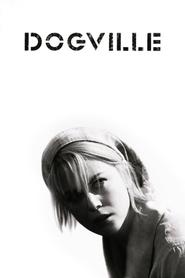
Dogville (2003)
The boldest formal gamble on this list: an entire town rendered as chalk lines and labels on a black floor, doors that exist only as sound and mime. Watch how this bareness intensifies rather than starves the film — with the visible world subtracted, every gesture must be read, and you become an active, implicated reader of the image. Notice too the tension between the geometric stillness of the set and Anthony Dod Mantle's restless handheld camera hunting among the actors. The lineage runs from Thornton Wilder's bare stage and Brecht's theater straight to this.

Moonlight (2016)
Jenkins inherits the world of the 1990s hood film — the corner, the addicted parent — and drains it of spectacle, replacing action with looking. Watch the opening Steadicam that orbits a conversation instead of cutting it up, and the scene where a man teaches a boy to float in the ocean: nothing is decided, no plot turns, and the holding is the meaning. The film's visual grammar of yearning — lingering close-ups, color, withheld touch — comes from Wong Kar-wai and Claire Denis as much as from any American source.
Watched in sequence, these films form a family tree you can actually see growing. De Sica's method — real places, unfamous faces, one small stakes-of-survival object — travels to Bengal, to Mexico City, to Yorkshire, to São Paulo, to Bombay, to Liège, to South Central and Miami; von Trier strips the same moral machinery down to chalk on a floor. What binds them is a shared wager: that attention is a form of respect. These directors refuse to look away from people the world overlooks, and they refuse to rescue them with plot. Your reward for watching closely is that you become what their characters are — a witness — and you discover how much a film can hold when it stops rushing toward a resolution and simply, patiently, sees.