Sightlines · a mini film course
The Long Con: Crime Movies That Refuse to Behave
Every film in this set is, on paper, a crime picture — heists, hitmen, detectives, salesmen who are really con artists, con artists who are really salesmen. But none of them plays the game straight. Each one takes the genre's most reliable machinery — the plan, the chase, the case, the deal — and does something quietly subversive with it: slows it down, scrambles it, hollows it out, or hands it to a character who can only watch. The through-line here is a fascination with what happens when action stops working — when the camera lingers instead of cutting away, when the detective can't convert clues into answers, when crime turns out to run on the same confidence and panic as any market. Watch these films for how they move (or refuse to), and a whole hidden conversation opens up between them.
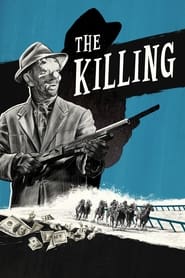
The Killing (1956)
Kubrick's heist film is a clockwork model of control — a plan assembled piece by piece, narrated with tidy omniscient authority, the racetrack itself setting the schedule like weather. But the film's real subject is the collision between that rational design and blind chance. Watch how the non-chronological structure (a direct ancestor of Pulp Fiction) keeps circling back through the same stretch of time from different men's angles, and how Lucien Ballard's deep-focus black-and-white rooms make every space feel measured and mapped. The question the film keeps asking, silently: can anyone really think of everything?
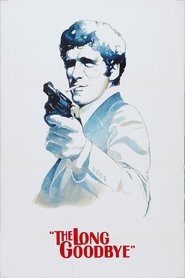
The Long Goodbye (1973)
Altman opens a murder mystery with a man trying to trick his cat with the wrong brand of cat food — and that errand is the whole film folded small. Elliott Gould's Marlowe is a man of loyalty and effort adrift in a Los Angeles that has stopped keeping score, and Vilmos Zsigmond's camera never stops drifting either: always slightly repositioning, zooming, panning, like a curious bystander rather than a guide. Notice how the film systematically inverts the confident detective picture (Leigh Brackett wrote both this and The Big Sleep) — the investigating never stops, but watch whether it ever adds up to power.
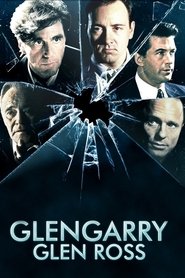
Glengarry Glen Ross (1992)
A chamber piece of rain, sodium light, and fluorescent office pallor, in which desperate salesmen fight over leads while a rigged board decides who survives. Watch Jack Lemmon's Shelley Levene work a phone: the patter is perfect, the machine is running, and nothing lands. The film's dark joke is that these men are built entirely for action — see the mark, read the weakness, close — inside a system that has quietly disconnected effort from outcome. Mamet's dialogue is a blood sport; listen to it like music.
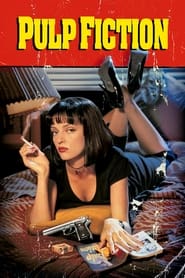
Pulp Fiction (1994)
Tarantino took the one thing movies had always promised to keep straight — the order of before and after — and shuffled it, and audiences loved him for it. Watch how the three out-of-sequence chapters turn "earlier" and "later" into rooms you can enter in any order, and how much of the film is long takes and patient medium shots that let conversation breathe (the camera is far more restrained than the film's reputation suggests). Notice the constant collision of the mundane and the mortal: fast food and foot massages discussed in the intervals between lethal business.
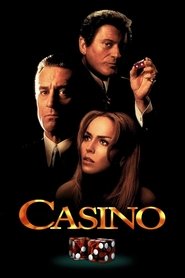
Casino (1995)
Scorsese opens with a car and a column of fire, set to Bach — the ending shown first, the suspense engine deliberately switched off. What replaces it is stranger and richer: an anatomy of a fallen empire, narrated from the wreckage like Citizen Kane. Watch Robert Richardson's color design of pure excess — amber and gold casino floors, harshly overlit pools, Ginger arriving in a swirl of warm backlight that marks her as both desire and danger — and Thelma Schoonmaker's freeze-frames punctuating a slow self-destruction.
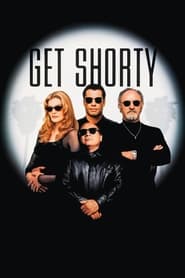
Get Shorty (1995)
The lightest film here, and secretly one of the sharpest. John Travolta's Chili Palmer is a study in stillness — a loan shark who never raises his voice because he's never needed to, and whose skills (reading people, applying pressure, projecting confidence) turn out to be exactly the skills of a Hollywood producer. Watch the "Look at me" moments: a command to perceive, issued by a man who's already finished perceiving you. The film's whole argument is that crime and showbusiness run on the same currency — the confident pitch.
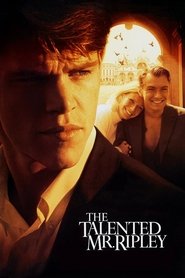
The Talented Mr. Ripley (1999)
John Seale's photography sells you paradise first — bleached Mediterranean gold, blue sea, sun on white linen — so that the darkening, when it comes, tightens like a hand at the throat. Watch the nightclub scene where Tom sings "Tu Vuò Fà l'Americano," a song mocking a kid who thinks borrowed clothes and swagger make him someone: the mimicry runs three layers deep and nobody on screen catches it but us. This is a film about a character who makes reality rather than discovering it — watch how performance and identity keep trading places.

Dancer in the Dark (2000)
Von Trier stages a war between two kinds of image inside one film. The dramatic scenes are deliberately ugly — handheld, jittery, washed-out, shot by the great Robby Müller working far outside his usual lyricism. Then the factory press finds a beat, the machines fall into rhythm, and the grey world becomes a musical number — before the song ends and the press is just a press again. Watch that switch each time it happens: it's the film's entire argument about what art can and cannot do against an indifferent world.
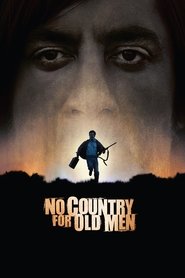
No Country for Old Men (2007)
Roger Deakins at his most restrained: long lenses compress figures against featureless desert, so the landscape itself becomes a participant — all distance and exposure, nowhere to hide. Watch the gas-station scene, where a coin on a counter and fluorescent light generate more dread than any chase, and watch how the film honors every mechanic of the thriller — the money, the hunter, the lawman — while quietly refusing the genre's promise that these lines will meet and settle. Listen, too: ambient sound does the work a score usually does.
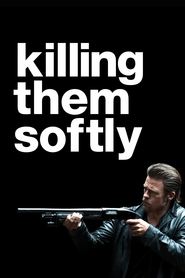
Killing Them Softly (2012)
Andrew Dominik's neo-noir works by negation: no romantic outlaws, just weary tradesmen complaining about being underpaid, trapped in cramped two-shots across tables where talk is the real transaction. Greig Fraser's palette — wet asphalt, sodium light, institutional greens — would launch him toward Dune and The Batman. Watch what the film does when violence arrives: it slows down, exhibits it, makes it beautiful — and means for that beauty to make you a little sick. The whole film argues that the underworld runs exactly like a market: on confidence, vulnerable to panic.
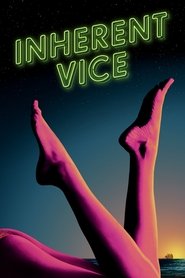
Inherent Vice (2014)
A detective picture in which the detective is carried through the case rather than mastering it. Watch Joaquin Phoenix's Doc scrawl notes to himself — not hallucinating — because he can no longer trust the difference between a clue and a contact high. Robert Elswit shoots through doorways, windows, and smoke, keeping Doc's bemused face at the center while the plot swells past anything one head can hold. It's The Long Goodbye's direct heir: mood and melancholy outrank solution, and the film is really an elegy — for an era, an innocence, a love.
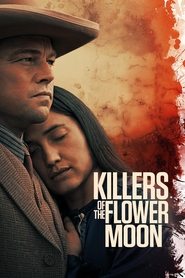
Killers of the Flower Moon (2023)
The man who made the tracking shot a verb holds still. Watch how Scorsese switches off his own signature motion — no glide, no whip-pan — and lets Rodrigo Prieto's camera wait on Lily Gladstone's face, where enormous drama unfolds in near-silence. The widescreen frame renders the Osage landscape as both paradise and trap, oil derricks crowding the horizon as wealth and encroachment at once. This is a crime epic told at an angle of critique: the genre's conventions are present as pressures the film deliberately works against.
Why watch them together? Because they form a fifty-year argument about what a crime movie is for. Start with The Killing and you see the genre as a perfect machine — plan, execution, chance. Then watch each subsequent film sabotage a different part of that machine: Altman lets the camera wander off the case; Mamet's salesmen act and act and connect with nothing; Tarantino cuts the string of before-and-after; Scorsese tells you the ending first, then — decades later — stops moving entirely. The pleasure isn't in what happens (these films are strikingly uninterested in surprise as their engine) but in how they hold time, space, and your attention. Watched in sequence, they teach you to notice the thing most movies work hard to hide: the moment when doing something is no longer the point, and watching — really watching — becomes the whole event.