Sightlines · a mini film course
When the Camera Stops Chasing: Twelve Films Where Watching Becomes the Story
Most movies run on a simple engine: a character sees a problem, does something about it, and the world changes. The twelve films on your list all, in one way or another, cut that engine. Their protagonists become watchers — of their own pasts, their own dreams, their own unraveling — and the films invite you into the same posture. Time stretches or loops back on itself. Spaces stop being settings and start behaving like minds. The question "is this real?" is raised and then deliberately left open. Watched together, these films form a secret tradition running from 1950s Sweden to digital-video Los Angeles: cinema built not on what happens, but on what it feels like to look at something you cannot resolve.

Wild Strawberries (1957)
Begin here — the wellspring. Bergman opens with a dream on a deserted street: a clock with no hands, a blank pocket watch. Time has been unhooked from schedules and appointments; it's become something you stand inside and examine. Watch how Gunnar Fischer's photography quietly changes texture between the present-day car journey and the layers of memory, and notice the debt to Sjöström's silent films, where a man could observe his own past like a ghost at the window. The film's real drama isn't events — it's an old man learning, too late or just in time, to look at his life rather than manage it.
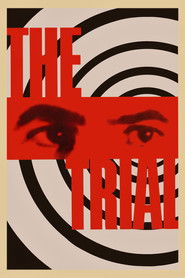
The Trial (1962)
Welles lost the money for sets, then found the entire film one night inside the abandoned Gare d'Orsay in Paris — a vast, dead railway terminus. That accident is the film's secret weapon: the spaces are real and genuinely enormous, and Edmond Richard's extreme wide-angle lenses make ceilings loom and corridors stretch until Josef K. is a speck in a grid he can't read. Notice how much he hurries, and how the hurrying gets him nowhere. Space itself is the antagonist — a bureaucracy you can walk through but never cross.
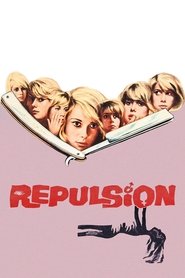
Repulsion (1965)
Polanski's masterstroke is a skinned rabbit left on a plate, slowly rotting through the film. It does nothing — and that's the point. It's a clock that measures decay instead of minutes, and it teaches you to watch the whole apartment that way: the dishes, the mold, the crack branching across the plaster. Almost nothing "happens" in this film; instead, entropy is filmed patiently until a confined flat becomes a psychological landscape. Watch how Gilbert Taylor's photography and amplified everyday sounds — drain water, buzzing flies — make horror out of ordinary textures.
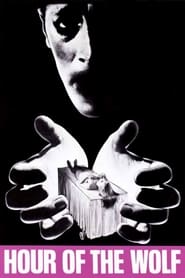
Hour of the Wolf (1968)
Watch how a face arrives in this film: it doesn't walk through a door, it surfaces out of blackness, says its small terrible thing, and sinks back with no exit visible. Sven Nykvist lit the film by subtraction — stripping light away until only the skin of a face survives against a void — inheriting a lineage that runs back to Nosferatu. The result: you can never fix where anyone is standing, or settle whether what torments the painter Johan is inside his head or out in the night. The film holds both possibilities open on purpose. That refusal to close the question is the horror.
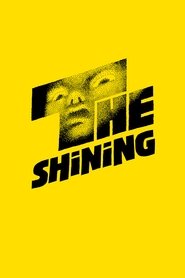
The Shining (1980)
Kubrick took Garrett Brown's brand-new Steadicam — invented to smooth out shaky shots — and turned it into a way of thinking. As it glides behind Danny's tricycle, listen: carpet, hardwood, carpet, the wheels going loud and soft as he rounds each corner, making you brace for what the hallway will reveal. Notice too that the Overlook's geography is famously impossible — windows where walls should be, rooms that can't connect — and that viewers have tried and failed for decades to map it. That failure is the design. The hotel isn't a place the characters move through; it behaves like a mind they're moving inside.
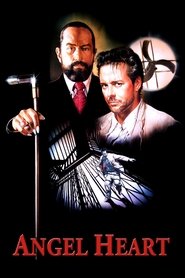
Angel Heart (1987)
There's a ceiling fan turning at the top of almost every room, chopping the light into flicker. The detective keeps not looking at it; you should keep looking at it. Parker and cinematographer Michael Seresin film everything through smoke and dust — New York cold and verminous, New Orleans humid and amber — and thread near-invisible flash-frames into otherwise naturalistic footage, a trick learned from The Exorcist. Watch how the classic private-eye machinery (a client, clues, interviews) is present and functioning, yet every door opened seems to worsen rather than solve. The gap between what the images know and what the man inside them can bear to know is where the dread lives.
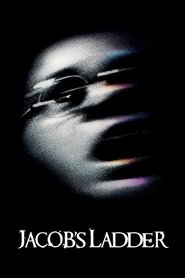
Jacob's Ladder (1990)
Early on, a figure on a subway car shakes its head at a frequency your eye can't resolve. Lyne got the effect in-camera — the actor whipping his head while the film ran slow — so the wrongness is printed into the photograph itself, not layered on top. That's the film's whole method: horror as something you look at and fail to read. Notice the desaturated palette, the sickly fluorescent whites, and how the Vietnam veteran at the center is handed thriller material — a conspiracy, a covert drug — yet mostly looks and endures. The film's structural ancestor is An Occurrence at Owl Creek Bridge; go in knowing only that time here is not a straight line.
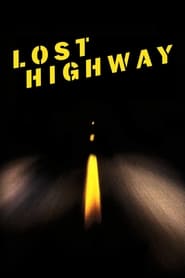
Lost Highway (1997)
Lynch's neo-noir keeps all the genre furniture — femme fatale, gangster, surveillance, doomed Los Angeles — and strips out motive, explanation, and detection. Peter Deming photographs the Madison house as near-abstract shadow: characters walk into blackness and simply dematerialize. Watch the doublings — one actress, brunette then blonde, echoing Vertigo — and feel the structural debt to Last Year at Marienbad, where scenes repeat and contradict without stable chronology. Pay close attention to the very first scene at the front door and the intercom. The film is built like a loop with no seam, and that opening moment is folded into everything that follows.
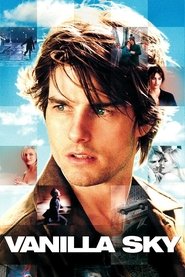
Vanilla Sky (2001)
Crowe hired John Toll — Malick's cinematographer on The Thin Red Line — and then weaponized his gorgeous, high-gloss surfaces: the beauty itself is a clue that something is off. The famous emptied Times Square arrives before you're told anything is wrong, and that's the trick in miniature — an image too beautiful to trust. This is Hollywood's reworking of a Spanish film, Abre los ojos, part of the turn-of-the-millennium wave of "reality is not what it seems" pictures, and Crowe layers in his signature curated soundtrack as a second narrator. Watch for glitches in the gloss.

Mulholland Drive (2001)
At Club Silencio, the emcee announces "There is no band" — and still a trumpet plays after the player lowers his horn; still a voice pours out after the singer falls. It's Lynch showing you his engine in ninety seconds: emotion that is real and manufactured at once, sound and image coming unstitched from each other. Notice how Deming's cinematography splits into two registers — warm, golden Hollywood light versus something harsher — and how the editing runs on emotional rhyme rather than cause and effect, a lineage running back to Un Chien Andalou through Sunset Boulevard. This is a film you decipher rather than follow.
Inland Empire (2006)
Lynch shot much of this himself on a consumer camcorder, and the cheap digital image — grainy, smeared, faces bulging in distorting close-up against engulfing black — isn't a limitation, it's the aesthetic. It looks like something recorded by accident and watched alone at night. Keep an eye on the weeping woman in a hotel room, watching a television: her helpless gaze is the film's deep structure. This is the culmination of Lynch's loose Los Angeles trilogy with Lost Highway and Mulholland Drive — identity dissolving across roles, performances consuming their performers — pushed to its furthest, rawest edge.
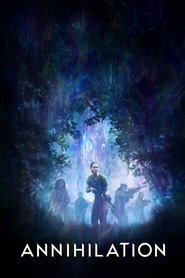
Annihilation (2018)
Two deer step from the brush moving in perfect mirrored unison, one shadowing the other like a copy that hasn't noticed it's a copy. The women watch; no one explains; the looking is the whole event. Garland's Shimmer descends directly from Tarkovsky's Zone in Stalker — a rule-warping interior space entered by a small expedition — and Rob Hardy films it as a soap-bubble membrane tinting everything toward the toxic and iridescent. Watch how a heroine built for competence (soldier, scientist) finds there's nothing adequate to do, and how the lighthouse sequence surrenders words entirely to image and sound, in deliberate echo of 2001's Star Gate.
Watch these together and a lineage snaps into focus: Sjöström's ghosts feed Bergman; Bergman and Expressionist shadow feed Polanski and Lynch; Welles's devouring architecture becomes Kubrick's impossible hotel; Tarkovsky's Zone becomes Garland's Shimmer. But the deeper reward is a retraining of your own attention. These films ask you to stop waiting for the next event and start reading the image itself — the rot on a plate, the fan on a ceiling, the sound of trike wheels crossing from carpet to hardwood. They trust that watching, done patiently, is its own kind of drama. Give them that patience and they give back more on every viewing — because none of them is a puzzle with one answer. They're rooms you learn to live inside.