Sightlines · a mini film course
When the Circuit Breaks: Seeing, Acting, and the Films That Pull the Plug
There's a moment you'll recognize across all ten of these films, even though it arrives differently in each one. A character who ought to be able to do something — the detective, the cop, the cab driver, the agent, the husband — finds that doing something changes nothing. They look, they move, they investigate, and the world refuses to answer. Classic cinema is built on the opposite promise: you perceive a problem, you act, and the action resolves things. These films are fascinated by what happens when that promise quietly dissolves. Some of them dissolve it with dread, some with beauty, some with a kind of philosophical dark humor. Watching them together, you start to feel the different shapes that paralysis can take — and how much a filmmaker can build inside that gap between seeing and being able to act.
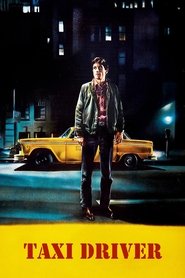
Taxi Driver (1976)
Watch the windshield. Scorsese and cinematographer Michael Chapman make the cab's glass into a kind of dirty aquarium wall — neon smeared by rain, faces caught and lost in headlight beams — so that you're always half inside Travis's head and half observing him from an uncomfortable distance. Notice how the camera will ride with him for a while, then quietly step outside and look down from above, as if the film itself needs to take a breath away from him. That double position — intimate but not endorsing — is the film's central ethical act. Also listen to the voiceover: it's modeled on the written diary that Robert Bresson used in Diary of a Country Priest, words running alongside images rather than explaining them, so that what Travis says and what we see are often quietly out of alignment with each other.
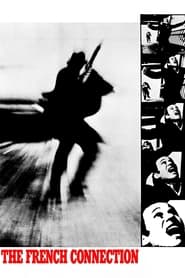
The French Connection (1971)
Before anything else, notice the cold. Gordon Willis's palette is all winter grays and brownish fluorescent murk, and cinematographer Owen Roizman shoots surveillance through long telephoto lenses that flatten and compress — you feel the distance between the watcher and the watched as a physical fact. The film invented a grammar that dozens of thrillers since have borrowed: real New York streets, available light pushed until it grains, a handheld camera that doesn't glide so much as lurch to keep up. Pay attention to the famous car-chase sequence not just as action but as sound — the way the elevated train fills the whole world above Doyle's head. Friedkin learned from his documentary work that the right ambient noise can do what three lines of dialogue can't.
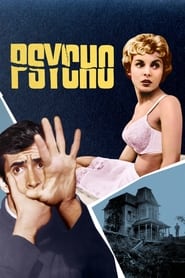
Psycho (1960)
Hitchcock shot this with his television crew rather than his usual film collaborators, and that choice is not incidental — the result has a leaner, more functional look than his prestige pictures, which makes the famous shock moments land harder against the ordinary texture around them. Watch how he uses point-of-view: he gives you Marion's perspective so consistently in the first half that you become complicit in her anxiety, her guilt, her constant monitoring of who might be watching. A highway patrolman who does nothing but stare through a car window becomes one of the most unsettling figures in the film. Notice also how Hitchcock handles the Bates house and motel as spaces — low angles, high angles, the geometry of who is above and who is below.
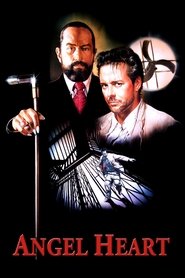
Angel Heart (1987)
The first thing to clock is the fans. There is a slowly turning ceiling fan in nearly every interior in this film, and cinematographer Michael Seresin lights them so the blades chop and flicker the available light. It seems like atmosphere — and it is — but hold onto it, because by the end you'll understand it was doing something more specific than decoration. Seresin gives New York a cold gray texture and New Orleans a humid, amber rot, so the two cities feel like different moral climates. Parker builds his horror not from sudden shocks but from accumulation: the wrong detail in the corner of a frame, the slightly too-long held shot. Watch the way the film uses mirrors and reflective surfaces — they're doing quiet structural work throughout.
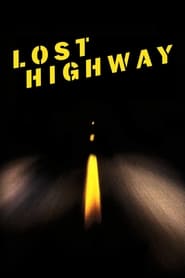
Lost Highway (1997)
Peter Deming, who would later shoot Mulholland Drive with Lynch, photographs the Madison house as a series of voids: walls that dissolve into blackness, characters who walk out of the frame and seem to dematerialize. Keep this in mind — what you can't see in this film is as loaded as what you can. Lynch and Deming then cut against that darkness with bleached, sun-struck exteriors, so the film is constantly oscillating between two visual registers that feel like different states of being. Pay close attention to the opening scene: a voice over an intercom, a figure at a door, a sentence that seems to arrive from nowhere. The film will return to that moment, and when it does, something you thought was a beginning will reveal itself as something else entirely.
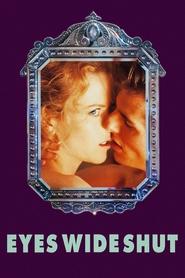
Eyes Wide Shut (1999)
Watch the mirrors. Larry Smith, Kubrick's long-trusted lighting technician elevated here to cinematographer, builds scene after scene around reflections — characters looking at themselves, looking at each other through glass, glimpsed in shop windows during the long night walk. The film's famous mansion sequence is shot in perfectly centered, symmetrical compositions that Kubrick borrowed from Resnais's Last Year at Marienbad, and those locked, formal frames make the ceremony feel both ritualistic and somehow artificial, like a stage set for a dream. Notice also the Christmas lights: nearly every interior is strung with them, warm and slightly unreal, so that even mundane domestic spaces carry a faint aura of the uncanny. The film moves at a deliberate, unhurried pace — this is not restlessness but sustained, even hypnotic, attention.
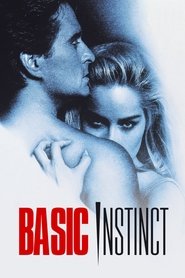
Basic Instinct (1992)
Jan de Bont's camera moves constantly and smoothly — not nervously, but with a kind of predatory composure, circling its subjects the way a suspicion circles a fact it hasn't quite closed around. Notice how Verhoeven stages the famous interrogation: five figures arranged around one, the lens gliding, and by the time the scene is over you realize the power in the room has quietly redistributed itself. De Bont works in cool blues and bleached whites for the Pacific coast, and classic noir murk for the San Francisco interiors, and that contrast between the two visual worlds tells you something about how the film thinks about exposure and concealment. Pay attention to Urioste's editing when violence erupts — the cuts are timed to feel like detonations inside otherwise very controlled, almost glassy compositions.
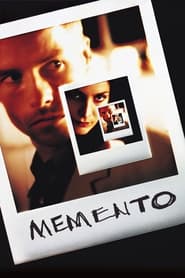
Memento (2000)
Wally Pfister makes a deliberate choice to keep the color sequences visually legible and clean — no disorienting handheld, no expressionist lighting — because the structure is already doing enough cognitive work. The film's color scenes run in reverse chronological order, each one ending where the previous one began, so you arrive in every scene without knowing how you got there. There's also a parallel strand shot in black and white, running forward. Watch for the Polaroids: in normal photography a picture develops toward clarity, but Nolan keeps running the image the other way, detail draining back into blankness. It's a practical effect, just reversed footage, but it's also a three-second diagram of everything the film is doing to your sense of past and present. The structure isn't a gimmick — it's an argument about whether any narrated self-history can be trusted.
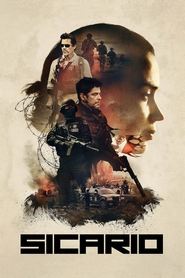
Sicario (2015)
Roger Deakins treats the border landscape geologically rather than picturesquely: long lenses compress human figures against featureless desert until people look small and exposed in a way that is not romantic but genuinely threatening. Watch where Villeneuve keeps placing Emily Blunt in the frame — doorways, back seats, the edge of rooms where decisions are being made. This blocking is the film's central idea made visible rather than stated. The night-vision sequence is worth particular attention: Deakins renders it in a nearly monochrome palette of pale greens and blacks, stripping the image of everything except the barest information, so that violence becomes abstract and procedural rather than dramatic. Jóhann Jóhannsson's score works the same way — low frequencies felt more than heard, sustained tones that register as dread before the conscious mind has caught up.
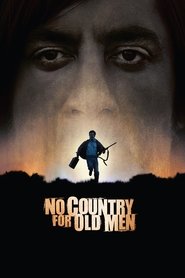
No Country for Old Men (2007)
Deakins again, and again that strategic restraint — the most celebrated sequence in the film, a conversation in a gas station lit by a single overhead fluorescent, achieves its power not through any camera movement or editing trick but by simply holding on two faces and letting the silence build. Notice how little music the Coens use, and how precisely they've calibrated ambient sound instead: wind, the creak of a door, the particular dead acoustics of a motel room. Chigurh is almost never shown arriving — we cut to him already present, already in the space, as if cause-and-effect rules don't quite apply to him. And pay attention to Tommy Lee Jones's frame narration: his voiceover is drawn directly from McCarthy's prose, and it places you at a reflective, slightly elegiac distance from events even as they're happening.
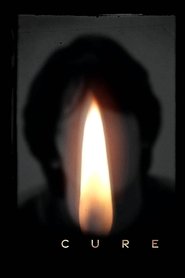
Cure (1997)
Kurosawa and cinematographer Tokushô Kikumura favor wide and medium-long framings that keep characters embedded in their environments rather than isolated in close-up — interiors are drab, concrete-gray, lit with the flat sickness of fluorescents — and the effect is that nobody ever quite commands the space they're in. Watch how the hypnosis scenes are staged: Kurosawa uses the same tools on you that Mamiya uses on his subjects, a point of light, a patient repetitive voice, a held frame. When investigators sit down to watch an old strip of medical footage demonstrating mesmerism, the film briefly shows you its own hand. Notice also what Kurosawa withholds — there is almost no on-screen violence for a film about a series of murders, and that absence is itself a formal argument about where the real horror lives.
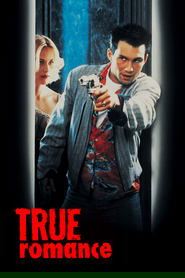
True Romance (1993)
Cinematographer Jeffrey Kimball gives the film a palette of bruised blues and molten ambers pushed to the edge of abstraction — saturated, sensory, unapologetically artificial — in the tradition of the music video and the advertisement. Tony Scott is often described as a stylist rather than a thinker, but watch how he handles the Elvis scenes: no soft-focus dream-sequence signals, no dissolves to indicate imagination. The King just appears, lit the same way as everything else, and Clarence talks to him. That refusal to visually code fantasy as different from reality is a philosophical position, not a stylistic accident. Watch also how Scott cuts action: he doesn't build to eruption the way Scorsese does — violence arrives abruptly inside otherwise warm, almost comedic scenes, and then it's over, and the warmth resumes. The tonal whiplash is the film's argument about the world Clarence and Alabama inhabit.
Why These Ten Together
What you'll find, watching these films in any order, is that each one has its own relationship to a single underlying tension: the gap between what a person can see and what they can do with what they've seen. Some of these films stage that gap as tragedy (Sicario, No Country for Old Men). Some stage it as paranoia (Lost Highway, Eyes Wide Shut). Some stage it as a kind of doomed investigation in which the investigator is the crime (Angel Heart, Memento). And one — True Romance — stages it as the wild, improbable claim that a person who has learned everything they know from movies might be able to bluff their way through the gap entirely, by refusing to acknowledge it exists.
They are also, all ten of them, deeply interested in what cinema looks like — in light and shadow as meaning, in what the frame includes and what it leaves in darkness, in the difference between a camera that chases and a camera that watches. Paying attention to those choices won't spoil anything. It will make everything richer.