Sightlines · a mini film course
When the Story Stops Moving: Twelve Films Where the Camera Watches, Waits, and Doubles Back
Most movies run on a simple engine: a character sees a problem, acts on it, and the world changes. See the threat, meet the threat. The films in this set all tamper with that engine — some pull its spark plugs, some run it in reverse, some let it idle so long you start noticing everything else in the frame. What connects them is a fascination with characters who perceive far more than they can act on: men trapped in loops, minds split into rooms, selves assembled from movie posters and mirrors. And in every case, the form does the talking — the camera watches rather than chases, time is allowed to stretch or fold back on itself, and space becomes a trap. Watch these not for what happens, but for how each film makes you feel what its characters can't say.
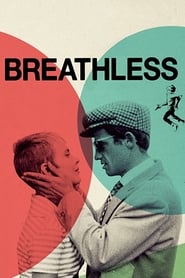
Breathless (1960)
Start here — this is the hinge for everything else in the set. Watch Belmondo test Bogart's lip-touch gesture like a borrowed suit, a man who has confused acting with living, and watch the camera decide to confuse them too. Notice how the famous jump cuts slice moments out of the middle of shots, so that scenes stutter forward the way the hero drifts: nothing quite resolves, no chase tightens into suspense. Coutard shoots Paris like street reportage — hard shadows, real crowds, uncorrected light — turning a gangster picture into found material rather than a blueprint.
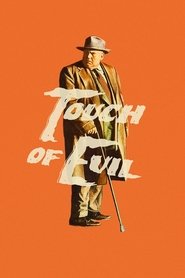
Touch of Evil (1958)
The opening is one of the most famous shots ever made: three unbroken minutes as a camera lifts off the ground and threads a border town's traffic, neon, and music, binding strangers into one breathing whole. Then compare that to how Welles shoots Hank Quinlan — from floor level, wide-angle, ceiling pressing down on his head like a lid. The whole film lives in the distance between the camera that can't stop telling the truth and the cop who forges it. Notice how scenes are built from sustained wide takes where actors move toward and away from the lens instead of being cut together — proximity does the work editing usually does.
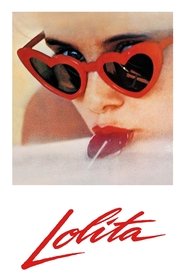
Lolita (1962)
Kubrick opens with the ending — the story doesn't unfold, it's confessed, after the fact, by a narrator with every reason to lie. Watch how that reordering (Kubrick's invention, not Nabokov's) makes everything feel like a doom already sealed. Oswald Morris's black-and-white favors long, fluid takes over aggressive cutting, letting performance and self-justification play out in real time — the better to let you see through Humbert's silken voice-over even as it seduces.
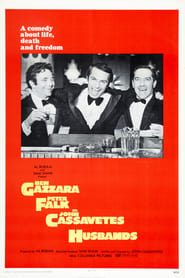
Husbands (1970)
Three men come home from a friend's funeral unable to put grief into any socially available shape, and Cassavetes throws out the machinery that would let them (or the movie) act it away. Watch the handheld camera hunt for faces — catching them off-balance, half-cut by the frame, held past comfort. Scenes run long past where a conventional film would cut, because the point is the squirming, the clowning, the feeling that won't arrive on command.
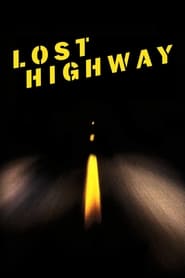
Lost Highway (1997)
A neo-noir with the femme fatale, the gangster, the murder — and none of the motive, explanation, or detection the genre runs on. Watch what Peter Deming does with darkness: the Madison house is defined by what can't be seen, and characters walk into blackness and simply dematerialize. Watch, too, how one actress plays two women, brunette then blonde, and how the film refuses to hand you the cut that would tell you whether they're two people or one person dreamed twice. Its ancestors are Vertigo, Persona, and Last Year at Marienbad — obsession, dissolving identity, and time treated as a loop rather than a line.
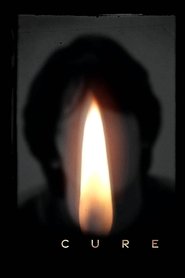
Cure (1997)
The anti-serial-killer film, made at the peak of the Se7en era and answering it by subtraction: no grand design, no charisma, no spectacle. Watch the distance — Kurosawa holds characters in wide, desaturated frames, small figures in gray institutional spaces, so dread seeps in from the environment rather than jumping from close-ups. And watch the hypnosis scenes, built from the oldest screen technology there is: a flame in the dark, a patient voice, a watcher emptied of resistance. The film is half-confessing what it's doing to you.
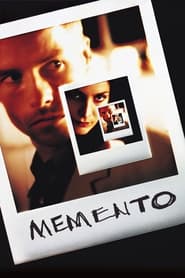
Memento (2000)
The opening image is a Polaroid running in reverse — an image un-developing back into blankness — and it's the whole film in three seconds. The color scenes run backward, each ending where the previous one began, so every scene drops you in with no memory of how you got there; a black-and-white strand runs forward; they meet at a hinge. Notice how Wally Pfister keeps the photography restrained and legible — a wise mercy, given the cognitive load. The genius is that you aren't watching a man who's lost his memory. For two hours, you've lost yours.
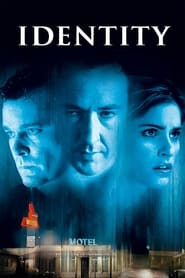
Identity (2003)
Ten strangers, one storm, one Nevada motel — the Agatha Christie closed-circle countdown crossed with slasher grammar. Watch the numbered room keys, and watch the space itself: Phedon Papamichael shoots the motel in sodium amber and cold rain-silvered blue, identical doors lined up like a multiple-choice question, deliberately stagey and hermetic. That artificiality isn't a budget compromise. Pay attention to the gap between what the countdown seems to be tallying and what it might really be counting.
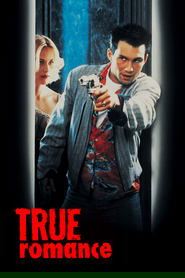
True Romance (1993)
Clarence is a man assembled from other people's pictures — comic books, kung-fu movies, an Elvis who leans into the bathroom mirror and gives advice, shot dead literal, no wavy dream-dissolve. He's the direct descendant of Breathless's Michel, the kid who built a self out of Bogart posters — so watch these two close together. Notice Tony Scott's palette of bruised blues and molten ambers, saturated to the edge of abstraction: image as pure sensation, a love story lit like a perfume ad and completely unembarrassed about it.
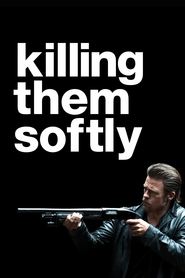
Killing Them Softly (2012)
A gangster picture that works by negation: the crime film as economics lecture, men trapped across tables in cramped two-shots, complaining about being underpaid. Then watch what Dominik does with the one truly operatic killing — slow motion, rain, shattering glass, a pop standard on the soundtrack — violence held up and exhibited like jewelry, quoting The Wild Bunch and Bonnie and Clyde so beautifully that you feel a little sick about being moved. That queasiness is the argument.
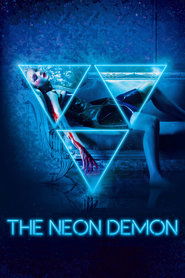
The Neon Demon (2016)
The first image tells you everything: a beautiful "corpse" that turns out to be a pose, blood that turns out to be paint. In this Los Angeles, being looked at and being consumed are the same act, only slower. Watch how characters study each other in mirrors rather than head-on, and how Braier's photography splits between cold geometric precision and hallucinatory saturated color — the inheritance of Suspiria's gel-lit horror-as-spectacle. People here perceive and do not act. They watch. So will you, and the film knows it.

You Were Never Really Here (2017)
Ramsay takes the traumatized-avenger picture — the Taxi Driver lineage — and quietly pulls its spark plugs. Fragments flare up without dates or places, and they never assemble into the explanatory backstory a thriller owes you; they just keep arriving, the way a smell arrives. Watch the Bressonian choices: hands and surfaces in extreme close-up instead of faces, violence placed offscreen or rendered through its material aftermath. She even shoots on 35mm so the image carries the same bruised grain as its ancestors — the shape of the genre kept, its release valve removed.
Watched together, these films become a conversation across sixty years. Breathless teaches you to see the borrowed gesture; True Romance shows you its American grandchild. Touch of Evil and Cure teach you what a camera can do by holding its distance; Husbands and You Were Never Really Here show you men flooded with perception and unable to convert it into action. Memento, Identity, Lost Highway, and Lolita each fold time or the self into shapes that reward — really, demand — a second viewing. And Killing Them Softly and The Neon Demon turn the act of watching violence and beauty back on you, the watcher. None of these films will chase you. They wait, and they trust you to notice. Meet them halfway, and they open up like rooms you didn't know were in the house.