Sightlines · a mini film course
The Watchers in the Dark: A Course in Films That Look Back
There's a peculiar family of thrillers that isn't really about catching killers, solving crimes, or escaping danger — it's about looking. Every film in this set turns the act of watching into its true subject: detectives who see too much, cameras that behave like nervous systems, houses and motels that become sealed containers for a fracturing mind, and — most unsettling of all — films that quietly notice you, sitting there, wanting to see what happens next. Across seventy years, from a Depression-era fairy tale to a mirrored ballet studio, these directors keep asking the same question in different keys: what does violence do to the person watching it? Watch these films and you'll feel the answer land, sometimes gently, sometimes like an accusation.
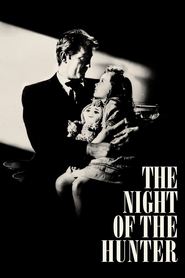
The Night of the Hunter (1955)
Charles Laughton, an actor directing his only film, understood that a predator is scariest not as a psychology but as a shape. Watch how Stanley Cortez's chiaroscuro photography — silhouettes thrown enormous on bedroom walls, the conical shadow of a hat arriving before the man does — makes the film think the way a frightened child thinks: in pictures too large and too clear. Notice, too, the deliberately storybook staging, inherited from silent cinema and German Expressionism, where flattened, painterly compositions replace realism entirely. This is the source-code for nearly everything else on this list.
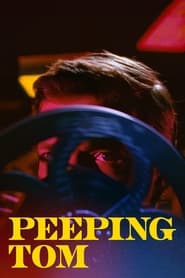
Peeping Tom (1960)
Powell's masterstroke is telling you almost everything at the start — the dread here isn't mystery but the terrible distance between what one warm, trusting character sees in a shy man with a camera and what you already know. Watch how Otto Heller lights the boarding house: airy, beautiful, and somehow inappropriate, refusing both horror's shadows and kitchen-sink drabness. And watch the film's obsession with the machinery of looking itself — lenses, mirrors, viewfinders — because Powell is making an argument about cinema that implicates everyone holding a ticket.
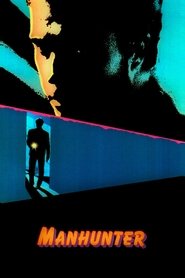
Manhunter (1986)
Michael Mann builds an entire thriller out of a man whose craft is occupying another person's gaze — a profiler who speaks a killer's reasoning aloud, in the present tense, as though renting his eyes. Watch Dante Spinotti's cold, designed palette of blues, teals, and clinical whites, the symmetrical compositions and hard horizons that turn glass-and-concrete architecture into psychology. The camera is forever watching a watcher; notice how often you're looking at someone who is himself looking, and how uneasy that doubling makes you feel.
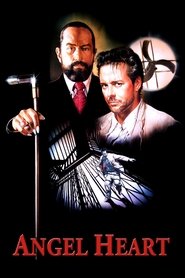
Angel Heart (1987)
A private eye does everything a gumshoe is supposed to do — follows clues, interviews witnesses, drives to the next town — and watch how the machinery of the detective story quietly breaks in his hands. Michael Seresin films two Americas through smoke and dust: New York cold, grey, and verminous; Louisiana humid, amber, and rotting. Keep an eye on the ceiling fans turning in almost every room; they're not set dressing. This film knows things its hero cannot bear to know, and that gap is where the dread lives.
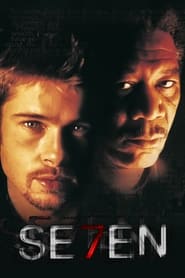
Se7en (1995)
A detective story usually wants you to watch a chase; this one wants you to do homework. Watch how the film deputizes you alongside Somerset — pulling Dante off library shelves, reading crime scenes like captioned texts — so that interpretation, not pursuit, becomes the real suspense. Darius Khondji's cinematography, one of the most influential of the decade, motivates every light source inside the frame — a bare bulb, a flashlight beam, rain-slicked streetlight — and positions the camera to allow maximum shadow. The city is never named. That's a choice worth sitting with.
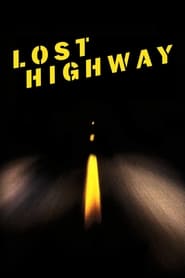
Lost Highway (1997)
Lynch takes the full noir kit — femme fatale, gangster, murder, surveillance, doomed Los Angeles — and strips out motive, explanation, and detection. Watch how Peter Deming photographs the Madison house as a near-abstract space of engulfing darkness, rooms defined by what cannot be seen, people walking into blackness and seeming to dematerialize. And pay close attention to the very first scene at the front door; the whole film is folded inside it. Don't try to sort what's real from what's dreamed — the film refuses to make that cut, and the refusal is the point.
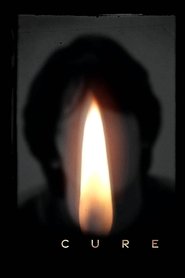
Cure (1997)
Kiyoshi Kurosawa answers the flashy serial-killer cycle of the '90s by subtraction: no grand design, no charismatic mastermind, just a soft voice, a cigarette lighter, and a question that sounds like nothing at all. Watch the distance — wide, held framings that keep figures small in desaturated concrete-and-fluorescent environments, letting dread seep in from the edges rather than jump at you. Notice how the hypnotist's tools — a flame in the dark, a patient voice, a watcher emptied of resistance — are also a description of cinema itself, working on you exactly as they work on his victims.
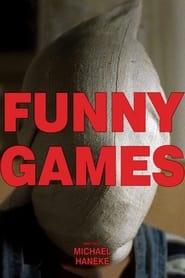
Funny Games (1997)
A home-invasion thriller made by a director who despises home-invasion thrillers — and wants you to feel why. Watch what Haneke withholds: violence happens offscreen, and the camera holds instead on aftermath, in long static takes that run far past comfort, refusing the cut that would release you. Jürgen Jürges's even, undramatic light denies every visual pleasure the genre trained you to expect. This is a film about your own appetite for what you came to see, and it knows you're there.
Funny Games (2008)
Haneke remade his own film shot-for-shot, in English, with American stars, landing it deliberately inside the American "torture porn" moment it critiques. Watch how the casting itself is a weapon: recognizable stars trailing their screen histories, a holiday house, golf clubs in the corner — every object the genre has taught you to read as a promise. Darius Khondji (yes, the Se7en cinematographer) works here in reverse: wide, neutral, stable compositions in an environment that refuses to encode danger in its geometry. Seeing both versions is the rare chance to watch one director conduct the same experiment on two different audiences.
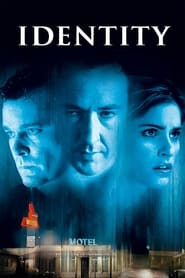
Identity (2003)
Ten strangers, one storm-sealed Nevada motel, a countdown — the Agatha Christie closed-circle engine bolted to slasher grammar. Watch Phedon Papamichael's palette of sodium-vapor amber, cold blue night, and silvered rain, and notice how deliberately artificial and hermetic the motel feels: identical numbered doors lined up like a multiple-choice question. Keep track of what the countdown seems to be counting. The pleasure here is a studio thriller playing an elegant shell game with the very idea of a single self.

Black Swan (2010)
Watch the back of her head. Matthew Libatique's camera rides inches behind Nina's shoulder through corridors and dressing rooms — never quite letting you see what she sees, never letting you stand safely apart, so intimacy curdles into surveillance. Then watch the mirrors, which a ballet studio supplies wall-to-wall: reflections that multiply, fragment, and lag a half-beat behind the body casting them. Aronofsky is drawing on Powell's The Red Shoes and Polanski's apartment films — a whole European tradition of filming a woman's space as her mind turned inside out.
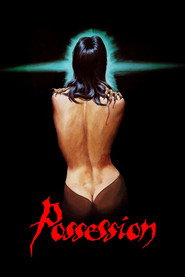
Possession (1981)
Save this one for when you're ready. Bruno Nuytten's handheld camera behaves like an anxious participant, not an observer — wide-angle and close, circling the actors, distorting domestic rooms into pressurized boxes, refusing every stabilizing convention. Żuławski directed his actors to the edge of collapse as a deliberate system, not an excess; watch the famous underpass scene and notice that nothing in it advances a plot — a body is simply undergoing something, past anything a story would need. A marital-breakdown drama turned inside out into horror, made in exile, and unlike anything else you will ever see.
Watched together, these films teach each other. You'll see Laughton's shadow-shapes resurface in Lynch's swallowing darkness; Powell's camera-as-weapon reborn in Mann's watchers and Haneke's accusations; the detective who reads instead of chases passed from Se7en to Cure like a torch being deliberately dimmed. Most of all, you'll start noticing how each film positions you — as accomplice, as reader, as the presence a killer performs for, as the unnamed thing riding a ballerina's shoulder. None of these films lets you watch innocently. That's not a flaw in the set; it's the through-line. Bring your full attention, and be prepared to catch it looking back.