Sightlines · a mini film course
When the Ground Won't Hold: Twelve Films Where Seeing Replaces Knowing
Every film on this list makes the same quiet, radical bet: that a movie doesn't have to march from problem to solution — it can drift, loop, sink, and dream, and be more gripping for it. These are films about people who can't act their way out — the burned, the fevered, the grieving, the guilty — so the camera stops chasing and starts watching. Time is allowed to stretch. Memory, fantasy, and the present get filmed in the same light, with no helpful dissolve to tell you which is which. Your job as a viewer changes too: instead of following a plot, you'll find yourself reading images — a ceiling fan, a cold hand, a pair of deer, dunes that look like a sleeping body. Trust your unease. It's the point.
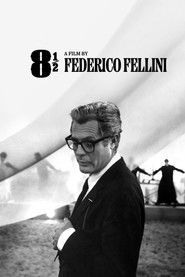
8½ (1963)
Start here, because Fellini wrote the rulebook everyone else in this set is playing from. Watch the opening minutes: you will not be told when the film leaves the world for a man's head, or the head for the world — the seams are removed on purpose. Editor Leo Catozzo cuts from present to childhood memory with the same matter-of-fact join he'd use between two rooms, and Gianni Di Venanzo shoots memory, fantasy, and reality on one continuous black-and-white silver, with no change of grain to grab onto. Learn to float here and the rest of the course opens up.
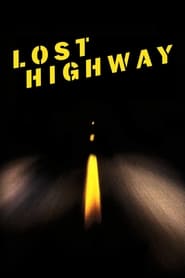
Lost Highway (1997)
Peter Deming photographs the Madison house as near-abstract darkness — rooms defined by what cannot be seen, characters walking into blackness and dematerializing — set against bleached, sun-struck exteriors. Lynch takes the full noir kit (femme fatale, gangster, surveillance, doomed Los Angeles) and strips out motive, explanation, and detection. Watch for how the film refuses to tell you whether what you're seeing is lived, remembered, or dreamed — that refusal, inherited from Persona and Last Year at Marienbad, is the design, not a flaw.
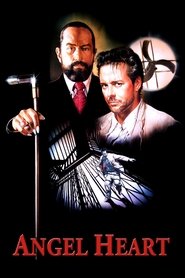
Angel Heart (1987)
A private-eye picture crossed with occult horror, filmed through perpetual smoke and dust: New York cold, grey, and verminous; Louisiana humid, amber, and rotting. Watch the ceiling fans — there's one turning at the top of almost every room, chopping the light into flicker, and the film keeps looking at them even when its detective won't. Notice, too, the near-invisible flash-frames cut into otherwise realistic scenes, a trick borrowed from The Exorcist: dread seeded frame by frame, below conscious notice.
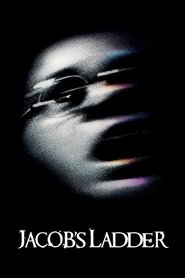
Jacob's Ladder (1990)
The famous subway figure — a head shaking too fast for the eye to resolve — was made by having the actor whip his head while the camera ran slow, so the wrongness is printed into the photograph itself, not layered on top. That's the film's whole method: you're shown things you cannot read, and the failure to read them is the horror. Watch how the palette splits between greenish Vietnam swamp light and the sickly fluorescent whites of hospitals and subways, and how its hero mostly looks and endures rather than acts.
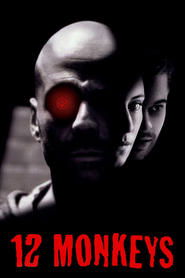
Twelve Monkeys (1995)
Gilliam takes Bruce Willis, arriving with all the physical authority of Die Hard, and spends the film disabling it: a large, capable man who can perceive everything and change nothing. Roger Pratt shoots the future in cold, crowded, desaturated blues, with distorting lenses and low institutional angles carried over from Brazil. Watch for the scrap of memory the film keeps circling — an airport, hard morning light — and notice how every loop tightens rather than resolves. The whole architecture descends from Chris Marker's La Jetée.
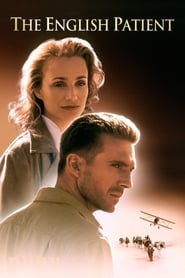
The English Patient (1996)
John Seale shoots the Sahara as an abstraction: dunes worked by wind into a hip, the furrow of a back, a sheet pulled to one shoulder — sand and skin lit to rhyme. The film's present tense belongs to a man who can barely move or speak; all that remains to him is memory, so watch how the film builds its now from pure looking and listening — a dressing changed, wind in stone rooms, the drone of a remembered engine — and lets the past arrive on that current.
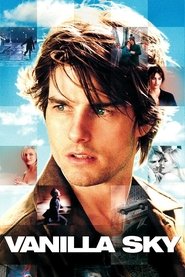
Vanilla Sky (2001)
John Toll gives David's privileged world a lush, high-gloss surface — clean light, saturated color, the sheen of wealth — and the film weaponizes that very beauty as a clue. When an image looks too perfect to trust, don't trust it. Watch the depopulated Times Square sequence early on: Crowe shows you the gorgeous nightmare before telling you anything is wrong. And listen — Crowe's needle-drops aren't accompaniment but a second layer of authorship, carrying meaning the dialogue won't.

Mulholland Drive (2001)
Deming again, now mapping two psychological registers onto light itself: warm, diffuse, golden-hour Hollywood glow for one register, something colder for the other. Watch for the Club Silencio sequence, where a voice comes loose from the body producing it — sound and image stop guaranteeing each other, and you feel emotion that is real and manufactured at once. This is Lynch's Sunset Boulevard: Los Angeles as a machine that manufactures illusions and destroys those who believe them, cut together by emotional rhyme rather than cause and effect.

You Were Never Really Here (2017)
Ramsay takes the vigilante engine of Taxi Driver, keeps its shape, and quietly pulls the spark plugs. Thomas Townend's camera works in extremes — hands, eyes, and surfaces in close-up; wide shots that withhold. Fragments of the past flare up without dates or explanation and refuse to assemble into the backstory a thriller owes you. Watch, too, the Bresson inheritance: violence shown through aftermath and objects rather than spectacle, the face subordinated to the hands.
Annihilation (2018)
Rob Hardy renders the Shimmer as a soap-bubble membrane tinting everything inside it: greens pushed toward the toxic, water given an oily refraction, all framed with a clean, slightly clinical eye that makes the strangeness stranger. Watch the mirrored deer — nobody explains them; nobody can do anything with them; the looking is the event. The structure borrows Tarkovsky's Stalker (a rule-warping zone entered by an expedition) and the ending owes a deliberate debt to 2001's surrender of story to pure image and sound.
Long Day's Journey Into Night (2018)
An hour in, the screen goes dark, the title card finally appears, and a voice tells you to put on the 3D glasses in your lap — and then the camera doesn't cut for fifty-nine minutes. That small physical gesture in the dark makes you complicit in a passage you can feel but not name: you are putting on a dream. Watch how the first half denies you a timeline — a lyric voiceover hovering over images that won't anchor to past or present, a device drawn straight from Tarkovsky's Mirror and Fellini's 8½.
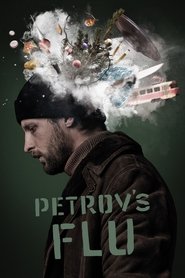
Petrov's Flu (2021)
The flu is the film's master key: a fevered, porous state where sanity and delusion, life and death, then and now stop staying in their lanes. Vladislav Opelyants's roving long takes carry you out of a crowded bus into a fantasy and back without a single edit to warn you the ground has changed — the delirious inheritance of Khrustalyov, My Car! and Hard to Be a God. Watch for the recurring Soviet New Year's party and the Snow Maiden's ice-cold hand — the film keeps reaching back to that cold across decades, daring you to say which present it belongs to.
Watched together, these twelve teach you a way of seeing. 8½ removes the seam between world and mind; Lynch, Lyne, and Parker turn that missing seam into dread; Crowe and Gilliam smuggle it into the studio picture; Ramsay, Garland, Bi Gan, and Serebrennikov carry it into the present, each with a different instrument — the withheld close-up, the toxic bloom, the unbroken hour, the fever. What connects them isn't genre (they span horror, romance, sci-fi, noir, and war) but a shared trust in you: that you'll notice the fan, the rhyming dunes, the too-perfect light, the second deer — and that noticing, not knowing, is where the real experience of these films lives. Watch them in any order. But watch them closely.