Sightlines · a mini film course
When the Frame Lies Kindly: Imagination, Ideology, and the Stories We Tell to Survive
There is a question buried inside each of these films, and it is essentially the same question wearing different clothes: what happens when the story someone tells — to a child, to a nation, to themselves — is not true, and yet the telling is the only thing keeping them alive, or sane, or human? These films span six decades and half a dozen national cinemas, but they share a fascination with fabrication as a form of survival. Some use color as a kind of emotional argument. Some fracture time so that past and present can't be told apart. Some build their whole architecture on the gap between what a character believes and what we, watching, know to be real. Taken together, they form an informal course in how cinema can make the act of storytelling itself — its costs, its consolations, its terrible power — visible on screen.

Life Is Beautiful (1997)
Watch the film in two halves and notice how the photography changes. Tonino Delli Colli — one of the great Italian cinematographers, who shot Sergio Leone and Fellini — bathes the prewar courtship sequences in a warm, fable-like light that feels almost too beautiful to be real. That unreality is deliberate. When you reach the labor camp, pay attention to how Benigni uses the gap between what we see and what his son Giosué is told: the film runs two incompatible stories over the same images simultaneously. Notice also how the film's debt to Chaplin and Keaton shapes Benigni's physical performance — the body doing comic work inside a space designed for horror. The tension between those two things is the film's argument.

Godzilla Minus One (2023)
Resist the pull of the monster and keep your eyes on the people watching it. Cinematographer Kōzō Shibasaki deliberately avoids the warm amber glow of nostalgic postwar-Japan filmmaking — his palette is cooler and harder, which means the ruined cityscape never tips into prettiness. The film holds wide frames and lets reactions accumulate before the creature fully appears, following the grammar established by the original Gojira (1954): bystander faces as a measure of scale, the roar arriving before the image does. The deeper thing to track is Shikishima's body — a man defined by a moment when he could not act — and how the film builds, methodically, toward the question of whether action is still possible for someone carrying that particular wound.
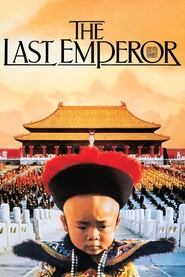
The Last Emperor (1987)
Vittorio Storaro's cinematography is doing something precise and beautiful here: each historical era has its own color temperature. The Forbidden City sequences glow amber and gold — warm, enclosed, unreal. As Pu Yi moves forward through history, the palette cools and drains. Watch the dissolves between time periods rather than the cuts — editor Gabriella Cristiani almost never draws a hard line between past and present, so that the prison of 1950 and the palace of 1908 bleed into each other and you genuinely lose the ability to say which is the "real" time and which is the remembered one. The film is structured less like a biography than like the way memory actually works: unreliable, layered, haunted by objects. Keep an eye on one particular wicker cricket cage.
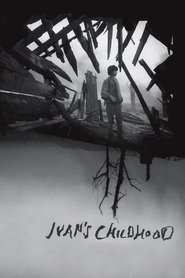
Ivan's Childhood (1962)
Tarkovsky's first feature is built across a hard fault line, and the film announces it immediately: a dream of birches and light and a mother, then a cut — no dissolve, no music, no warning — to a boy lying in a ruined windmill in wartime. Notice that the two worlds are shot entirely differently. Vadim Yusov photographs the war sequences with deep-focus night photography, low angles, and horizontal bands of reeds and mist that make the landscape feel threatening and vast. The dreams are their opposite: bright, weightless, almost ethereal. These are not flashbacks explaining what happened. They are a different country, and Tarkovsky refuses to soften the border crossing between them. The seam is the subject.

Memoirs of a Geisha (2005)
Dion Beebe won the Oscar for this cinematography, and the best way to understand why is to watch what the film does with obstruction: light passing through paper screens, lanterns, falling snow, latticework. The frame is almost never open. The most important thing to notice is how Beebe and Marshall repeatedly return to Zhang Ziyi's face as the single bright element in an otherwise shadowed composition — a painted mask catching light while the rest of the frame recedes into darkness. The geisha's profession is precisely the art of holding a feeling at the surface while refusing to act on it, and the film's visual language is built around that constraint. Watch how much the film asks a face to carry when the character is not permitted to speak.
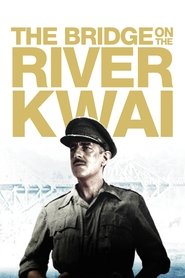
The Bridge on the River Kwai (1957)
Jack Hildyard's CinemaScope photography does something counterintuitive: the jungle, which should feel open in a wide frame, is made to feel enclosed — the canopy pressing down, light arriving in columns and patches. Against this claustrophobia, the river and the bridge itself become the film's great breathing spaces, and Hildyard earns those spaces carefully over the course of the film so that the final sequence at the bridge pays off geometrically as well as dramatically. The deeper game to watch is Colonel Nicholson, played by Alec Guinness with a ferocious surface control. Lean elicits from him a performance of almost perfect institutional composure — and the film's moral complexity lives entirely in the gap between how correct that composure looks and what it is in the process of doing.
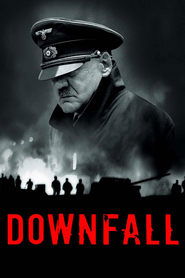
Downfall (2004)
The camera strategy here is built on a fundamental tension: Rainer Klausmann works close and handheld in the bunker, keeping the lens near faces, trapping people in shallow focus and narrow corridors — but without the frenetic agitation of combat cinematography. It is a proximity without release, claustrophobia as method. What to watch for is the map room: Hitler moving pieces on a map, issuing commands to armies that no longer exist, receiving news of phantom counterattacks in the measured tones of men reporting real ones. The film is structured around the gap between the language of military decision-making — which proceeds normally — and the reality above ground, which has entirely collapsed. Bruno Ganz's performance is the key: the film insists on showing Hitler as a person capable of small warmths, which makes the ideological mechanism all the more legible and all the more disturbing.
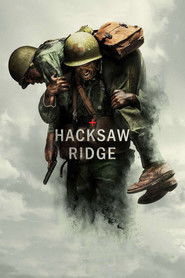
Hacksaw Ridge (2016)
Cinematographer Simon Duggan divides the film cleanly in two, and the division is worth watching for consciously. The Virginia sequences are shot in warm golden-hour pastoral light — fields, a white church, America as it imagines itself. The moment Doss arrives on Okinawa, that light is gone: the palette drains, the camera destabilizes, the sound design becomes a weapon. Pay attention to how Gibson uses the geography of the escarpment itself — the Ridge is a literal threshold, a cliff edge between earth and void, and the film's blocking and cutting treat it as such. The deeper thing to track is what happens to the war-film's usual engine once you place at its center a man who will not carry a weapon: the film has to find a completely different way to generate and release tension in its battle sequences, and the solution Gibson arrives at is genuinely strange.
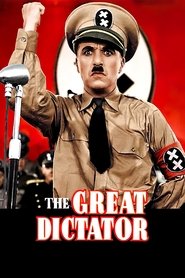
The Great Dictator (1940)
Two scenes to fix your attention on before you watch. The first is a rally sequence: Chaplin built Hynkel's podiums and crowds as a direct parody inversion of Leni Riefenstahl's Triumph of the Will — the same angles, the same geometries of mass devotion, now populated by a buffoon. The second is a scene in Hynkel's chancellery, alone, with a balloon painted like a globe. Watch what that scene does to movement — what it means for a Chaplin character to go still, to stop acting on the world and let the world move around him. And then brace for the final scene, which breaks every rule of classical narrative filmmaking with full awareness that it is doing so. Chaplin is not being clumsy; he is making a decision that the film he has spent two hours building makes necessary and almost inevitable.
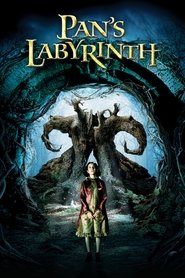
Pan's Labyrinth (2006)
Guillermo Navarro's Oscar-winning cinematography operates on a strict color grammar: the world of the mill, the soldiers, and the captain is rendered in cold blues and desaturated greens; the fantasy spaces glow amber and gold. Crucially, the film never lets those palettes become absolute — they bleed into each other at the threshold moments, which is the visual clue to the film's central and sustained act of mischief. Del Toro and Navarro photograph the fantasy world with the same practical solidity as the real one: no soft focus, no dreamy gauze. The monsters and the labyrinth are lit and framed as physical facts. The film then refuses, all the way to its ending, to tell you whether they are. Watch Ofelia's face in the moments between worlds — not for what she expresses, but for what remains perfectly, unsettlingly decided in it.
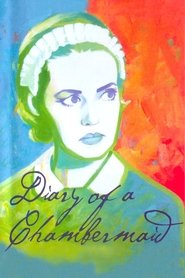
Diary of a Chambermaid (1964)
Roger Fellous photographs this film in a flat, even, undramatized grey — no expressionist shadows, no music cues telling you how to feel, no lighting that separates the shocking from the mundane. A meal, a fetish, a corpse: all lit the same. This evenness is Buñuel's method and his argument. The film uses the upstairs-downstairs ensemble staging of classic social comedy — drawing from Renoir's Rules of the Game — but the camera's refusal to be surprised by what it shows gradually does something disorienting: the bourgeois household stops feeling like a social setting and starts feeling like a skin stretched over something much older and more feral. Watch the objects: boots, dead birds, insects. In Buñuel, objects carry a cargo of desire and violence that the characters around them have not consciously chosen to acknowledge, and the camera's neutrality is what allows that cargo to accumulate.
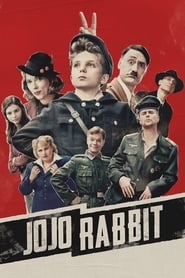
Jojo Rabbit (2019)
Mihai Mălaimare Jr.'s photography gives the film a bright, saturated, almost picture-book look — symmetrical framing, clean geometry, the visual grammar of an orderly childhood world. That order is the trap: the film is asking you to notice how totalitarian ideology presents itself to a child, which is precisely as clarity, belonging, and bright colors. Watch the first cut of the film — archival rally footage laid over a Beatles song — and pay attention to what that juxtaposition is doing before a single scene has played. Then watch how Waititi stages his imaginary Hitler: not as a threat but as a need, an internal voice assembled from posters and radio and playground rumor, performing whatever the boy requires of him. The film's formal question is whether something you have built inside yourself can be dismantled by contact with a real human face.
Watching These Together
What accumulates across these twelve films is a sustained meditation on the same handful of pressures: the weight of history on a child's body, the gap between what institutions tell us and what our eyes report, the strange moral work that storytelling — lying, fabulating, performing, imagining — can accomplish when reality becomes unbearable. Some of these films trust their fabrications completely; others watch them collapse. Some use color and light to argue their case; others use the camera's neutrality as a kind of accusation. Put together, they become something like a conversation about what cinema itself does when it shows us things that didn't happen — and why, in the right hands, that unreality can be the most honest thing in the room. Watch them in any order, but watch them with that question running underneath: who is telling this story, to whom, and what does the telling cost?