Sightlines · a mini film course
The Image Knows First: Twelve Films Where Looking Is the Danger
What connects this dozen isn't a genre — it's a wager. Each of these films bets that the deepest dread doesn't come from what jumps out, but from the gap between what the image knows and what the person inside it can bear to know. Again and again, the camera watches rather than chases. Space becomes a trap. Time is allowed to stretch past comfort. And the act of looking — the detective's, the killer's, ours — turns out to be the most dangerous thing in the room. Watch for how each film makes you a participant in seeing, then makes you feel the weight of it.
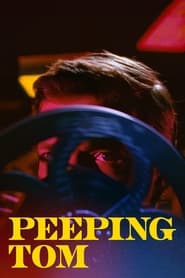
Peeping Tom (1960)
The oldest film here and the skeleton key to the set. Powell tells you almost immediately who the killer is, so the dread comes not from mystery but from distance — the space between what the warm girl downstairs sees in this shy man and what you already know. Notice how Otto Heller's frames are beautiful in ways that feel vaguely inappropriate, and how a camera, a lens, and a mirror become the film's central objects. It's a movie about the violence latent in looking, made by a director willing to accuse his own medium.
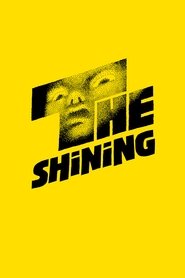
The Shining (1980)
The famous Steadicam — brand new in 1980 — was invented to smooth out shaky footage; Kubrick turned it into a way of thinking. Watch how it glides behind Danny's tricycle a few inches off the floor, and listen to the wheels go loud on hardwood, soft on carpet, loud again, making you brace before every corner. Notice too the one-point-perspective corridors receding to a single vanishing point, and the way the hotel's geography quietly refuses to add up. The Overlook isn't a setting the characters move through — it behaves like a mind they're moving inside.
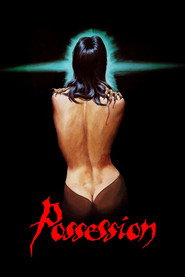
Possession (1981)
Bruno Nuytten's camera behaves like an anxious participant, not an observer — wide-angle and close, circling the actors, distorting apartments into pressurized boxes. Żuławski directed his cast to the edge of collapse, and the film's operatic intensity is a deliberate system, not excess: watch for a scene in a tiled Berlin underpass where a body simply undergoes something, far past what any plot would need. This is a film about the terror of not truly knowing another person, where a marriage's breakdown is staged like a cosmic event.
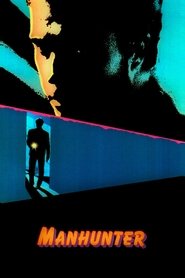
Manhunter (1986)
Mann and cinematographer Dante Spinotti build the film from cold blues, hard horizons, and wide negative space — and from a single dramatic posture: a man trying to stand where a killer stood and see what he saw. Will Graham's method isn't deduction; it's occupation, speaking a murderer's reasoning aloud in the present tense as though renting his eyes. Notice how often the camera is watching a watcher — Graham at a screen, running a murdered family's home movies in the dark. Empathy here is both a gift and a contagion.
Angel Heart (1987)
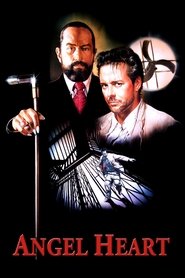
A private-eye picture crossed with occult horror: cold, grey, verminous New York against humid, amber, rotting Louisiana, everything filmed through smoke and dust. Watch the ceiling fans — there's one turning at the top of almost every room, chopping the light into flicker, and the film keeps looking at them even when its detective won't. Notice too the near-invisible flash-cuts seeded into otherwise realistic footage, a trick inherited from The Exorcist. Every door Harry Angel opens seems to make things worse, and that wrongness is the film's engine.
Jacob's Ladder (1990)
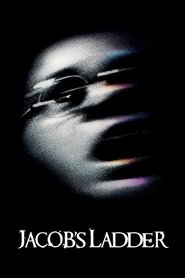
Watch for one image early on: a figure on the subway whose head shakes at a frequency the eye can't resolve — achieved by whipping the actor's head while the camera ran slow, so the wrongness is printed into the photography rather than layered on top. You're looking at something you cannot read, and the failure to read it is the horror. Notice how little Jacob does about any of it: the film hands you conspiracy-thriller machinery, then keeps its hero looking and enduring rather than acting, and the desaturated palette drains the everyday of comfort.
Strange Days (1995)
The opening isn't watched so much as worn: a crime unfolds entirely through someone else's eyes, via a black-market device that records the full sensorium for playback inside your skull. Bigelow built custom rigs to sustain genuinely first-person vision — years before GoPro, VR, or bodycam footage — and the film keeps two distinct ways of looking in tension: the grimy neon noir of "real" Los Angeles versus the borrowed eyes of the clips. It's the set's most literal statement of the shared theme: watching as addiction, witness, and complicity.
Funny Games (1997)
A home-invasion thriller made by the genre's fiercest prosecutor. Haneke's strategy is severe restraint: long takes, a static camera, even undramatic light, and violence kept offscreen while the camera holds on the aftermath — far past the point of comfort, into a duration that feels like it's asking you a question. Watch what the film refuses to show and when it refuses to cut, and notice how your own appetite for release becomes the subject. Nothing here is an accident; every denial is aimed at you.
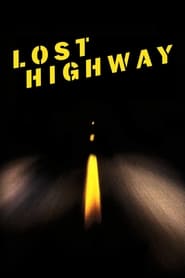
Lost Highway (1997)
Peter Deming photographs a house as engulfing darkness — rooms defined by what can't be seen, people walking into blackness and dematerializing. Lynch takes the full noir kit — femme fatale, gangster, murder, surveillance — and strips out motive, explanation, and detection, letting identity itself go unstable: one actress, brunette then blonde, and a film that refuses the cut that would tell you whether you're seeing two women or one woman dreamed twice. Don't try to solve it on first viewing. Let the present and the imagined blur, and notice how the film never marks which is which.
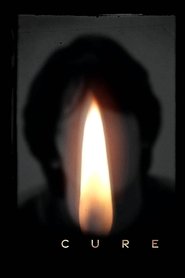
Cure (1997)
Kurosawa answers the flashy serial-killer cycle of the '90s by subtraction: no grand design, no spectacle, a palette of concrete greys and fluorescent sickliness, and a camera that keeps its distance, holding figures small inside wide frames so dread seeps in from the environment. Watch the hypnosis scenes — a flame, a patient voice, an emptied watcher — and notice that they're built from the oldest screen technology there is: a point of light in the dark. The film is quietly doing to you what its mesmerist does to his victims, and it half-confesses as much.
Funny Games (2008)
Haneke's own near shot-for-shot English-language translation, remade in the middle of the American "torture porn" wave it exists to interrogate. The fascination is in the casting: Naomi Watts and Tim Roth arrive trailing everything you expect stars to be granted — survival, rescue, redemption — and the film weaponizes those expectations. Watch it against the 1997 version if you can: same wide neutral compositions, same refusals, but now wearing Hollywood's face, which is precisely the provocation.
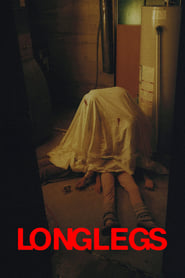
Longlegs (2024)
Watch where they put him. Perkins and cinematographer Andrés Arochi almost never let the killer sit in the middle of the shot — he hangs at the top edge, cut off, slightly out of focus, pressing in from a place the frame refuses to hold, and your eye goes hunting before your mind admits it's afraid. The compositions are wide, symmetrical, drained to institutional grey, with large dead zones you're left to scan anxiously. Dread here is a question of where, exactly, the bad thing is — and the frame keeps declining to answer.
Watched together, these twelve films teach a single lesson from a dozen angles: fear is a formal choice. It lives in where the camera stands, how long a shot holds, what the frame includes and what it exiles to the edges. You'll see the lineages braid — Peeping Tom flowing into Strange Days' rented eyes, Manhunter seeding the profiler films that Cure and Longlegs answer, Haneke arguing with the whole tradition twice. And you'll start to notice, in every one of them, the same quiet transaction: the film knows something, you come to know it too, and the person on screen doesn't yet. That gap — held open, stretched, sometimes turned back on you — is where all of this dread lives. Watch attentively, and you'll never see a static shot the same way again.