Sightlines · a mini film course
The Image Knows First
Every film in this set is built on the same delicious, unnerving gap: the picture on screen knows something the person inside it doesn't. A ceiling fan, a fogged breath, a key laid on a body, two deer moving in perfect unison — the camera keeps placing these things in front of us and lingering, while the characters look away, or look and cannot act. These are films where watching replaces doing: heroes who arrive with all the equipment of the thriller — guns, badges, licenses, expertise — and find that the world has quietly stopped responding to action. What's left is attention. Space becomes a trap, time is allowed to stretch, and dread grows not from what jumps out but from what sits still and refuses to explain itself. Watch them as one long course in the art of the loaded image.
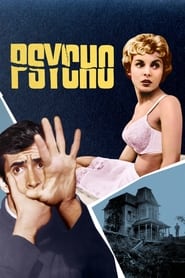
Psycho (1960)
This is the ancestor: a film organized entirely around who looks, at what, and what looking costs. Notice how Hitchcock implicates you — from the first minutes you're placed in the position of the observer, and the film keeps tightening that position until it's uncomfortable. Shot in stripped-down black and white by a television cinematographer, its style is clean and functional, which makes its famous eruption of pure editing — violence assembled from rapid fragments, feet and hands and faces — hit like a power surge. Watch how confidently the film hands you a protagonist, then watch what it does with your trust.
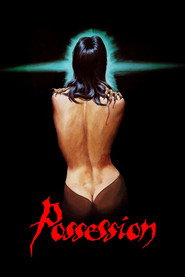
Possession (1981)
Here the camera stops observing and joins the panic: Bruno Nuytten's wide-angle lens gets close, circles the actors, chases sudden movement, and turns ordinary apartments into pressurized boxes. Żuławski directed his performers to the edge of physical collapse, and the result is a marriage-breakdown drama pitched as operatic catastrophe — screaming and laughing inside the same breath. Don't ask what the performances "mean"; watch what the bodies are undergoing. The convulsion is the content.
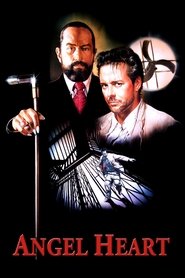
Angel Heart (1987)
A private-eye film photographed through smoke and dust, where highlights bloom and shadows swallow detail — cold, grey, verminous New York against humid, amber, rotting New Orleans. Watch the ceiling fans: there's one turning in almost every room, chopping the light into flicker, and the detective keeps not looking at it while the camera keeps making sure you do. This is Chinatown's noir crossed with occult dread, and its deepest trick is the space between what the image knows and what the man inside it can bear to know.
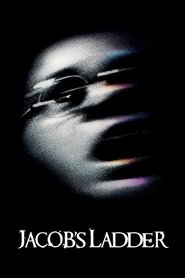
Jacob's Ladder (1990)
Watch for the head. Early on, a figure on a subway car shakes its head at a speed the eye can't resolve — an effect Lyne created in-camera, running the film slow while the actor whipped back and forth, so the wrongness is printed into the photograph itself rather than pasted on top. The palette tells its own story: greenish swamp light for Vietnam, sickly fluorescent whites for civilian New York. A veteran keeps pulling threads and every thread dissolves; the horror is in looking at something you cannot read.
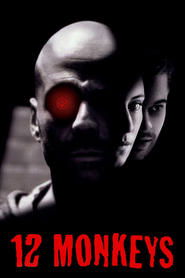
Twelve Monkeys (1995)
Gilliam takes Bruce Willis, an actor carrying all the physical authority of the action hero, and spends the film disabling it — a large, capable man who can see everything and change nothing. Roger Pratt's distorting lenses and low institutional angles make every space press inward, whether it's the desaturated future or a Baltimore psychiatric ward. Above all, watch the recurring fragment of memory — a scrap of an airport in hard morning light — that the film returns to for two hours before letting you finish it.
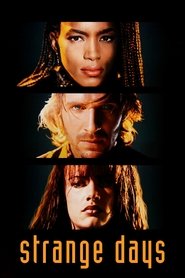
Strange Days (1995)
You don't watch the opening; you wear it — an unbroken first-person recording, someone else's eyes rented out to you before you know whose they are. Bigelow built custom rigs to keep two kinds of looking distinct: the grimy, neon-soaked "real" Los Angeles, and the immersive playback clips that put you inside another body's sensations. It's a film about the craving to relive experience, made years before bodycams and VR — watch how it asks whether witnessing something recorded makes you complicit in it.
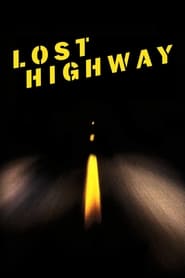
Lost Highway (1997)
Peter Deming photographs a house as a near-abstract space of shadow: characters walk into blackness and simply dematerialize. Hold onto the opening — a voice through an intercom, a message with no visible messenger — because the film's strange, seamless structure is folded inside it. Lynch keeps all the furniture of noir (the femme fatale, the gangster, the surveillance tapes) and removes the explanations, letting identity itself become the mystery. Don't try to solve it; try to feel where the film refuses to draw the line between what's lived and what's dreamed.

The Sixth Sense (1999)
A boy in a warm kitchen exhales, and his breath fogs — nothing else has happened, and you already know something has entered the room. Shyamalan and Tak Fujimoto shoot Philadelphia in chilled blues and grays and then ration the color red like a drug; wherever red appears, the hidden world is showing through. Watch, too, how the film uses long, patient takes and suggestion rather than shock — sound, negative space, the ordinary thing turned a few degrees wrong.
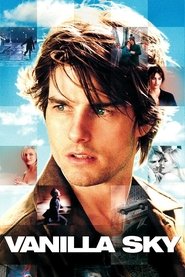
Vanilla Sky (2001)
The film opens with one of the great uncanny images in studio cinema: Times Square, gorgeous and completely empty, before anyone tells you anything is wrong. John Toll's cinematography is lush, saturated, almost too beautiful — and that excess of surface gloss is not decoration but a clue, planted in plain sight. Listen to the soundtrack as narration: Crowe curates his needle-drops as a second layer of authorship. The rule here: the more perfect the image, the less you should trust it.

Mulholland Drive (2001)
Deming shoots the film in two lighting registers — the golden, diffuse glow of Hollywood myth and something harder underneath — and the shift between them is the film's real map. Its centerpiece is a nightclub scene where a voice comes loose from the body producing it, and sound and image stop guaranteeing each other; Lynch shows you, in ninety seconds, that a feeling can be real and manufactured at once. This is Sunset Boulevard's Hollywood-devours-its-dreamers noir rebuilt on dream logic, where cuts follow emotional rhyme rather than cause and effect.
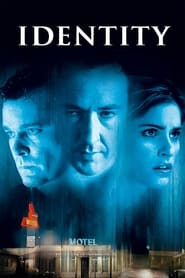
Identity (2003)
Ten strangers, a storm, a Nevada motel — the Agatha Christie countdown engine rebuilt as a rain-soaked thriller. Phedon Papamichael shoots it in sodium-vapor amber and cold blue, rain silvering every surface, and the space feels deliberately stagey and hermetic: identical numbered doors lined up like a multiple-choice question. That artificiality is not a flaw; it's the tell. Watch the numbered keys, and ask yourself what they're really counting.
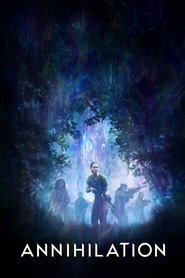
Annihilation (2018)
Rob Hardy renders the Shimmer as a soap-bubble membrane tinting everything inside it — greens pushed toward the toxic, water with an oily refraction — while keeping the camera clean and slightly clinical, so the strangeness reads as observed fact. Watch the scene with the two deer moving in mirrored unison: nobody explains it, nobody can do anything about it, and the looking is the whole event. In the final stretch, the film hands itself over to pure image and sound, score and sound design fused into one throbbing texture — a deliberate echo of 2001's plunge past language.
Seen together, these twelve films teach a single skill: reading the frame instead of following the plot. Each one plants its meaning in things — a fan, a color, a key, a breath, an empty square — and trusts you to notice before its characters do. Their heroes are detectives, soldiers, scientists, cops: people trained to act, delivered into worlds where action has quietly