Sightlines · a mini film course
Don't Trust the Picture: Twelve Films Where the Image Knows More Than You Do
Every film in this set makes you the same quiet promise a magician makes: watch closely, I'm going to show you everything — and then shows you everything in a way you can't yet read. These are detective stories, ghost stories, marriage stories, and one time-travel story, but they share a single deep habit: the camera plants what matters in plain sight and trusts you not to notice. A ceiling fan, a room key, a half-second of the wrong facial expression, a figure on a subway car whose head moves wrong. Watching these together is a course in second sight — learning to feel the difference between what a shot shows and what it's really telling you.
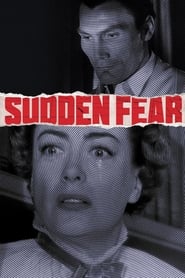
Sudden Fear (1952)
Start here, at the classical root. Charles Lang's black-and-white photography splits the film in two: a warm, open San Francisco courtship that slowly darkens into shadow and cramped interiors, so the lighting itself tracks a marriage curdling. Above all, watch Joan Crawford's face in silence — the film builds whole sequences around a woman alone in a room, listening, and asks her features to travel enormous distances without a word. Notice, too, that this is a story about an actor and a playwright: everyone here is performing, and the suspense is about telling the performance from the person.

Chinatown (1974)
The great inversion: a noir shot in blinding California daylight, where crimes happen at high noon and sunshine hides more than shadow ever did. Jack Nicholson's detective does everything a detective should — tails cars, takes photographs, follows the water — and the film's quiet dread comes from watching competence itself stop working. Keep an eye on that famous bandage across his nose: a detective who literally can't follow his own nose, the joke and the tragedy in one image.
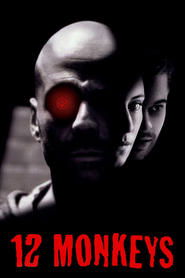
Twelve Monkeys (1995)
Terry Gilliam takes Bruce Willis — an actor who arrives carrying pure action-hero authority — and spends the whole film gently disabling it: a big, capable man who can see everything and change almost nothing. The film keeps circling back to one fragment of childhood memory, an airport in hard morning light, refusing to let you (or him) finish it. Watch how the distorting lenses, low angles, and cold blues make institutions feel like weather — something you endure, not something you fight.
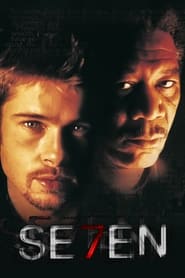
Se7en (1995)
A detective story that wants you to do homework instead of watch a chase: each crime arrives with a caption, and the real procedure is reading — library books, index cards, Dante under Bach. Darius Khondji lights only from sources you can see in the frame — a bare bulb, a flashlight, rain-smeared streetlight — so darkness feels earned, physical, everywhere. Notice how the film makes you the third detective, assembling connections its characters can't yet see.
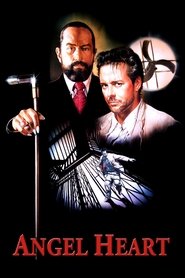
Angel Heart (1987)
A hardboiled private-eye picture grafted onto occult horror, filmed perpetually through smoke and dust — cold grey New York giving way to humid, amber, rotting Louisiana. There's a slow ceiling fan in almost every room, chopping the light into flicker; the detective never looks at it, and you should. This is a film about the gap between what the image quietly knows and what the man inside it can bear to know — watch for near-invisible flashes cut into otherwise ordinary scenes, seeding unease you can't quite source.
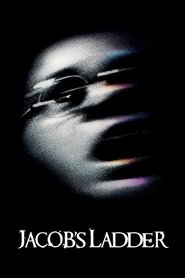
Jacob's Ladder (1990)
The scariest effect here was made in-camera: an actor moving too fast while the film ran slow, so the wrongness is printed into the photography itself, not painted on top. Adrian Lyne drains the warmth from ordinary New York — hospitals, subways, fluorescent whites — until the everyday feels like a place you're not supposed to be. Notice that the hero mostly looks rather than acts; the horror is being reduced to a witness of things you cannot read.
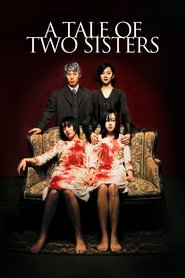
A Tale of Two Sisters (2003)
You'll remember the wallpaper before the plot: green and floral, warm woods, deep ambers, a house lit like a children's book and framed with a painter's symmetry. Kim Jee-woon hides his horror not in the dark but in the well-lit corner of a lovely room — the prettiness is the trap. Watch how the film refuses to sort its images for you: what's happening now, what's remembered, what's feared all wear the same beautiful surface.
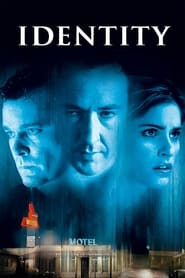
Identity (2003)
Ten strangers, one storm-sealed Nevada motel, and a countdown ticking through the décor — watch the numbered room keys and notice what you think they're counting. Phedon Papamichael shoots it in sodium-vapor amber and cold rain-silvered blue, the identical doors lined up like a multiple-choice question. It's an Agatha Christie closed-circle mystery wearing a slasher's clothes, and the artificiality of the space — stagey, hermetic, too neat — is not a flaw but a clue.
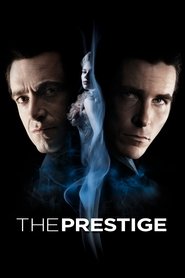
The Prestige (2006)
Nolan builds the whole film as two rival magicians reading each other's diaries — dueling accounts with no referee — so every scene you watch may mean something different once you learn who's narrating it. Wally Pfister's wide anamorphic frames are composed like magic acts: they contain information you are trained not to notice. Watch how the film's structure mimics a trick's three parts, and how the cool, sooty Victorian palette keeps splendor and obsession in the same shot.

Shutter Island (2010)
Scorsese's loving anthology of old studio thrillers — noir paranoia, gothic storm, asylum dread — shot with Robert Richardson's signature hard top-light haloing every face. Watch the small things that don't behave: props in the interview scenes, weather that appears where it shouldn't, edits that admit tiny mismatches. The film hides its secrets inside its apparent excesses, so what looks like style is actually text — this is a movie that asks you to read images, not just watch them.
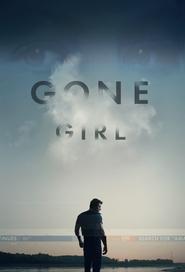
Gone Girl (2014)
It opens on the problem of a face photographed a half-second wrong: a man does nothing, and the image convicts him anyway. Fincher and Jeff Cronenweth give the suburban Midwest a sickly, beautiful gloss — desaturated greens, institutional whites — and a camera so smooth and deliberate it feels like surveillance. Watch how two narrations braid against each other, and how the film keeps asking what an image can be made to mean once cameras, cable news, and spouses get hold of it.
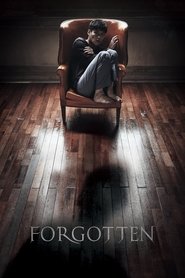
Forgotten (2017)
The most disciplined camera in the set: compositions built from doorways, window panes, and stairwells, turning a family home into a maze of thresholds the hero can't safely read. The film opens by telling you its protagonist's perception can't be trusted — then makes that doubt the engine rather than the obstacle, so you never get stable footing. Hold onto its opening image, a string of numbers remembered with perfect clarity but attached to nothing: a fact without a world to confirm it.
Watched together, these twelve films train a specific muscle: the ability to notice when a movie is being too composed, too pretty, too procedural, too calm — because in every one of them, the polished surface is a screen over something else. The classical thrillers here (Sudden Fear, Chinatown) show you the contract between camera and viewer at full strength; the rest show you every elegant way it can be bent, stalled, or torn up from the inside. By the last of them, you'll find yourself watching ceiling fans, wallpaper, room keys, and half-second smirks the way these filmmakers intended — as clocks, confessions, and traps. That's the reward: not knowing the twists, but earning them.