Sightlines · a mini film course
Watching Instead of Knowing: Twelve Films Where the Image Outpaces Its Hero
Here's the thread that stitches this watchlist together: in every one of these films, the camera knows more than the person it's following. Sometimes the hero can't act — the world has grown too large, too strange, or too rigged for action to matter. Sometimes he can't see — the truth is right there in the frame, flickering above his head or standing behind him in a mirror, and the film is patient enough to let us notice what he won't. And sometimes he lies to us so charmingly that we don't want the truth anyway. These are movies about detectives who investigate themselves, salesmen whose pitch stops landing, narrators we shouldn't trust, and rooms that remember more than the people in them. The pleasure of this set is learning to watch the frame, not just the plot.
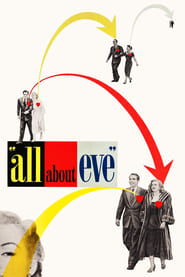
All About Eve (1950)
Start here, with the oldest trick in the set: a story told after it's over, by narrators who each hold only a piece of it. Mankiewicz builds the film out of flashbacks that are partial and self-serving — nobody's version is the whole version. Watch Eve Harrington's face at the stage door early on, rain-damp and rapt with devotion, and hold onto this question: in a film set entirely in the theatre, made entirely of performances, how would you ever tell devotion from its forgery? The dialogue is famously sharp, but the real game is in what faces do while other people are talking.
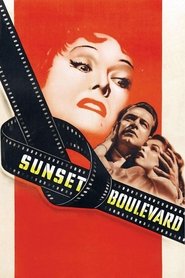
Sunset Boulevard (1950)
A dead man narrates this film — calmly, past-tense, like a coroner reading his own report — so the ending sits at the beginning and time circles rather than advances. Watch the Desmond mansion: low angles, deep shadows, mirrors and portraits everywhere, a house built to keep the past and present in the same room. The key scene is a private screening where Norma Desmond watches her own young face projected onto a sheet — not remembering the past but sitting inside it, thrown into the room by a beam of light. Wilder makes the whole architecture do the psychology.
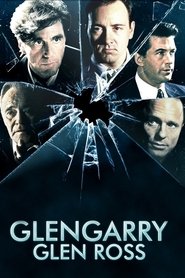
Glengarry Glen Ross (1992)
A chamber piece: one office, one rainy night, and a group of salesmen ranked on a board with the bottom two to be fired. Mamet's dialogue is verbal blood-sport, but watch the bodies underneath it — especially Jack Lemmon working a phone, running patter he's run ten thousand times while the voice on the other end keeps saying no. Watch his eyes go hunting for a door that isn't there. These are men built entirely to close, to act, to win — and the film is a study of what happens when the action stops landing. Anchía's rain-streaked ambers and cold fluorescents make the confinement physical.
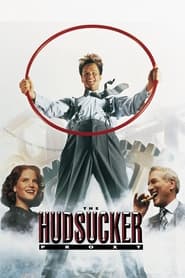
The Hudsucker Proxy (1994)
The Coens' corporate-Deco fairy tale, shot by Roger Deakins with a glossy, metallic sheen — sweeping cranes, vast boardrooms out of Metropolis, miniatures and forced perspective instead of a single real street. Watch the great clock in the Hudsucker tower: in an ordinary movie a clock serves the plot, telling you how long the hero has. Here the mechanism governs the story — the year turns at midnight, everything is timed to its gears — and the man who keeps the clock is also the man narrating the fable. Time isn't the setting; it's the author. Notice how everything circles: hoops, gears, the whole shape of the tale.
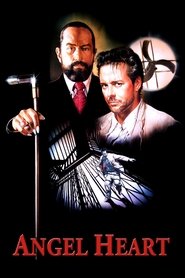
Angel Heart (1987)
A private eye is hired to find a missing man — the sturdiest plot in movies — and Parker lets you watch the machinery quietly break. Seresin films everything through smoke and dust: New York cold, grey, and verminous; New Orleans humid, amber, and rotting. Watch the ceiling fans — there's one turning at the top of almost every room, chopping the light into flicker, and Harry Angel never looks at them. You will. Watch too for near-invisible flash-cuts seeded into naturalistic footage (a trick inherited from The Exorcist): the film is planting things in your eye before your mind can file them.
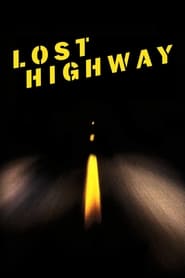
Lost Highway (1997)
Lynch and cinematographer Peter Deming shoot the Madison house as near-abstract darkness — characters walk into blackness and dematerialize. Most films keep the real and the imagined cleanly separated: here's the event, here's the flashback, here's the dream. Lynch refuses the cut that would sort them. Watch the opening moments at the front door and the intercom very carefully — the whole film is folded inside them — and watch Patricia Arquette, brunette then blonde, and resist the urge to decide too quickly whether you're seeing two women or one woman dreamed twice.
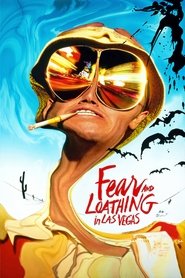
Fear and Loathing in Las Vegas (1998)
Gilliam's crucial decision arrives in the first minutes, on the highway to Vegas: when the hallucinations come, he does not cut away to them. They live in the same shot as the road. Pecorini shoots almost everything on lenses so wide (often 14mm, inches from faces) that foregrounds swell and horizons bend — the real and the imagined warp together on one continuous plane. There is no clean window onto this world, only the bent eye. Keep watching the corners of the frame: the deep focus never lets the background resolve into safety, and both the comedy and the dread happen at the edges.
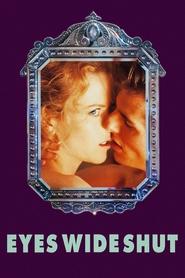
Eyes Wide Shut (1999)
Early on, a woman undresses before a bedroom mirror and her husband watches them both in the glass — and Kubrick holds the shot just long enough that you stop trusting it. That's the method of the whole film: after a confessed fantasy detonates a marriage's calm, a doctor wanders a dreamlike Manhattan (rebuilt entirely on British sets) where every encounter rhymes with the fantasy that sent him out the door. Watch the gliding camera, the centered, symmetrical frames — a grammar borrowed from Last Year at Marienbad — and notice how the film never quite tells you what's happening and what's dreamed. The refusal is the point.
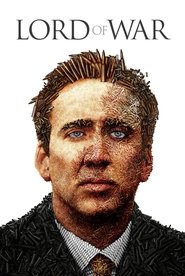
Lord of War (2005)
The film opens with one of the boldest shots of its decade: the camera rides a single bullet from the stamping press where it's born, across borders, into a magazine, into a chamber — a two-minute journey witnessed by no human eye. The merchandise sees; nobody watches it seeing. Then the narrator opens his mouth, and you meet the film's real engine: an arms dealer telling his own story in the breezy patter of a man who could sell you the chair you're sitting in. Watch how Mokri's glossy, saturated widescreen makes the trade seductive — the film wants you charmed, and then wants you to notice you've been charmed.
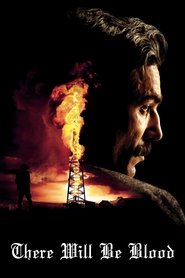
There Will Be Blood (2007)
Anderson opens with roughly fifteen minutes of nearly wordless cinema: a man alone in a landscape, prospecting by hand, breaking his leg, hauling himself across rock. No dialogue, no conventional score. You learn Daniel Plainview the way you learn an animal — by watching what it does to survive. Watch how Elswit stages figures in depth across the widescreen frame, power differentials made visible without cutting, and how the film keeps showing you two worlds in the same shot: the social surface of leases and handshakes, and something older and hungrier underneath it — appetite wearing the skin of business.
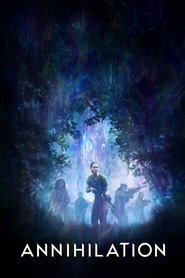
Annihilation (2018)
Early in the expedition, two deer step from the brush moving in perfect mirrored unison, one shadowing the other like a body printed twice. Nobody explains it. Nobody can do anything with it. The women just look — and that stalled, helpless attention is the film's method. Garland takes a soldier-scientist, exactly the figure a thriller would arm with competence, and puts her inside a zone (the structure borrowed from Stalker) where there's nothing adequate to do, only things to see and hear. Watch Hardy's toxic greens and soap-bubble refractions, and be ready for a finale that surrenders story to pure image and sound, in the lineage of 2001.
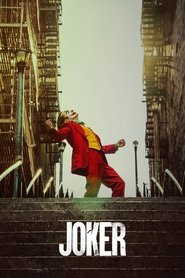
Joker (2019)
Watch the spaces. Sher's cinematography — anamorphic widescreen, deep-shadowed 35mm in the tradition of Taxi Driver — begins by compressing Arthur Fleck into low ceilings, tight apartments, institutional rooms, and gradually opens the frame as he transforms. For a long stretch, Arthur can only watch the world: absorb the beating, endure the social worker who isn't listening, replay a talk show he'll never be on. The film makes you sit inside that helplessness. And watch the restroom dance after the subway: Guðnadóttir's cello was recorded before shooting, handed to Phoenix to move against — the body moves first and the meaning trails after. That gap is the whole film in one held shot.
Watch these together and you'll start noticing a shared discipline: the camera that watches rather than chases. A ceiling fan, a mirror, a clock, a pair of deer — these films trust the image to carry knowledge the characters can't hold, and they trust you to catch it. You'll see how a narrator's charm becomes a trap, how a room's shadows do the work of exposition, how time can be allowed to stretch, circle, or stop cold. None of these movies hurries you toward an answer. They reward the viewer who slows down to the film's own speed — who looks at the whole frame, listens to what the sound is doing before the story explains it, and learns, shot by shot, to see what the hero can't bear to.