Sightlines · a mini film course
The Camera Knows First
There is a moment in each of these films when you realize the image is ahead of the people inside it. A ceiling fan turns and turns; a figure hangs at the top edge of the frame; a mirror lags half a beat behind the body that cast it. These eleven films — noirs, hauntings, home invasions, expeditions into the unknowable — all share one deep conviction: horror doesn't live in what jumps out at you. It lives in the gap between what the film shows and what its characters can bear to see. Detectives investigate themselves. Homes become traps. The camera watches rather than chases, and time is allowed to stretch until looking itself becomes the event. Come for the dread; stay for the craft.
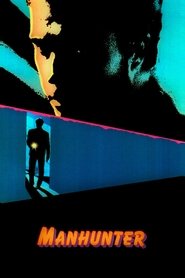
Manhunter (1986)
Michael Mann's foundational profiler film makes perception the whole drama: an FBI investigator whose gift is standing where a killer stood and renting his eyes. Watch how Dante Spinotti's cold palette — blues, teals, clinical greens — and hard, symmetrical compositions turn every space into something designed, almost too designed. Notice how often the camera is watching a watcher: a man in a dark room running someone else's home movies, speaking to the screen. The film asks whether empathy is a gift or a contagion, and its images keep the question open.
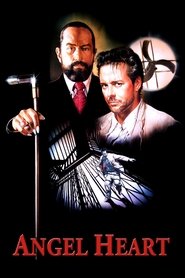
Angel Heart (1987)
A private-eye film crossed with occult horror, shot through perpetual smoke and dust — cold, verminous New York giving way to humid, amber, rotting New Orleans. Alan Parker seeds the film with near-invisible flashes and recurring objects (keep an eye on the ceiling fans — they're never just set dressing). The detective does everything a gumshoe should, and watch what his doing actually accomplishes. This is a film where the investigation is the trap, and the images know it before anyone else does.
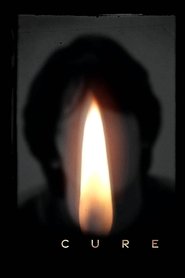
Cure (1997)
Kiyoshi Kurosawa answers the flashy serial-killer cycle by subtraction: no grand design, no spectacle, just a patient voice, a flicked lighter, and a question that sounds like nothing at all. The defining choice is distance — wide, held framings in washed-out grays that keep figures inside their environments, letting dread accumulate in the room rather than the cut. Notice how the film's hypnosis is built from the oldest screen tools there are: a point of light in the dark, a watcher going slack. The film is quietly doing to you what its mesmerist does to everyone else.
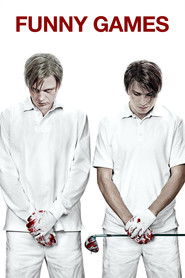
Funny Games (1997)
Haneke's home-invasion film is built against everything the genre trains you to want. Watch the restraint: long static takes, flat even light, violence kept offscreen while the camera holds — punishingly long — on rooms and aftermath. Notice when you find yourself waiting for the cut that will release you, and notice that Haneke refuses it. The film's real subject is you, watching.
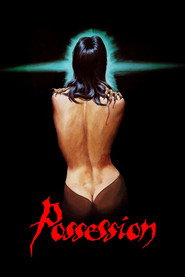
Possession (1981)
Żuławski's camera behaves like an anxious participant — wide-angle, close, circling, refusing the calm grammar of two people politely trading shots. A marriage's collapse is staged as full-body catastrophe: he directed his actors to the edge of exhaustion, and the famous subway-corridor scene shows a body simply undergoing something no story could discharge. Watch how domestic interiors become pressurized boxes, and how the performances pitch operatic intensity as a deliberate system, not excess. Cold War Berlin, filmed by an exile, becomes a divided world for a divided self.
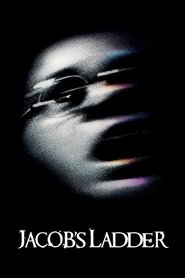
Jacob's Ladder (1990)
A Vietnam veteran rides the subway home and sees something wrong — an effect Lyne printed directly into the photography (an actor whipping his head while the camera ran slow), so the wrongness lives in the image itself, not on top of it. Watch the drained, sickly palette of the civilian scenes against the humid green of the war sequences, and notice how often the protagonist can only look — the thriller machinery keeps promising a hero who acts, and the world keeps morphing faster than any action could catch. Its structural ancestors run from Bierce to Resnais; its dread is in the failure to read what you're seeing.
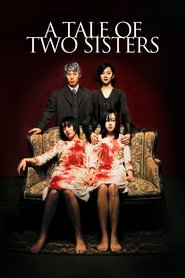
A Tale of Two Sisters (2003)
Kim Jee-woon hides his horror not in the dark but in the well-lit corner of a lovely room. Lee Mo-gae shoots the house with a painter's care — warm woods, floral wallpapers, deep ambers, doorway framed within doorway — and the prettiness is the trap. Watch how the film refuses to sort its images for you: what is happening now, what is memory, what is grief refusing to let go. Descended from The Innocents and Repulsion, it treats the domestic interior as a surface stretched over something that already happened.
Funny Games (2008)
Haneke's near shot-for-shot English remake, made in the middle of the torture-porn wave it was built to indict. Here the casting is a technique: recognizable stars arrive trailing every expectation the genre has taught you — the survivor, the protector — and the film loads those expectations like ammunition. Watch Darius Khondji's deliberately neutral compositions, an environment that refuses to encode danger in its geometry. And watch for the moment the film breaks its own rules; it's the smallest gesture in the movie, and it explains everything.

Antichrist (2009)
Von Trier opens with a lustrous black-and-white slow-motion overture — consciously beautiful — that the rest of the film will corrode. Once the grieving couple reaches their forest retreat, listen: acorns fall on the roof all night, a forest tirelessly making more of itself, and the sound tells you things the husband's careful therapeutic language can't reach. Watch the film peel back an ordinary place — a cabin, a clearing — until something older and hungrier shows through. Dedicated to Tarkovsky, it stages reason's confrontation with nature as a battle reason was never equipped to win.

Black Swan (2010)
Watch the back of her head. For most of the film the camera rides inches behind the ballerina's shoulder — close enough that intimacy curdles into surveillance, never quite inside her mind, never safely outside it. Then watch the mirrors, which a ballet studio supplies endlessly: reflections that multiply her, fragment her, lag a half-beat behind. Aronofsky pulls European art-film ancestors (The Red Shoes, Repulsion, Persona) into a backstage thriller about perfectionism as a body under siege.
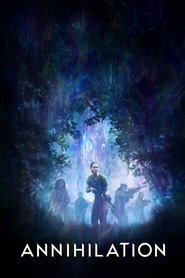
Annihilation (2018)
Two deer step out of the brush moving in perfect mirrored unison, and nobody explains it — the looking is the whole event. Garland builds his forbidden zone from Tarkovsky's template (Stalker's rule-governed interior, Solaris's alien-as-mirror), rendering it as a soap-bubble membrane that tints everything inside: greens pushed toward the toxic, water given an oily refraction. Watch how the film keeps handing its competent expedition situations no competence can answer, and how the finale surrenders words to pure image and sound, the score fused into one throbbing texture.
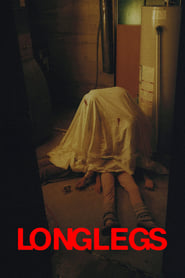
Longlegs (2024)
Watch where they put him. The killer almost never sits in the middle of the shot — he hangs at the frame's top edge, cut off, slightly soft, and your eye goes hunting before your mind admits it's afraid. Andrés Arochi's compositions are wide, symmetrical, drained to institutional grey, with vast dead zones you're left to scan. Descended from The Silence of the Lambs and Zodiac, the film relocates dread from what the bad thing is to where, exactly, it might be.
Why watch these together? Because they teach each other. Mann and Kurosawa show you two opposite ways to film an investigator dissolving into what he investigates; the two Funny Games let you watch the same experiment run twice, a decade apart, on two audiences. Parker, Lyne, and Kim all build films around images that know more than the people inside them — watch one and you'll start catching the others' tells. Żuławski and von Trier push the body past what story requires; Garland and Perkins empty the frame until your own scanning eye becomes the source of dread. By the end of this set, you'll have retrained your attention: away from what happens next and toward how the image is working on you — which, these films quietly insist, was always where the horror lived.