Sightlines · a mini film course
The Mind Is a Haunted House: Twelve Films That Can't Be Trusted
Every film in this set makes you a promise it intends to break — and that's the pleasure. These are pictures built on a gap: between what the camera shows and what the person inside the frame can bear to see, between what an image is and what it can be made to mean. Some of them are detective stories where the investigation curdles; some are dreams too beautiful to trust; some are elegant machines that only reveal their true shape on a second viewing. What connects them is a shared conviction that the image itself can lie, withhold, or know more than its characters do. Watch these films the way you'd read a letter from someone you're not sure you believe: attend to the surfaces, the repetitions, the details that seem like mere décor. Nothing here is only décor.
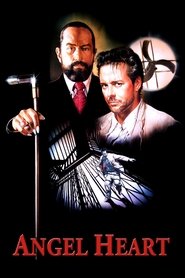
Angel Heart (1987)
Watch the ceiling fans — there's one turning at the top of almost every room, chopping the light into flicker, and the film keeps looking at it even when its detective won't. Michael Seresin shoots the whole picture through smoke and dust: New York cold, grey, and verminous; New Orleans humid, amber, and rotting. It plays the hardboiled private-eye game with total conviction while quietly borrowing the near-invisible flash-cuts of The Exorcist — faces, blood, descending shapes seeded into naturalistic footage. Notice how the investigation keeps producing exactly what it claims to be uncovering.
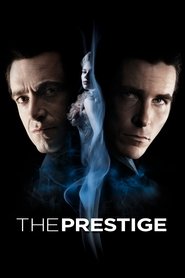
The Prestige (2006)
Wally Pfister's anamorphic widescreen is doing sleight of hand: the frames are wide enough to contain information you're being trained not to notice. The structure is two rival magicians reading each other's diaries — each account distorting the other, with no master version to settle them — so scenes you've already watched keep changing meaning as the readers' knowledge changes. This is a film that treats its audience the way a magician treats a volunteer: with courtesy, and with intent. Watch where you're being invited to look, and ask what the invitation is covering.
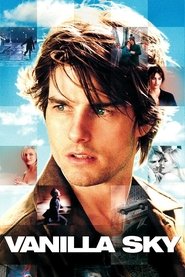
Vanilla Sky (2001)
Early on, a man drives into Times Square and finds it emptied of every other human being — gorgeous, silent, wrong — before the film has told you anything is amiss. That's the method: John Toll's lush, high-gloss photography (the painterly eye behind The Thin Red Line) makes the world of wealth and beauty so seductive that its very beauty becomes a clue. Listen, too, to Crowe's soundtrack, which works as a second narrator rather than accompaniment. When an image feels too perfect, trust the feeling.
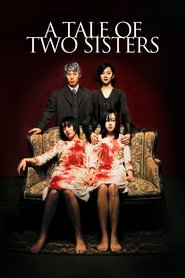
A Tale of Two Sisters (2003)
You'll remember the wallpaper before you remember the plot. Lee Mo-gae shoots this Korean gothic in saturated greens, reds, and deep ambers — warm woods, floral fabrics, symmetry framed through doorway after doorway — and the prettiness is the trap. Kim Jee-woon hides his horror not in the dark but in the well-lit corner of a lovely room, following the tradition of The Innocents and The Haunting, where the house itself seems to know things. Watch how the domestic surface stays composed, and what that composure is stretched over.

Shutter Island (2010)
Watch the hands. A glass of water that behaves impossibly, details that shift between shots — on a first pass you'll blink and move on, because the case has a logic and the case is what matters. Scorsese builds the film as a loving anthology of older forms — rain-slicked noir, gothic asylum dread, the studio-era B-picture — with Robert Richardson's hard top-light haloing faces like interrogation lamps. Thelma Schoonmaker's editing keeps the measured tread of a procedural, then begins to admit small ruptures. The apparent excesses are not excesses.
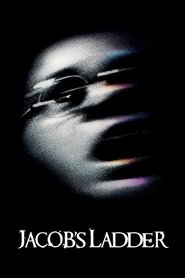
Jacob's Ladder (1990)
There's a figure on a subway whose head shakes at a frequency the eye can't resolve — Adrian Lyne achieved it in-camera, with slow film speed, so the wrongness is printed into the photograph itself rather than layered on top. Notice how little the protagonist does: he looks, he endures, and the failure to act is the horror. The palette splits registers — greenish swamp humidity for Vietnam, sickly fluorescent whites for civilian New York — and the film cuts between them without warning or explanation. You are meant to feel unmoored. Stay unmoored.
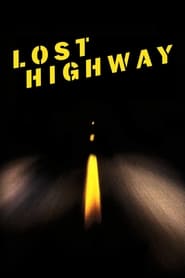
Lost Highway (1997)
Peter Deming photographs the Madison house as engulfing darkness — rooms defined by what cannot be seen, characters walking into blackness and dematerializing. Lynch strips the noir engine of motive, explanation, and detection, keeping only the dread. Don't try to sort the film into "what's real" and "what's imagined"; it deliberately refuses the cut that would tell you, in the tradition of Persona and Last Year at Marienbad. Watch instead for doublings — faces, voices, spaces that seem to arrive before themselves.
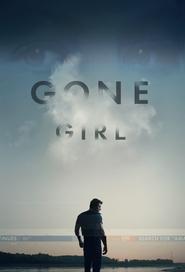
Gone Girl (2014)
Watch the smirk: a man photographed a half-second early, his face caught mid-arrangement, and the frame convicts him on cable news by morning. Fincher's whole film lives in that gap between what an image shows and what it can be made to mean. Jeff Cronenweth's camera is locked, gliding, sickly-beautiful — desaturated greens and sodium ambers that make the suburban Midwest feel faintly toxic — and the film braids two accounts of one marriage, both presented with equal conviction. Notice which narrator you believe, and when, and why.
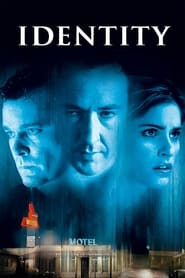
Identity (2003)
Count the keys. Every time a body falls at the rain-soaked Nevada motel, a numbered room key turns up — a countdown borrowed openly from Agatha Christie's closed-circle puzzle, crossbred with the slasher's stalk-and-dispatch grammar. Phedon Papamichael shoots the motel in sodium amber and cold blue, rain silvering every surface, identical doors lined up like a multiple-choice question. The staginess is deliberate. Ask yourself, as the count drops, what the keys are really counting.
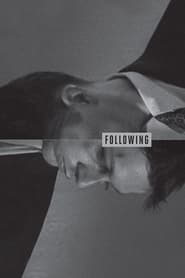
Following (1999)
Nolan's first feature: 16mm black-and-white, shot handheld on weekends for a few thousand pounds, with the director as his own cinematographer. The camera shadows a man who shadows strangers through real London crowds, holding the lens at the follower's own furtive distance — so we're never innocent of the following, because the film makes us do it too. The story arrives out of sequence, three strands braided together, with the protagonist's grooming and injuries serving as your only clock. Read the faces. They're the timeline.
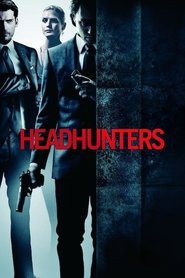
Headhunters (2011)
After all that dread, a thriller that runs like a beautiful machine. Nordic Noir's cool light and restrained surfaces house a plot built on the old Hitchcock template — The 39 Steps, North by Northwest — where innocuous first-act details return as lethal mechanisms, and an imperfect man must improvise his survival through escalating traps. Watch how the aspirational gleam of the Oslo scenes (the oversized house, the too-neat breakfast table) sets up everything that follows. The camera does not flinch at what it costs him. Neither should you.
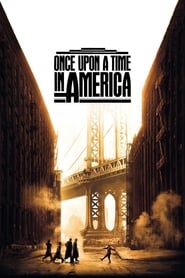
Once Upon a Time in America (1984)
Start with a smile: a man in a 1933 opium den, grinning at the ceiling with no cause we can point to, held a breath too long. Leone's four-hour gangster elegy folds back toward that image like smoke toward a draft. Tonino Delli Colli lights each era differently — honeyed amber for childhood and Prohibition, colder tones for age — and Morricone's score was written before filming, so the great dilated setpieces are staged to the music, not scored after. De Niro plays the lead as a study in passivity: a man who mostly looks, and remembers. Let the film's time stretch. That stretch is the subject.
Watched together, these twelve films train a particular muscle: the habit of doubting the frame while loving it. You'll start noticing how a ceiling fan, a room key, a wallpaper pattern, or a half-second smirk can carry the whole weight of a story — how directors from Oslo to Seoul to Cinecittà arrived at the same discovery, that the most unsettling thing a film can do is show you everything and let you fail to see it. Each picture here rewards a second viewing, but the real reward is what they do to your first viewings of everything after. Once you've learned that an image can know more than the person inside it, you never watch quite the same way again.