Sightlines · a mini film course
The Age of the Watcher: Twelve Films Where Seeing Outruns Doing
There's a certain kind of movie hero we all know: he sees a problem, he acts, the world bends. The twelve films on your list quietly refuse that bargain. Their protagonists are detectives, snipers, magicians, priests, lawyers, killers — people whose entire identity is competence — and yet each film, in its own way, disconnects the wire between seeing and doing. What's left is watching: a camera that observes rather than chases, time that's allowed to stretch, images that ask to be read rather than acted on. Almost all of them drain the color from the world — cold blues, ash grays, overcast light — as if to say the old heroic warmth has left the building. Watch them together and you'll start to feel the shared pulse: the drama isn't in what people do, but in what they see and cannot change — or in versions of the truth that refuse to line up.
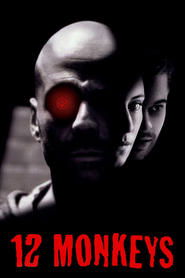
Twelve Monkeys (1995)
Terry Gilliam takes Bruce Willis — arriving with all the physical authority of Die Hard — and spends the film carefully disabling it: his hero is sent through time not to fix anything but merely to gather information. Watch how cinematographer Roger Pratt (returning from Brazil) uses distorting wide lenses, low institutional angles, and a cold, crowded, desaturated future to make the world press inward on a man who perceives everything and can act on almost nothing. Notice, too, the single scrap of memory the film keeps circling back to — the whole looping structure is a machine built around one image.
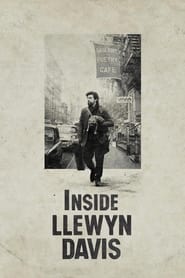
Inside Llewyn Davis (2013)
The Coens' portrait of a gifted Greenwich Village folk singer is a road movie and a failure story that belongs fully to neither tradition — it withholds the catharsis those genres promise. Watch where cinematographer Bruno Delbonnel puts Llewyn in the frame: at the edges, caught between walls and doorways, spatially sidelined in his own film. And watch the ginger cat — a comic gag on first glance, but quietly the film's whole method: the one creature that simply persists, and the thing Llewyn keeps failing to hold onto.

Dancer in the Dark (2000)
Von Trier's demolition-job musical lives entirely in a switch: jittery, handheld, washed-out reality on one side, and on the other, moments when factory noise finds a rhythm and the gray floor becomes a stage. Watch how the great Robby Müller — working far from his usual lyricism — makes ugliness deliberate, and how the musical numbers borrow Busby Berkeley's trick of turning industrial labor into pattern. Deneuve's presence is no accident: von Trier summons your memory of the classic musical precisely to test it against an indifferent world.
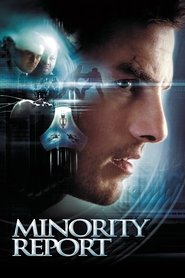
Minority Report (2002)
The film's truest image is a strange one for a thriller: a man before a wall of glass, sorting translucent fragments of a crime that hasn't happened — he can do everything to the image except act on it. Watch how Janusz Kamiński's overexposed, silver-drained photography turns a Spielberg blockbuster into cold future-noir, descended from Blade Runner through their shared Philip K. Dick lineage. Detection here becomes reading: scrubbing through visions that arrive out of order, refusing cause-and-effect, asking to be deciphered.
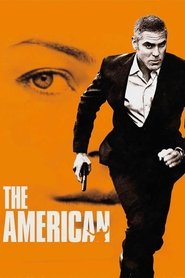
The American (2010)
Stop waiting for the chase; there isn't going to be one in the sense the trailer promised. Anton Corbijn — a photographer by training — films Clooney small within converging medieval stone streets, so the beautiful Italian town becomes a slow-tightening vise of sightlines. In the tradition of Melville's near-wordless professional killers, character is built entirely from gesture and routine: exercises, coffee, a piece of steel patiently filed. Stillness is the dramatic event — the film even screens Once Upon a Time in the West to tell you so.
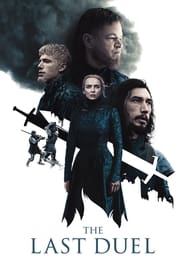
The Last Duel (2021)
Ridley Scott tells one story three times — a husband's version, a rival's, a wife's — each opening with a title card claiming truth, none granted an outside vantage to settle the matter. Inheriting Rashomon's grammar, cinematographer Dariusz Wolski keeps the palette and light constant and changes almost nothing but stance and placement: watch where Marguerite stands in the frame in each chapter. The placement turns out to be the entire argument — about whose testimony institutions choose to believe.
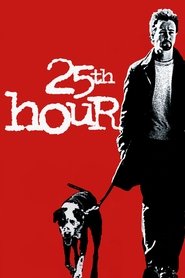
25th Hour (2002)
Watch how Monty moves through New York in his final free hours: Spike Lee mounts actor and camera on the same rig — his signature "double dolly" — so Norton glides, weightless, while the city slides past like a current he's no longer part of. The world moves; the man holds still, because everything decisive has already happened before the first frame. This is also arguably the first major fiction film to absorb 9/11 not as plot but as atmosphere — Rodrigo Prieto's bruised-blue city grieves alongside its hero.
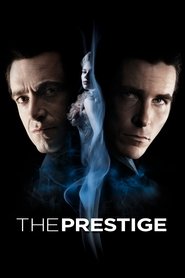
The Prestige (2006)
Two magicians, two diaries, each man reading the other's — and every time a reader's knowledge shifts, the meaning of a scene you already watched shifts with it. Nolan doesn't correct lies with truths; he offers competing accounts and refuses to rank them. Watch how Wally Pfister's anamorphic widescreen frames work like a magic act themselves: wide compositions containing information you're trained not to notice.
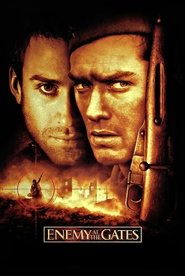
Enemy at the Gates (2001)
Two snipers lie motionless in the rubble of Stalingrad, each waiting for the other's first betraying movement — whoever moves first, dies. The film takes the patient, powerless watcher and puts a rifle in his hands, so that waiting becomes the engine of a war picture. Watch the opening river crossing, shot with embedded handheld chaos in the mode of Saving Private Ryan — and then watch how completely the film slows down afterward, narrowing to an eye at a lens.
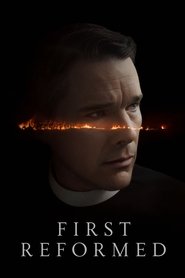
First Reformed (2018)
Before it shows you a single act, this film teaches you a posture: sit still, look, endure. Alexander Dynan's camera is locked into frontal, almost liturgical symmetry, and movement is rationed so severely that when the camera finally moves, it lands like an event. Schrader is working the lineage of Bresson's Diary of a Country Priest and Bergman's Winter Light — a pastor's journal, a bare room, a crisis of faith — and the film's tension lives in the narrow distance between despair and grace.
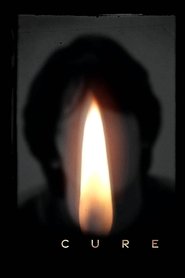
Cure (1997)
Kiyoshi Kurosawa answers the glossy 1990s serial-killer thriller by subtraction: no grand design, no charismatic mastermind, just a slow-voiced drifter, a cigarette lighter, and a question — who are you? — that dissolves people from the inside. Watch the distance: wide, held framings that keep figures embedded in gray, drained environments rather than cutting into close-up, letting dread accumulate in the room itself. Notice how the film's hypnosis is built from cinema's own oldest tools — a point of light in the dark, a patient voice, a watcher — so that the film half-confesses it's doing the same thing to you.
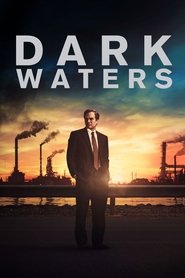
Dark Waters (2019)
The most radical thing here is a man sitting on the floor of a windowless room, reading file boxes for months — heroism as paperwork, in the tradition of All the President's Men. Todd Haynes and cinematographer Edward Lachman, who usually luxuriate in saturated color, choose deliberate drabness: overcast exteriors, airless interiors, lone figures dwarfed by looming corporate architecture. Watch how the film honors persistence over catharsis — the drama of a situation that resists moving, and a conscience that keeps pressing anyway.
Watched together, these films retrain your eye. Once you've seen a hitman's routine treated as drama, a sniper's stillness as an engine, a lawyer's reading as radical, you start noticing how much of great filmmaking happens in the frame that holds — the marginalized figure at the edge of the shot, the color drained from the world, the scene replayed from a different stance and quietly re-weighted. These are films that trust you to look, and they get better the more patiently you do. Don't wait for the chase. Watch the watching.