Sightlines · a mini film course
When the Image Stops Telling the Truth
Every film in this set makes the same quiet, thrilling bargain with you: it will show you everything, and you still won't know where you stand. These are films about minds under pressure — grieving, guilty, obsessive, splintering — but the real drama is in how they're shot. The camera watches rather than chases. Rooms and hallways become traps. Reflections, screens, and memories are given the same weight as solid ground. And in nearly all of them, the reliable engine of the thriller — see a problem, act, fix it — has been quietly disconnected. What's left is looking, and the looking is the event. Watch these twelve as a course in the ways cinema can make seeing itself the mystery.
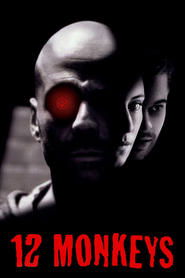
Twelve Monkeys (1995)
Notice what Gilliam does to an action star: Bruce Willis arrives with all the physical authority of Die Hard, and the film methodically disables it — a large, capable man who can perceive everything and change almost nothing. Roger Pratt (carrying his toolkit from Brazil) shoots the future in cold, crowded, desaturated blues, all vertiginous angles and low institutional compositions, so that space itself seems to press inward on the hero. And watch for the fragment of memory the film keeps circling back to — a scrap of airport, a face — held just out of readability. The whole looping structure is a machine built around that one image.
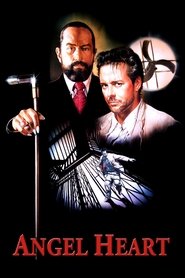
Angel Heart (1987)
Parker and cinematographer Michael Seresin film everything through smoke and dust — a cold, verminous New York against a humid, amber, rotting Louisiana — and the atmosphere is doing narrative work. Watch the detective machinery run: a private eye follows clues, opens doors, drives to the next town, exactly as the genre demands. Then notice that his actions never seem to resolve anything. And keep an eye on the ceiling fans, slowly chopping the light in almost every room. The film knows they matter before anyone in it does.
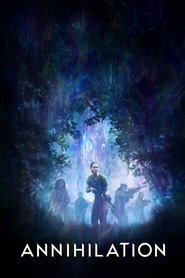
Annihilation (2018)
Rob Hardy's photography gives the Shimmer a soap-bubble sheen — greens pushed toward the toxic, water with an oily refraction — but his framing stays clean, almost clinical, which makes the strangeness land harder. Watch for the moments when the expedition simply stops and looks: at mirrored deer, at impossible growth. Nobody explains; nobody can act. That stalled attention is the film's real subject. The debt to Tarkovsky's forbidden Zone in Stalker is structural and proud, and the near-wordless lighthouse passage, where sound and score fuse into one throbbing texture, echoes 2001's surrender of story to pure image.
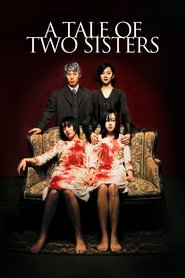
A Tale of Two Sisters (2003)
The horror here hides in plain, beautiful light. Lee Mo-gae shoots the house like a children's book — floral wallpaper, warm woods, deep ambers, symmetry framed through doorway after doorway — and the prettiness is the trap. Watch how the film refuses to sort its images for you: it declines to label what is happening now, what is remembered, what is feared. That refusal descends from The Innocents and The Haunting: a house filmed as if it were a mind, terror generated by suggestion and composition rather than by anything jumping out of the dark.
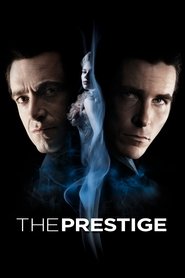
The Prestige (2006)
Wally Pfister shoots in wide anamorphic frames — slate, soot, cool desaturation — and the format is the trick: horizontal expanses that contain information you're trained not to notice. The structure is two diaries, each magician reading the other's, each reader's knowledge changing the meaning of scenes you've already watched. Nolan never hands you a lie corrected by a truth; he gives you competing versions and refuses to crown one. Watch how a film about stage magic becomes an argument about what film itself does to honesty.
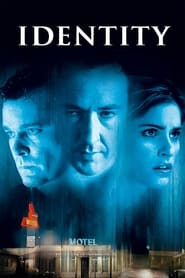
Identity (2003)
Phedon Papamichael renders the motel in sodium-vapor amber, cold blue night, and silvering rain — deliberately stagey, hermetic, sealed by weather. The bones are Agatha Christie's closed-circle countdown crossed with the slasher's rain-soaked grammar, and the numbered room keys keep the score. Watch the keys, and watch the space: identical doors lined up like a multiple-choice question, wet glass and reflections everywhere. Ask yourself, as the count drops, what exactly is being counted.
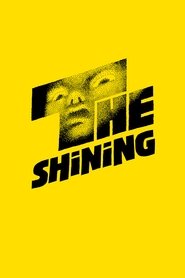
The Shining (1980)
Follow the Steadicam. Garrett Brown's rig was invented to smooth out shaky shots; Kubrick turned it into a way of thinking, floating inches off the floor behind Danny's trike — and let the sound do the dread: carpet, hardwood, carpet, loud-soft-loud around every corner. Notice John Alcott's one-point-perspective corridors receding to a single vanishing point, lit with a bright, unnerving clarity that refuses gothic shadow. And notice, if you can, that the hotel's geography doesn't add up. Viewers have tried to map the Overlook for decades and failed. The failure is the point.
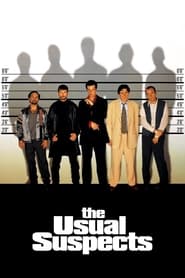
The Usual Suspects (1995)
Newton Thomas Sigel strips the interrogation room down to a bureaucratic white box, so that the flashbacks Verbal narrates feel baroque and vivid by contrast — fully lit, fully scored, fully convincing. That's the game: cinema almost always treats a flashback as evidence, and this film keeps the form of that contract while quietly voiding its contents. It inherits Double Indemnity's confession-to-authority structure and Hitchcock's daring false-flashback gambit from Stage Fright. Watch how completely you trust what you're shown, and why.
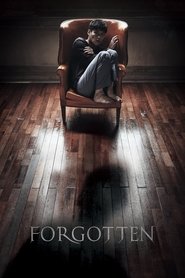
Forgotten (2017)
The camera here is disciplined and sly: compositions built from doorways, window panes, and stairwells, turning a family home into a set of thresholds the hero can't safely read — a paranoid geometry inherited from The Tenant. The film's opening move is to tell you its protagonist has schizophrenia, planting doubt about his perceptions before the plot gives you any reason to use it. Watch how the framing hovers near his point of view without fully committing to it. You're never quite inside his head, never quite outside — and the film knows exactly what that does to you.

Black Swan (2010)
Watch the back of her head. Matthew Libatique's camera rides inches behind Nina's shoulder — a figure he and Aronofsky built on The Wrestler — putting you somewhere with no name: not inside her mind, not safely outside it, shadowing her until intimacy curdles into surveillance. Then watch the mirrors, because the film can't stop: a ballet studio is wall-to-wall glass, and reflections here don't reassure, they detach — lagging, multiplying, misbehaving. The lineage runs through The Red Shoes and Polanski's Repulsion, where a woman's rooms become the visible shape of her interior weather.
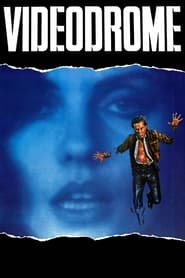
Videodrome (1983)
The genius is in what Cronenberg withholds. Mark Irwin shoots the monstrous — screens that swell, flesh that gives — in exactly the same cool, flat, institutional light as the cramped offices and ordinary rooms, muted grays and sickly greens with the blue glow of screens. No cue tells you when you've left the real. Watch Max Renn begin as a fast-talking noir investigator, following a pirate signal to its source, and watch what happens to that confidence. Watching, this film suggests, may itself be a form of participation.
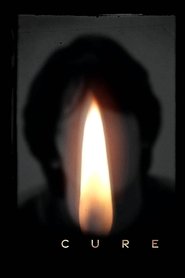
Cure (1997)
Kurosawa answers the flashy serial-killer cycle of the '90s by subtraction: no grand design, no charismatic mastermind, no spectacle. Kikumura shoots in concrete grays and washed daylight, and the defining choice is distance — wide, held framings that keep figures small in their environments, letting dread seep in from the edges of the shot rather than the center. Watch the hypnosis scenes closely: a flame, a patient voice, a question that sounds like nothing — and notice that this is also a description of cinema itself, a point of light in the dark working on a watcher. The film is doing to you what it depicts.
Watched together, these films teach a single lesson from twelve directions: an image can be perfectly clear and still be unreliable. Some build minds out of architecture — a hotel, a motel, a wallpapered house, a shimmer in the woods. Some build lies out of the most trustworthy tool cinema has, the flashback. Some simply slow the camera down until watching becomes its own kind of suspense. Pay attention to how each film shows you things — where the camera stands, what the light insists on, which image keeps returning — and you'll find that the twists, when they come, were never really hidden. They were on screen the whole time, waiting for you to learn how to look.