Sightlines · a mini film course
Doing the Job: A Short Course in the Heist Film, and What Happens When the Job Won't Save You
Every film in this set circles the same magnetic idea: the criminal as professional. A plan, a crew, a score, a getaway — the heist is cinema's purest machine, where every cut serves a decision and competence is the only glamour on offer. But watch closely and you'll see these eleven films splitting into two camps. Some run the machine at full power, polishing it until it gleams. Others quietly sabotage it — they give you criminals who can't act, plans that fail before they start, stories that may not be true at all. The through-line here is the job itself: what it costs to do it well, what it means when it's all you are, and what happens to a crime picture when the doing stops working.
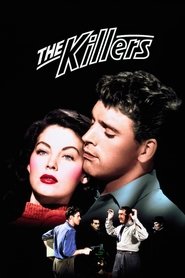
The Killers (1946)
This is the foundation stone. Woody Bredell's lighting is some of the most aggressive in all of noir — hard light raking down, faces half-swallowed in shadow, rooms with the depth of coffins. Watch the opening: a man who knows death is coming and does absolutely nothing about it. The rest of the film is an investigation into that stillness, told through a mosaic of flashbacks borrowed from Citizen Kane, each witness reconstructing a piece of a dead man's life. Notice how Siodmak's Weimar-trained eye makes space itself feel like a verdict.
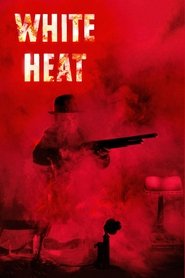
White Heat (1949)
A late, self-aware entry in the Warner Bros. gangster tradition, and a film pulled between two visual languages: daylight procedural clarity outside, deep noir shadow in the prisons and hideouts. But the real subject is Cagney's body. Cody Jarrett isn't an agent making plans — he's a creature of compulsion, and the film keeps letting raw need erupt through the crime-picture surface. Watch the prison mess hall scene, where news travels down a long table like a current through water, and hold onto what happens to Cagney's face when it arrives.
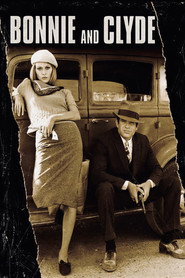
Bonnie and Clyde (1967)
The film that opened New Hollywood, and it works by shorting out the genre's engine. The robberies are scrappy, fumbled, contingent — at one point Clyde holds up a bank that has already failed. Watch Dede Allen's editing, which imports Godard's jump-cut nervousness into a Hollywood picture, and Burnett Guffey's Oscar-winning photography, which shifts between sun-bleached naturalism and something harsher. Above all, watch the gang stop to pose for snapshots: a couple more interested in becoming an image than in staying alive.
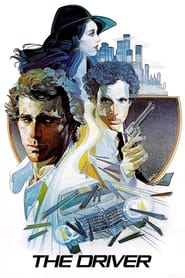
The Driver (1978)
Walter Hill takes the professional-criminal film and strips it to near-allegory: no names (the Driver, the Detective, the Player), no backstory, no confession. Los Angeles becomes a depopulated nightscape of wet asphalt and parking garages. Watch the early scene where the Driver proves his skill by methodically wrecking a client's car, pillar by pillar — the act stands in for the speech. The chases, learned from Bullitt, are always legible: you know where the cars are and why a maneuver works. Competence is something you watch, not hear about.
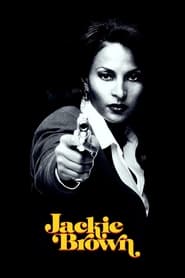
Jackie Brown (1997)
Tarantino's most patient film, and his most humane. The camera is observational rather than showy — long holds on faces, an anthropological patience with a Torrance shopping mall. Watch the opening: Jackie on an airport travelator, doing nothing, while Bobby Womack sings, and the shot holds far past where a thriller would cut. Her predicament can't be solved by any single decisive act; she survives by watching, waiting, and letting everyone underestimate her. A crime picture that watches a woman be a person before it makes her a plot.
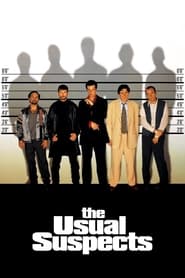
The Usual Suspects (1995)
Here the heist film turns on itself. A man narrates in a deliberately drab white interrogation room, and the film does what films always do with narration — shows you the events, fully lit, fully scored, fully convincing. The question is whether the standard grammar of the flashback can be trusted at all. The lineage runs from Double Indemnity's confession to Rashomon's contradictory testimonies to Hitchcock's Stage Fright. Watch how the film uses your own viewing habits against you — and watch the small physical details of Kevin Spacey's performance.
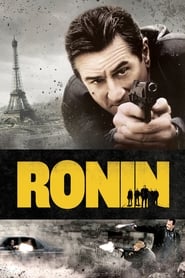
Ronin (1998)
Frankenheimer built this around a hole: a briefcase everyone bleeds for and nobody opens. What matters is never the object — it's the geography around it, and the camera always shows you who owns the exit, who can reach a weapon. The two car chases, shot with real vehicles at real speed using techniques Frankenheimer developed on Grand Prix, are cut for coherence, never confetti, and carried by engine roar rather than music, following Bullitt's lead. Ex-operatives who've outlived their masters, filmed in a cold, glamourless European palette: professionalism as a code with nothing left to serve.

Sexy Beast (2001)
The art-cinema wing of the British gangster cycle. Ivan Bird shoots the Spanish villa deliberately overlit — flesh turned to leather, sky bleached white — so that paradise becomes a place of exposure with nowhere to hide. Watch the opening image of a boulder crashing unbidden into a swimming pool: the whole film is in it. The debt is to The Servant (power reorganized between two men through implication alone) and Performance (dread and dream-imagery spliced into criminal realism). A film about a man trying to retire from an identity that refuses to acknowledge his retirement.
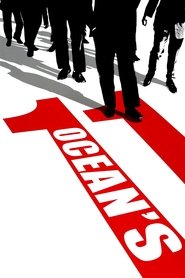
Ocean's Eleven (2001)
The machine at its most joyful. Soderbergh shoots it himself under the pseudonym "Peter Andrews," in a warm, lamp-lit palette, and builds the pleasure the caper tradition — Rififi, Topkapi, The Killing — codified: experts doing difficult things flawlessly. Watch how the film replays its own robbery from deliberately withheld angles. Then watch the fountain scene, where eleven men who have just pulled off the impossible do the one thing the whole film has trained you not to expect: they stand still.
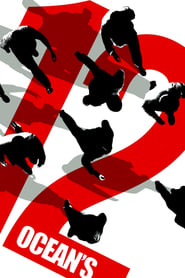
Ocean's Twelve (2004)
The sequel deconstructs what the first film honored. Soderbergh goes full 1960s–70s European: long lenses, sudden zooms, jump cuts and freeze frames lifted from Breathless, each city color-tagged with its own filtered palette. The famous set piece — a movie star playing a thief pretending to be that same movie star — is the film in miniature: a con made out of truth, with no way to get a knife between the two. Watch how much the film withholds, and ask yourself whether the withholding is the point.
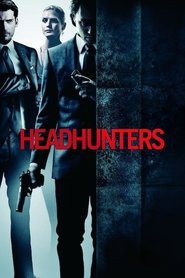
Headhunters (2011)
Nordic Noir at its most mechanically gleeful. John Andreas Andersen shoots Oslo with an aspirational clarity that mirrors its protagonist's curated life — the oversized house, the too-perfect breakfast table — before the film starts dismantling him. The school here is Hitchcock: The 39 Steps' civilian trapped in an impossible situation, North by Northwest's innocuous early details returning as lethal mechanisms, plus Blood Simple's tone of horrifying-and-absurd. Watch how every planted object comes back, and how far the camera is willing to follow a man's degradation without flinching.
Watched together, these films become a conversation about what a crime picture can be. The classical entries show you the machine running perfectly — plan, execution, consequence, every cut serving the deed. The others show you what's underneath: compulsion where there should be agency, performance where there should be identity, invention where there should be truth, stillness where there should be action. By the time you've moved from the Swede's face against the wall to Jackie Brown gliding on that travelator, you'll have developed an eye for the most interesting question the genre asks — not will they get away with it, but who is this person when the job is all they have? That's the reward of the double bill and the marathon: the films start watching each other, and you start seeing how they're made.