Sightlines · a mini film course
Watching the War That Won't Be Won: Twelve Films Where Seeing Outruns Doing
Most war movies run on a simple engine: a soldier sees a problem, acts, and the world changes. The films on your list are all, in one way or another, about that engine breaking down. Their heroes watch more than they fight. Their commanders issue orders to armies that aren't there. Their cameras hold still when convention says cut, or press so close to a face there's nowhere left to look. Again and again, these filmmakers ask: what happens to a person — and to a movie — when seeing clearly and being able to do something about it come apart? Watch for how each film stages that gap: in a bunker map room, through a rifle scope, from a helicopter lifting away, behind a pair of sunglasses worn at night.
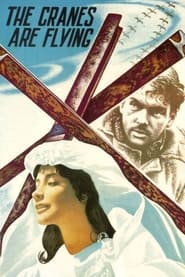
The Cranes Are Flying (1957)
Sergei Urusevsky's camera is the star here — unchained, athletic, built on custom rigs and spiral tracks, inheriting the acrobatic energy of the 1920s Soviet avant-garde and turning it toward private feeling instead of political rhetoric. Watch the staircase sequence, where the camera climbs and spirals with a character in one sustained breath, compressing longing and architecture into a single movement. This is the film that broke the Soviet war picture open: away from monuments and leaders, toward the home front and the wounded heart. Notice how, at the most extreme moments, the camera takes over the motion a human body can no longer supply — the world itself seems to turn.
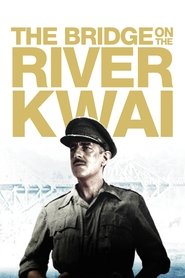
The Bridge on the River Kwai (1957)
Lean opens with prisoners whistling "Colonel Bogey" — not singing, whistling, a thin defiant line of breath — and marching in geometric formation into a jungle that has no use for geometry. That's the whole film in one image: order asserted against an indifferent world. Jack Hildyard's Oscar-winning widescreen photography keeps the jungle canopy pressing down even in the vast frame, so enclosure and spectacle coexist. Watch how a film that seems to run on the cleanest war-movie machinery — mission, obstacle, decisive act — slowly turns that machinery into its own subject, asking whether professional pride and moral clarity are the same thing.
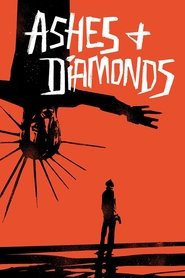
Ashes and Diamonds (1958)
A young assassin wears dark glasses indoors, at night — the actor Zbigniew Cybulski's own, kept because they looked right. Jerzy Wójcik's high-contrast black-and-white photography pools shadow across faces like American film noir crossed with Orson Welles's deep-focus grammar, all compressed into one hotel over one night at the exact moment a war ends. The signature film of the Polish Film School, it's less about heroic action than about what a generation trained for clandestine war is supposed to do when the war stops needing them. Watch how the film keeps giving its hero a soldier's reflexes in a world that no longer answers to them.
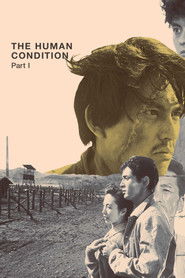
The Human Condition I: No Greater Love (1959)
Yoshio Miyajima's widescreen compositions do half the storytelling: rows of laborers, fence lines, the receding architecture of a labor camp, all organizing the enormous frame into grids of confinement. A man with humane intentions is placed inside that grid — a mining operation in occupied Manchuria — and the film watches, in long takes and deep staging, whether decency can survive inside a coercive system. Notice how often social pressure is composed into the frame rather than spoken: foreground and background bearing down on a single figure who looks very small against the plain. It's the first movement of a ten-hour cycle, and the images already carry the moral weight.
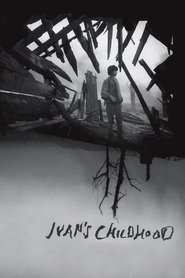
Ivan's Childhood (1962)
Tarkovsky's first feature is built across a fault line: on one side, tense nighttime missions — deep-focus photography, low angles pressing a boy's small figure against threatening skies, reeds and water and mist; on the other, dreams shot in a completely different light, birch trees and sun through leaves. Watch how he cuts between them — flat, hard, no dissolve, no consoling music. The dreams aren't flashbacks and they don't explain the plot; they're a second world welded against the first, and the seam between them is the real subject. A key work of Soviet Thaw cinema, and the announcement of one of cinema's great image-makers.
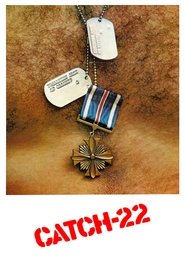
Catch-22 (1970)
David Watkin's signature move is the long-held wide shot: a dawn airfield in near-silence, engines coughing to life, men tiny inside an enormous flat frame, nothing you could call an event. That patience teaches you the film's logic — the war machine runs whether or not anyone decides anything. Nichols and his Graduate collaborators bring deadpan, elliptical comedy to a paradox with no exit: a pilot can be grounded for insanity, but asking to be grounded proves he's sane. Watch how the film keeps the war movie's perceiving and quietly amputates the acting.
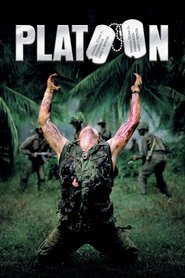
Platoon (1986)
The first collaboration between Stone and cinematographer Robert Richardson plants the camera in the mud with the infantry — handheld, embedded, sightlines partial, geography dissolving into flares and muzzle-flash. Stone described his young narrator as "a partly passive vessel," and the film's most famous image is of someone watching a death from a helicopter lifting away: able to see everything, able to change nothing. Watch how the film keeps the combat movie's machinery — patrols, objectives, a perimeter — while cutting the wire between witnessing and effective action. The real war, the film insists, is the one inside the unit and inside the self.
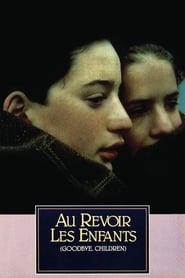
Au Revoir les Enfants (1987)
Renato Berta's disciplined, naturalistic photography — grays, browns, the bluish white of winter light in an unheated wartime boarding school — refuses melodrama at every turn. Malle drew this from his own childhood, and forty years on he built the entire film to deliver a single involuntary glance, less than a second long, whose consequences he himself could never determine. Watch the young lead: he acts almost entirely through watchfulness rather than deed. This is a war film from the civilian margins, in the lineage of Forbidden Games and The 400 Blows — catastrophe registered through a child's eyes and the small rituals of dormitory life.
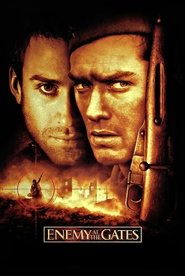
Enemy at the Gates (2001)
The opening river-crossing assault is the showcase — handheld, embedded, smoke and chaos in the desaturated steel-blue palette of a winter siege, direct heir to Saving Private Ryan's combat grammar. But the film's stranger heart is stillness: two snipers lying motionless for hours across dead ground, each waiting for the other's first betraying movement. Watch how the camera keeps returning to a man whose entire being has narrowed to an eye at a lens — a war film whose central act is waiting and watching, not charging. Notice too the twin pressures on the hero: the enemy ahead, and his own state's machinery behind.
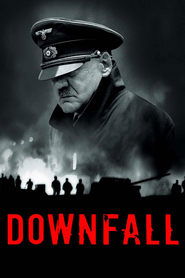
Downfall (2004)
Rainer Klausmann's camera works on a principle of proximity: handheld, close to faces, shallow focus, narrow bunker corridors — characters trapped by the lens itself. The film's chilling engine is the gap between the map room and the street above it: a hand moves across a map and orders armies that no longer exist, and the conferences proceed as if command still connected to reality. Watch how the film depicts a closed ideological system maintaining itself against all evidence — not as simple insanity, but as a machine that keeps grinding after its purpose has vanished. A landmark of German cinema's reckoning with its own past.
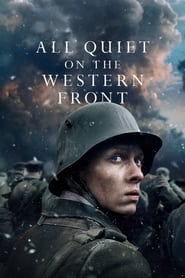
All Quiet on the Western Front (2022)
In the opening minutes, a soldier dies — and the film follows his coat: stripped, laundered, stitched, folded, reissued to a boy still excited to put it on. No music; observational cuts; the rhythm of inventory. Before anyone speaks a word of disillusionment, Berger has shown you the whole war as a factory that consumes bodies and recycles the packaging. The first German-language adaptation of Remarque's novel — a correction of a long historical absence — it also cross-cuts, in the tradition of Paths of Glory, between comfortable rooms where the war is administered and the mud where it is paid for. Watch that contrast; it's where the film's moral outrage lives.
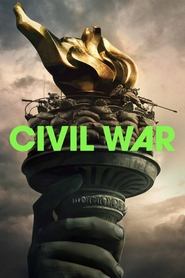
Civil War (2024)
Garland's device is the click: mid-firefight, the motion stops, and one perfectly composed still frame appears — the photograph a press photographer would file — then motion resumes as if nothing had been removed. Something had. Watch your own body the first time it happens. Rob Hardy's camera behaves like a fifth member of the press team — handheld, searching, sometimes caught flat-footed — and the film's real subject is the ethics of witness: whether making images of suffering is moral seriousness or a sublimated thrill, and what repeated exposure does to the person behind the lens. An outsider's eye — a British filmmaker's — turned on an imagined American catastrophe.
Watched together, these twelve films form a conversation across seventy years and half a dozen national cinemas — Soviet poets, Polish fatalists, Japanese humanists, German reckoners, Hollywood mavericks. Each takes the war movie's promise — that action changes things — and tests it to destruction, and each finds a different formal answer: the spiraling camera, the held wide shot, the hard cut between dream and mission, the freeze into a still photograph. Pay attention to how each film watches — where the camera stands when someone can only see and endure — and you'll start noticing the same question asked in a dozen accents: when doing fails, what is witnessing worth? By the last film, you won't just be watching wars. You'll be watching cinema argue with itself about what watching means.