Sightlines · a mini film course
When Watching Becomes the Story
There's a moment in every film on this list where the camera stops chasing the plot and simply watches — a face, a room, a landscape, an object — for longer than a story strictly needs. That's not indulgence. It's the point. These eleven films, from a smoke-filled Berlin bunker to a rain-soaked Hungarian plain, all wrestle with the same problem: what does cinema do when its characters can't fix their world? The usual movie engine — see a problem, act, solve it — either breaks down here, runs in a vacuum, or gets deliberately dismantled. What rushes in to fill the gap is time itself: stretched, looped, dissolved, endured. Watch these films for how they watch, and they'll teach you a whole other way of seeing.
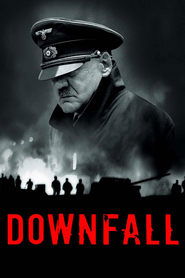
Downfall (2004)
Rainer Klausmann's handheld camera stays punishingly close to faces in narrow bunker corridors, trapping everyone in shallow focus — a technique inherited from Come and See, where the lens refuses to pull back from extremity. Watch the map room: hands move armies across paper, orders are issued in confident tones, and the whole apparatus of command grinds on — while the street above tells a completely different story. The film runs the classic war-movie machinery of decisions and orders, but in a vacuum where commands connect to nothing. Notice how proximity becomes its own kind of claustrophobia.
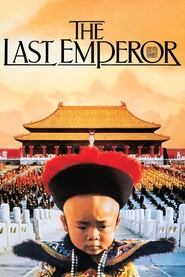
The Last Emperor (1987)
Vittorio Storaro paints historical eras as temperatures: the Forbidden City glows amber and gold — warmth, but also confinement and unreality — while later periods cool down. Watch how editor Gabriella Cristiani (who won the Oscar) refuses to cut hard between time periods; she dissolves, letting prison bleed into palace until you can't say which time is real and which is remembered. Keep an eye on small objects — one wicker cage folds sixty years into a single image. This isn't a life story; it's the memory of a life, told by a man unsure the life was his.
Lost Highway (1997)
Peter Deming photographs the Madison house as near-abstract darkness — characters walk into blackness and simply dematerialize. Lynch takes every neo-noir ingredient (femme fatale, gangster, murder, surveillance) and strips out the motive, explanation, and detection that usually hold them together. Watch for doubling: the same actress, brunette then blonde; a voice on an intercom; scenes that seem to reflect each other like mirrors. The film never cuts to the shot that would tell you what's real and what's dreamed — and that refusal is the whole design.
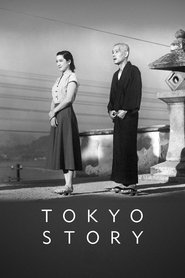
Tokyo Story (1953)
Ozu's camera sits about fifty centimeters off the floor — the sightline of someone seated on a tatami mat — and it almost never moves. Watch for the shots between scenes: chimneys, hanging laundry, a passing train, held a few seconds past any narrative use, with nobody in them. Another director would use those cuts like a clock, telling you something; Ozu's tell you nothing, and that's the point. The elderly couple face a situation no action can fix, so the film does what they do: it looks, it waits, and its quiet accumulates into something devastating.
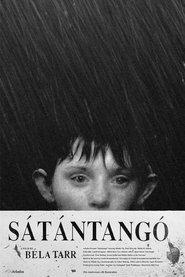
Satantango (1994)
The film opens with several minutes of cows shuffling through a ruined farmyard — one take, no dialogue, no explanation — and by the end of it Tarr has taught you how to watch the next seven hours. Individual shots run five, eight, ten minutes; watch how duration itself becomes the material, time moving through a collapsing world at the pace of an animal with nowhere to go. Decay operates on every level: the mud and rain, the dissolving community, the moral surrender. Notice the doctor at his window with his notebook — a man for whom observing has become the only verb left.
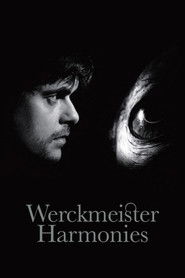
Werckmeister Harmonies (2001)
The opening is one of cinema's great sequences: in a single fluid take of nearly ten minutes, a gentle postman arranges drunken men in a bar into a working model of a solar eclipse — you be the sun, you the earth, you the moon — and sets them slowly orbiting. Nothing is decided; nothing is accomplished; meaning arrives through movement, not plot. Watch Lars Rudolph's face: transparent, unguarded, a surface on which events register rather than a mind that schemes. The film asks how systems of order — musical, social, political — carry the seeds of their own catastrophic failure, and it asks through atmosphere and duration rather than event.
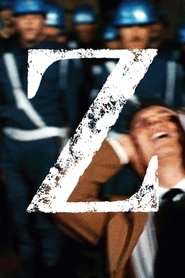
Z (1969)
Costa-Gavras made the film that proved political cinema could be a thriller and reach a mass audience. Watch the assassination sequence: Raoul Coutard's camera plunges to ground level, into the legs and panic, cutting fast between bad angles that refuse you the clean overhead view — because the murder itself was staged to look like an accident, and the image withholds the overview the way the state withholds the truth. Then watch the investigation push back against that engineered chaos. At a moment when the most ambitious European cinema had given up on action mattering, Z insists — almost aggressively — that it can.

Salò, or the 120 Days of Sodom (1976)
Approach with care: this is Pasolini's most confrontational film, an austere horror about power as consumption. What makes it endurable as cinema is precisely its restraint of style: Tonino Delli Colli lights a rationalist villa cool and even, like an official document, in measured medium and wide shots that hold everyone at a deliberate distance. Watch how the film replaces narrative arc with a graded descent — chapters borrowed from Dante's circles — and how it fixates not on atrocity but on the watching of atrocity: opera glasses, arranged distances, connoisseurship. The bland bureaucratic surface over pure appetite is the entire argument.
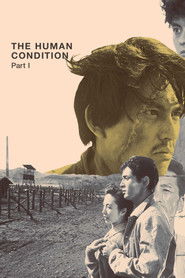
The Human Condition I: No Greater Love (1959)
Yoshio Miyajima's GrandScope widescreen turns the Manchurian plain into grids of confinement — fence lines, watchtowers, rows of laborers organizing the vast frame. Watch how often Kaji, the idealist trying to run a mining operation humanely, stands small in an image too wide for one man to fill: the shape of the frame carries the film's argument before anyone speaks. This is the classical machinery of a hero acting on a situation, deployed by Kobayashi across an epic canvas where the institution grinding him is composed right into the depth of every shot.
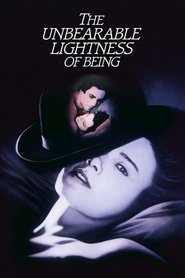
The Unbearable Lightness of Being (1988)
Sven Nykvist — Bergman's cinematographer, working far from those austere chamber dramas — shoots with warm, handheld, available-light intimacy: skin rendered with frank tactility, sensual without gloss. Watch for mirrors: characters are constantly doubled in glass, most memorably a woman in a bowler hat regarding her own reflection, the reflection regarding her back. And watch that hat itself — an object that keeps returning across countries and years, quietly condensing the film's whole question of lightness versus weight. You don't act on it. You read it.
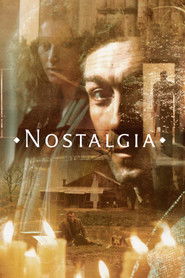
Nostalgia (1983)
Tarkovsky builds pressure through duration rather than cutting: slow lateral pushes, water-saturated spaces, fog. The film's centerpiece is a nine-minute single take of a man trying to carry a lit candle across a drained pool — the flame keeps going out, he keeps starting over, and the precariousness is real, not simulated. Nothing is "happening"; everything is at stake. Watch Oleg Yankovsky's performance of pure withholding — a man moving like he's walking underwater — and notice how the film uses color and monochrome as different registers of inner life, a technique carried over from Mirror.

You Were Never Really Here (2017)
Ramsay takes the vigilante thriller — the Taxi Driver template, shot on 35mm to carry that same bruised texture — and quietly pulls its spark plugs. Watch how Thomas Townend's camera works in extremes: enormous close-ups of hands and surfaces, wide shots that withhold. Watch how fragments of memory flare up without dates or places, refusing to assemble into the explanatory backstory a thriller owes you. And watch, following Bresson, how violence keeps landing offscreen, rendered through aftermath — a door, an object — so that action never delivers the release the genre promises.
Watched together, these films form a conversation across seventy years about what happens when doing gives way to seeing. You'll notice the rhymes: Downfall and No Greater Love both run the machinery of command and heroic action against worlds that no longer answer; Tokyo Story, Satantango, and Nostalgia let time stretch until stillness itself becomes the drama; Lost Highway, The Last Emperor, and The Unbearable Lightness of Being fold present and past, reality and reflection, into images you can't pry apart; Z and You Were Never Really Here take the thriller's engine and expose its wiring — one to prove action still matters, one to show what's left when it doesn't. Watch them slowly, in any order, and let each film teach you how to see the next. The reward isn't finding out what happens. It's discovering how many ways a camera can wait.