Sightlines · a mini film course
The War Film When Action Fails: Ten Ways of Filming the Unwinnable
Every war movie inherits the same basic engine: someone sees a danger, acts, and the world changes. Charge the hill, dig the tunnel, take the shot. What binds this particular set of films — made across eight decades, in six languages, in tones from slapstick to unbearable — is how each one tinkers with, strains, or outright breaks that engine. Some run it at full throttle so you can hear it roar. Others let it stall and force you to sit in the silence. In several, the most powerful figure on screen is not the soldier who acts but the person who can only watch: a child, a widow, a medic, a boy at a mirror. Together they form a course in what the camera does when doing something is no longer possible — and in how comedy, suspense, and grief each find their own answer.
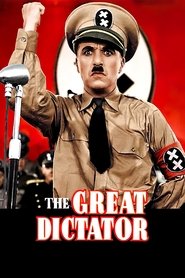
The Great Dictator (1940)
Watch the famous scene where the dictator dances alone with a balloon painted like the earth — nearly four minutes in which nothing "happens" and everything is revealed. Chaplin, whose little Tramp always acted on his world, here shows a man gone still and rapt while the world floats around him: megalomania filmed from the inside. Notice too how the film borrows the visual grammar of actual Nazi rally propaganda — the podium angles, the crowd geometry — and inverts it into ridicule. The argument is architectural: fascism isn't just evil, it's genuinely absurd.

Rome, Open City (1945)
Shot in the actual rubble of Rome, this film looks caught rather than composed — off-center framings, figures snatched mid-gesture, light taken as found. Watch for the moment, barely halfway through, when the film violates the oldest rule of movie storytelling: something happens to a beloved character that the story has not prepared and cannot fix, and the film simply goes on. That refusal to let action rescue anyone is where a whole new kind of cinema begins.
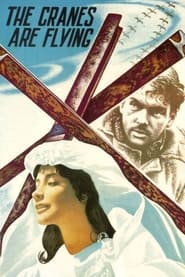
The Cranes Are Flying (1957)
Urusevsky's camera is the star: it spirals up staircases, sprints through crowds, moves like a body possessed. Watch what happens at the film's most famous moment, when a character falls still and the camera keeps moving — tilting into wheeling birch trees, dissolving into a vision of a life that will never be lived. Grief and fantasy occupy a single frame. This is war filmed from the home front and the wounded heart, and it changed what Soviet cinema was allowed to feel.
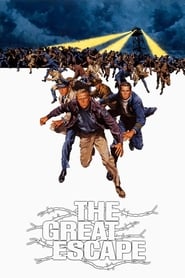
The Great Escape (1963)
Here is the classical engine running at maximum voltage — every problem immediately becomes a task, every situation a thing to be done. Watch how carefully Sturges builds the camp itself in the opening reels: the wire, the towers, the huts raised off the ground. Space becomes a machine designed against escape, so that ingenuity itself becomes the drama. And notice the stillest image in this film of pure motion: a man alone in a cell, throwing a baseball against a wall, over and over.
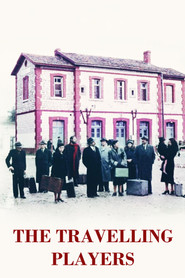
The Travelling Players (1975)
Angelopoulos built this four-hour epic from roughly eighty shots, some many minutes long — and inside a single unbroken take, the year can change. Watch for the drift down a wet grey street where the camera loses a crowd, waits, and receives back marchers from a different era. Time becomes a property of the space itself, not the editing. The troupe at the center keeps trying to finish staging a simple pastoral play; history keeps interrupting. That interruption is the film's whole theory of the twentieth century.
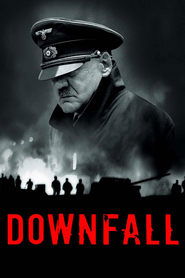
Downfall (2004)
A war film set almost entirely in a bunker, where the war exists only as maps, rumors, and tremors through concrete. Watch the map-room conferences: a hand moves pins representing armies, orders are issued, plans are drawn — and none of it connects to anything above ground. The handheld camera stays trapped in narrow corridors and shallow focus, close to faces, so that the gap between what is commanded and what is real becomes the film's true subject: a closed system of belief grinding on inside a vacuum.
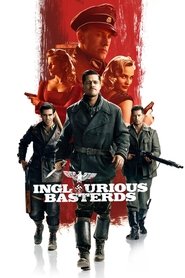
Inglourious Basterds (2009)
Everyone in this film is performing, and everyone is reading the performance. Watch the opening farmhouse scene — twenty unhurried minutes over a glass of milk — and notice how a single camera move reveals what all that courtesy has actually been built on top of. Then watch the long tavern sequence, where survival hangs on micro-behaviors: how you pronounce a word, which fingers you raise to order three drinks. Tarantino lets scenes run long precisely so the smallest gesture can carry mortal weight.
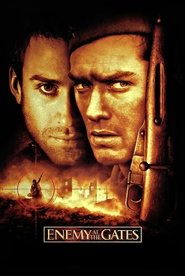
Enemy at the Gates (2001)
After a river-crossing opening of handheld chaos in the tradition of Saving Private Ryan, the film narrows to something stranger: two men lying motionless in rubble for hours, each waiting for the other to move first. Watch how the film keeps giving you a person whose entire being has contracted to an eye at a lens — a war movie whose central act is watching. Alongside it runs a sharp thread about how heroes are manufactured: a soldier turned into a symbol by a propaganda machine, tyranny pressing from behind as well as ahead.
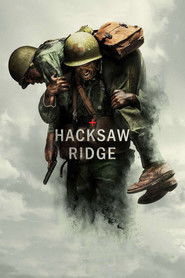
Hacksaw Ridge (2016)
The film splits cleanly in two — golden pastoral Virginia, then the smoke and mud of Okinawa — and Gibson drives the classical combat machine without irony: assault, counterassault, force against force. But watch what he plants inside it: a man on the battlefield who refuses to carry a weapon, whose entire "action" is a rope, a prayer, and the next body. The war film's engine keeps running, and at its center is someone the engine cannot digest. Listen, too — the sound design owes a debt to cinema's most harrowing depictions of blast and aftermath.
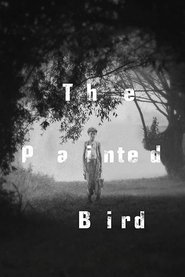
The Painted Bird (2019)
The most demanding film here, and the purest expression of the set's core idea: a child moving through a wartime landscape who cannot act on anything he sees — only witness and endure. Watch how the static, painterly widescreen compositions keep him small inside spaces that dwarf and endanger him, and how the camera refuses to cut away or editorialize. The title image — a bird marked as different, then destroyed by its own flock — is staged with no music and no mercy, and it contains the entire film.
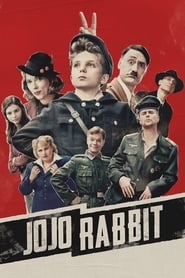
Jojo Rabbit (2019)
Waititi revives Chaplin's gambit — the comedian personally playing Hitler to shrink him into a buffoon — but the twist is that this Hitler is imaginary, built by a lonely ten-year-old out of posters, radio, and playground rumor. Watch the very first cut: archival rally footage laid over the Beatles, ecstatic crowds recast as fandom. The bright, storybook framing renders the boy's world as orderly as a toy — which is exactly how indoctrination feels from inside. The real subject is how a voice gets installed in a child's head, and what it takes to evict it.
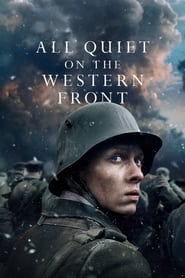
All Quiet on the Western Front (2022)
Watch the opening minutes: a soldier dies, and the film follows the uniform — stripped, laundered, stitched, folded, reissued to a boy still excited to wear it. No music; cuts with the rhythm of inventory. Before a single word of disillusionment, the film has shown you the war as a machine that consumes bodies and recycles the packaging. The first German-language adaptation of Remarque's novel — long suppressed in the country that produced its author — it turns the combat film's usual grammar inside out: its hero perceives everything and can change nothing.
Watched together, these films become a conversation about what a camera should do when human action stops mattering — chase, or watch? Cut away, or hold? You'll see the same problem answered with a balloon dance, a spiral staircase, a twenty-minute glass of milk, a followed coat, a street that changes years. You'll notice how the escape films and the sniper films need the classical engine, and how the postwar European films get their devastating power from switching it off. And you'll start catching the films quoting each other across decades: Chaplin's rally parody echoing in Waititi's opening, the helpless child witness passing from Soviet cinema into Czech, the bunker and the trench as spaces where commands go out and nothing comes back. Ten films, one question — what remains of us on screen when doing is no longer possible — and ten unforgettable answers.