Sightlines · a mini film course
The Map Room and the Street Above: A Course in the Cinema of the Decisive Act
Every film in this set is built around the same ancient promise of the movies: a person looks at the world, understands it, and does something to change it. The general reads the map. The investigator opens the file. The hero draws the sword. What makes this eleven-film run so rich is that each film takes that promise and does something different with it — runs it at full confident power, hollows it out, plays it for horror or for laughs, or quietly asks whether the act ever really connected to anything at all. Watch for the gap between the order given and the world that receives it. Sometimes there is no gap. Sometimes the gap is the whole film.
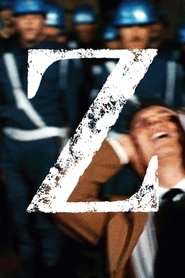
Z (1969)
When violence erupts in a crowd, Costa-Gavras drops the camera to ground level — into the legs, the panic, the bad angles — and cuts so fast that you never get the clean overhead view that would settle what happened. This is deliberate: the image withholds the overview the way officials will withhold the truth. Then watch how the investigation fights back, restaging the same event again and again through different witnesses, each replay chiseling the chaos into shape. Raoul Coutard's fast, available-light camerawork, developed for New Wave romances, is here retooled into a weapon.
Dr. Strangelove (1964)
Kubrick and cinematographer Gilbert Taylor build three distinct visual worlds — the air base shot like a documentary, the bomber interior, the vast War Room — and the comedy lives in the fact that these worlds can barely speak to each other. Notice that nobody in this film is confused: everyone understands the situation with perfect clarity, and the machinery grinds on anyway. It's a comedy assembled inside the space between knowing and doing, descended from Keaton's deadpan against runaway machines and the Marx Brothers' war cabinet as vaudeville act.
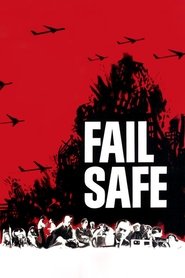
Fail Safe (1964)
The same year, the same nightmare, played absolutely straight. Lumet strips out atmosphere — flat institutional light, plain rooms, men on telephones — and lets faces under pressure carry everything, the chamber-drama discipline he built in Twelve Angry Men. The crucial thing to notice: there is no villain. No saboteur, no enemy agent. The safeguard itself is the threat, and the thriller's engine roars along with nothing to punch.
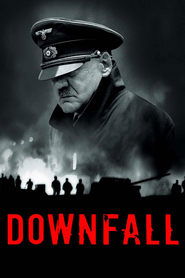
Downfall (2004)
Rainer Klausmann's handheld camera stays close to faces, trapping them in shallow focus and narrow bunker corridors — the technique of Come and See, where the lens cannot pull back from extremity. Watch the map room: hands move across the map and armies move with them, orders flowing out with total procedural confidence toward units that the street above says otherwise about. The film's real subject is how a closed system keeps believing itself in the face of everything.
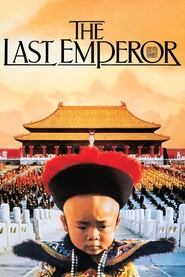
The Last Emperor (1987)
Storaro shoots history as temperature: the Forbidden City glows amber and gold — warmth, but also confinement and unreality — while later eras cool toward steel. And notice how editor Gabriella Cristiani moves between decades: almost never a hard cut, nearly always a dissolve, so that one time bleeds into another and you lose your grip on which is the real present and which the remembered past. Watch small objects, too — the film loves letting things carry time across a whole life.
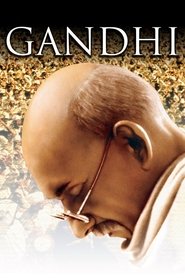
Gandhi (1982)
The inheritance from Lawrence of Arabia is visible in every frame: wide Panavision landscapes that dwarf a single figure. But Attenborough keeps returning to one composition — a small, half-clothed man at the dead center of the frame, ringed by officials dressed for power — and lets the whole image organize itself around his refusal. Here is the epic's strangest case: a hero whose decisive act is not acting, staged with all the scale usually reserved for armies.
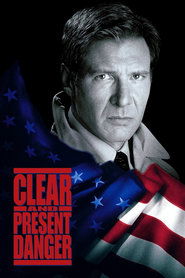
Clear and Present Danger (1994)
McAlpine's photography splits the film into two climates — cool, shadowed, wood-paneled Washington against the hard sun of the field — and the moral geography follows the light. But the sequence to study has no guns in it at all: two people at keyboards, a progress bar crawling, a file being copied while someone else deletes it. The film's great trick is making paperwork, chain-of-command sparring, and information itself as kinetic as any firefight.
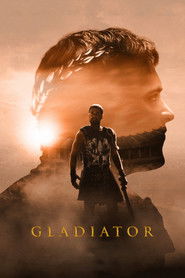
Gladiator (2000)
Scott and Mathieson give the arena ochre and dust, and Rome cool marble — color temperature as political map. This is the confident engine at full power: see, decide, strike, and nearly every cut serves that chain. But watch the film's real argument, inherited from Spartacus: the spectacle-within-the-spectacle, the idea that authority itself is a performance, and that the most dangerous thing a ruler can face is a show that reflects his illegitimacy back at him.

The Last Samurai (2003)
John Toll photographs the landscape with painterly, seasonal light, and Zwick borrows openly from Kurosawa — the village defense of Seven Samurai, the color-coded armies of Ran, cavalry against gunfire from Kagemusha. Watch how the battles are staged as arguments: sword against rifle, ritual against machinery, one whole way of life pressed against another. The camera lingers where a faster film would cut, letting the cost register.
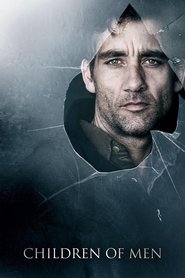
Children of Men (2006)
Cuarón and Lubezki take away the thing we rely on most — the cut — precisely in the moments a thriller leans on it hardest. The famous long takes keep the camera within arm's reach of the protagonist, and when the world's violence spatters the lens, they leave it there: no cut wipes it clean, no reframe restores the tidy sightline a genre film owes you. Notice how it changes your body as a viewer. When the film refuses to cut, you stop watching action and start living through duration.
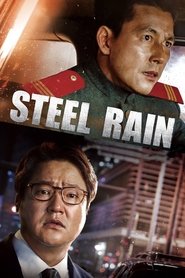
Steel Rain (2017)
Watch how Yang uses space: enemies from North and South sharing a cramped safe house, the geography of cohabitation generating intimacy before the dialogue admits it. And watch for the small flickers — a hardened operative briefly undone not by a soldier but by the plain abundance of a shelf of goods — where the human being shows through the function. The film's old-fashioned faith that two competent men, acting decisively, can still avert catastrophe is not naïveté; it's the argument.
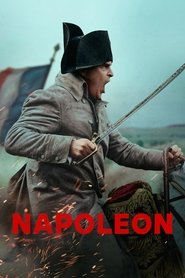
Napoleon (2023)
Wolski shoots interiors by candle and firelight, in the tonal palette of period painting, against cold desaturated battlefields — and Scott stages the most famous life in cinema as a study in the gap between the grandeur of ceremony and the graceless man inside it. Watch the coronation: shot absolutely straight, and faintly absurd for it. The battles descend from Gance's 1927 epic and Bondarchuk's War and Peace — vast formations readable from above, one gesture transforming a landscape.
Watched together, these films become a conversation about the same question asked eleven ways: does acting on the world still work? Some of them answer yes with full conviction — the sword falls, the file is copied, the war is averted. Some run the machinery at full power toward disaster, so that competence itself becomes the horror or the joke. Some replace the act with refusal, or with the long unblinking look. Pay attention to how each film cuts — or refuses to — and you'll start to feel the difference in your own body: the films that let you do something with your attention, and the films that make you sit with what you see. That difference, more than any plot, is what this set has to teach.