Sightlines · a mini film course
When Revenge Stops Working: A Watchlist in Eleven Frames
Every one of these films promises the oldest, most reliable story in cinema: someone is wronged, and someone will pay. But watch what actually happens to that promise. Again and again, these filmmakers build the revenge machine — the wronged man, the plan, the confrontation — and then quietly sabotage it. The camera lingers when it should chase. The hero arrives at his moment of triumph and finds nothing there. Time stretches, doubles back, folds in on itself. This is a course in what happens when movies about doing become movies about watching, remembering, and enduring — and why that shift, in the hands of these directors, produces some of the most haunting images in the genre.
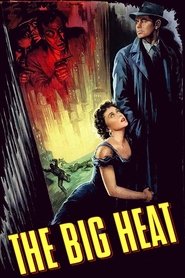
The Big Heat (1953)
Start here, with the machine running clean. Fritz Lang's syndicate noir is cause-and-effect cinema at its most efficient — every scene cut to its minimum, one honest cop against an organization that owns the whole city. Watch Charles Lang's photography of doorways, windows, and corridors: characters are constantly placed at the boundary between safety and exposure, and the warm, bright family home of the opening gradually gives way to narrower, shadowier spaces. And notice Lang's patience with the audience — his willingness to let you figure out the worst before the camera confirms it, as when a woman walks in with her coat collar turned up and you're trusted to do the arithmetic yourself.
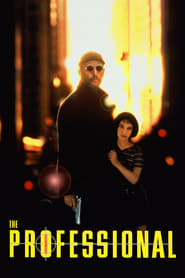
Léon: The Professional (1994)
A hit man who drinks milk, does sit-ups in the dark, and tends a houseplant he calls his only friend "because it has no roots — like me." Besson inherits the silent, code-bound professional from Melville's Le Samouraï, then does something strange with him: between the jobs, the film simply stops and looks at Jean Reno's face. Watch Thierry Arbogast's warm ambers and golds in the interior refuges against the cooler light of institutional and violent spaces — and watch how much of the film lives in close-ups where feeling registers but never discharges into action. The efficiency and the tenderness are the same man, and the film's whole argument lives in that gap.
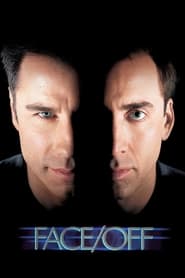
Face/Off (1997)
Hold onto one image: two men on either side of a two-way mirror, each aiming a pistol at his own face — because his face is now worn by the man across the glass. John Woo brings his Hong Kong grammar wholesale — the slow-motion doves, the church-and-candle imagery, the gunfight as emotional crescendo rather than a break from character — and pours it into a story about whether the self lives in the face, the body, or somewhere neither surgery nor grief can reach. Watch how Oliver Wood's camera keeps arranging Travolta and Cage in mirrored compositions until you can't say which man is the original and which the reflection.
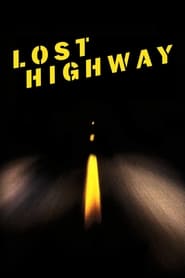
Lost Highway (1997)
Lynch takes the noir kit — femme fatale, gangster, murder, surveillance, doomed Los Angeles — and removes the one thing the genre depends on: explanation. Peter Deming photographs the Madison house as engulfing darkness; characters walk into blackness and simply dematerialize. Watch how the film refuses to keep "what happens" and "what is dreamed or remembered" in separate compartments — one actress, brunette then blonde, and the film declines to tell you whether she's two women or one woman dreamed twice. Don't try to solve it. Read it the way you'd read a recurring dream.
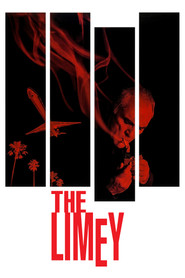
The Limey (1999)
There's a face in this film that doesn't belong to it: a young Terence Stamp, grainy and gold, lifted whole from a 1967 Ken Loach film and dropped into the memory of the weathered man Stamp plays here. Soderbergh never labels it a flashback — it just surfaces, the way memory actually does, mid-thought. Watch how Ed Lachman shoots Los Angeles in bleached, unglamorous clarity while the editing fractures everything around it: this is a revenge picture propelled by vengeance but powered by remorse, and its broken timeline is the shape of a mind that cannot stop returning to what's lost.
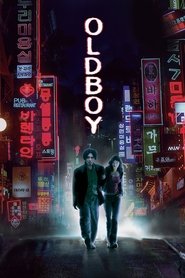
Oldboy (2003)
The famous corridor fight is filmed flat from the side, one unbroken take, the camera gliding along the wall like an eye reading a line of text — and the frame permits its hammer-wielding hero exactly one direction: forward. Watch what that shot quietly insists: this man isn't choosing his path; he's moving along a track someone laid down. Chung Chung-hoon's camera is never neutral — canted angles, overhead views that shrink a man to a figure on a board — and the whole film uses the frame as a moral instrument. Go in knowing as little as possible.
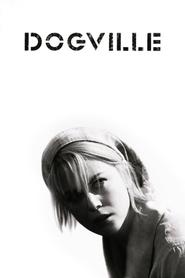
Dogville (2003)
A woman knocks on a door that isn't there — just a chalk rectangle on a black floor and, from somewhere, the click of a latch. Von Trier subtracts the visible world (walls, doors, even the dog, replaced by the word "dog" written on the floor) and leaves you the act of reading it. Watch the tension between the geometric stillness of the chalk-line set and Anthony Dod Mantle's restless handheld camera hunting among the actors. Stripped of scenery, every gesture becomes legible — and you become the town's uneasy, complicit witness.
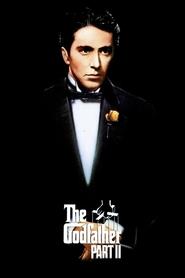
The Godfather Part II (1974)
Coppola braids two timelines — a father's rise, a son's reign — and lets each comment silently on the other. Watch Gordon Willis's light do the moral work: harsh, unadorned Mediterranean sun for the Sicilian past; shadows and enclosure gathering gradually in the New York tenements; and interiors that grow darker as power consolidates. This is the gangster film stripped of its consolations, a study of a man whose greatest strengths — patience, coldness, strategy — are precisely what cost him everything he claims to be protecting. Notice how often the film ends a movement not on an act but on a held, waiting frame.
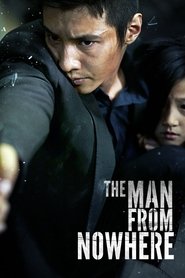
The Man from Nowhere (2010)
Lee Jeong-beom keeps pushing Won Bin's face up against the lens until it stops looking like a movie star's and starts looking like evidence — no soft light, no flattering distance. The celebrated first act barely moves: a near-mute pawnbroker in a Seoul backstreet, watching a neglected girl drift through his shop. That slowness isn't padding; it's a portrait of grief as a kind of living entombment, built entirely from observed routine in the Melville tradition. Watch the palette — nocturnal blues, concrete greys, sickly amber — render Seoul's poorer quarters without a trace of the picturesque.
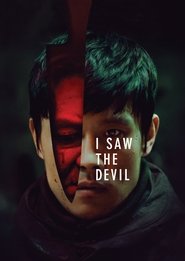
I Saw the Devil (2010)
The opening is snow: a woman in a stalled car, a storm erasing the world, a stranger tapping the window. What Kim Jee-woon establishes isn't suspense but weather — a loneliness so total that nothing done afterward can reach back into it. Watch Lee Mogae's almost perverse commitment to clarity: where extreme cinema usually fragments its hardest images with fast cutting, he holds wide, stable shots that force you to inhabit the full geography of violence. This is a revenge film about the cost of succeeding — and it refuses, on principle, to let bloodshed deliver pleasure.
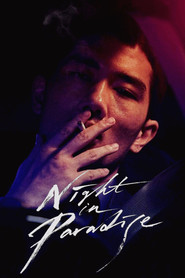
Night in Paradise (2020)
End here, where the genre openly mourns itself. Park Hoon-jung sends his gangster to Jeju Island, and Kim Young-ho's camera holds at a contemplative distance — wide, becalmed frames of sea and volcanic stone that are beautiful and utterly indifferent to human grief. Watch how often the film's center of gravity is a man simply standing and looking at water. The "paradise" of the title is a bitter irony: a refuge that everyone on screen and everyone watching knows is temporary. The film inherits the loyal-enforcer template of A Bittersweet Life and the unbeautiful, uncathartic violence Park scripted for I Saw the Devil — and lets the landscape have the last word.
Why watch them together? Because in sequence, they teach you to see the revenge film's secret subject — not payback, but time. Lang shows you the machine intact; Besson and Woo flood it with feeling; Lynch and Soderbergh shatter its clock; Park Chan-wook, Coppola, and the Korean films of 2010 and 2020 show you heroes who get everything vengeance can deliver and stand there, in the last frame, holding nothing. Watch where each camera chooses to wait rather than chase, and you'll start noticing it everywhere: the moment a film stops asking what will he do? and starts asking what is left of him? That question is the through-line — and these eleven films answer it eleven different, unforgettable ways.