Sightlines · a mini film course
The Long Shadow: A Century of Noir in the City of Light
Every film in this set is haunted by the same question: can you trust what you're looking at? These twelve pictures span eighty years — from wartime Hollywood to the modern blockbuster — but they form one continuous conversation about watching, deception, and the strange gravity of Los Angeles (and its sister cities of shadow). Most of them are detective stories in some form, but the real investigation is always aimed at the image itself: the portrait that outshines the woman, the recording that replaces the memory, the sunlit street that hides the crime. Watch them together and you'll see a genre teaching itself, generation by generation, that the camera is never an innocent bystander.
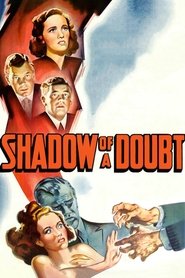
Shadow of a Doubt (1943)
Hitchcock shoots the small town of Santa Rosa with an almost documentary plainness — flat light, wide friendly streets — and then lets shadow creep sideways into the sunny family house whenever one particular visitor enters a room. Watch how the film's tension lives not in actions but in knowledge: who knows what, and who knows what the other person knows. Notice the emerald ring — a single object Hitchcock loads with more dread than any act of violence. This is the domestic thriller as a hall of mirrors: two characters presented explicitly as twins, one bright, one dark.
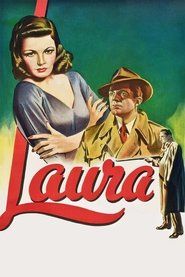
Laura (1944)
Preminger's lighting is elegant rather than harsh — it sculpts Gene Tierney's face into something almost otherworldly, because the film is about a woman who has been turned into an ideal image by everyone who loves her. Watch the portrait above the fireplace and how it's lit a half-shade warmer than the room around it, keeping its own reserve of life. A detective assembles a woman entirely from her letters, her things, her picture — and the film quietly asks whether he's falling for a person or a projection.

Double Indemnity (1944)
This is the film that consolidated noir's grammar, and you can watch it being invented shot by shot: Venetian-blind shadows striping faces like the bars of a cell nobody's entered yet, a doomed man narrating his own story into a Dictaphone from the very first scene. Watch the famous introduction by anklet — the camera falls for her before the hero does, and we know more than he does from the start. Notice how ordinary spaces — a house, a supermarket, an office — are staged as traps that look open but close around their occupants.
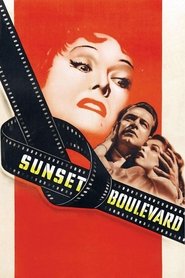
Sunset Boulevard (1950)
Wilder reunites with his Double Indemnity cinematographer and pushes everything further: the narrator tells his story from the far side of the grave, calm and past-tense. Watch how the mansion is shot — low angles, deep focus, ceilings pressing down while rooms stretch into shadow — architecture as psychology, a technique running straight back to German silent cinema. The unmissable scene: a faded star running her own old films in a dark room, her young face thrown by projector light into the room where her older self sits. Past and present sharing one beam of light.
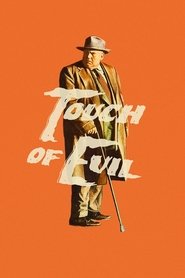
Touch of Evil (1958)
Often called the last classical noir — the one that pushes every element to its limit. It opens with a legendary three-minute unbroken crane shot following a car with a bomb in its trunk over rooftops and through border-town traffic; watch how it binds strangers, music, and dread into one continuous breathing motion. Then notice the opposite technique: a corrupt cop shot from floor level, wide-angle lens rendering him monstrous, ceiling crushing down. Welles builds scenes by moving actors toward and away from the lens rather than cutting — the camera as moral instrument.

Chinatown (1974)
The New Hollywood generation resurrects noir and turns it inside out. Watch the light: instead of night and shadow, the crimes here happen in blinding California noon — amber, dust, sun-bleached exteriors where daylight offers no clarity at all. Watch the bandage on the detective's nose, worn for half the film: a sleuth who literally can't follow his own nose, maimed on-screen by the director himself in a cameo. And watch water — in channels, reservoirs, tide pools — as the film's image for how power flows invisibly around every obstacle.
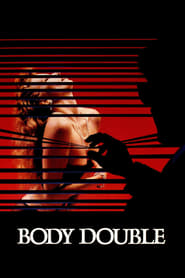
Body Double (1984)
De Palma rebuilds Hitchcock's watching-machines — the courtyard telescope, the trailed woman, the staged spectacle — with the safeties off. Watch how he refuses to let the act of looking dissolve: when a character peers through a telescope, we get the black vignette, the wobble of magnification, the hardware of vision kept in the frame. Watch for his signature split-diopter shots holding a foreground face and a distant doorway both knife-sharp. This is a film about the pleasure of watching that keeps reminding you that you bought the ticket.
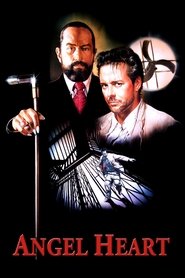
Angel Heart (1987)
A hardboiled private-eye picture crossbred with occult horror, shot through perpetual smoke and dust — cold grey New York, humid amber Louisiana, highlights blooming, shadows swallowing detail. Watch the ceiling fans: there's one turning at the top of almost every room, chopping the light into flicker, and the film keeps looking at them even when its hero won't. Notice near-subliminal flashes cut into otherwise realistic scenes — a technique borrowed from The Exorcist — seeding unease you can't quite locate.
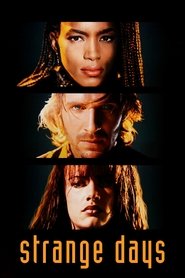
Strange Days (1995)
Bigelow's near-future noir opens with a sequence you don't watch so much as wear: an entire robbery experienced through someone else's eyes, shot on custom first-person rigs years before GoPro or bodycams made that vision ordinary. Watch how the film maintains two distinct ways of seeing — the grimy, neon-soaked "real" Los Angeles versus the immersive recorded clips — and how it treats the craving to relive sensation as an addiction. Every clip implicates the watcher. That means you.
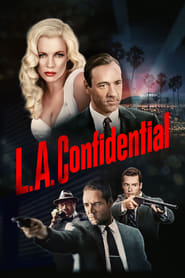
L.A. Confidential (1997)
Dante Spinotti lights 1950s Los Angeles in warm amber and gold — sunlight through venetian blinds, lacquered bars, glamour-portrait lamplight — and the beauty is the point. Watch for a woman lit exactly like a 1940s studio star, in a story about an operation that manufactures counterfeit movie stars: the film photographs the forgery with total reverence while knowing it's a forgery, and refuses to choose between those facts. Watch also how three very different cops embody three different gaps between what the law says it is and what it does.
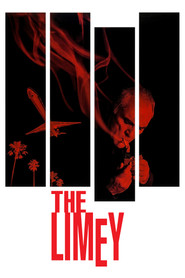
The Limey (1999)
Soderbergh shoots Los Angeles in unglamorous sunstruck clarity — glass, concrete, freeways — then fractures it in the editing room the way grief fractures a mind. The boldest stroke: for the hero's memories, Soderbergh uses actual footage of the young Terence Stamp from a 1967 Ken Loach film, so the remembered past is literally another movie's past, grainy and gold, surfacing unannounced the way real memory does. Watch how voice and image drift apart, words floating free of the scenes they belong to.
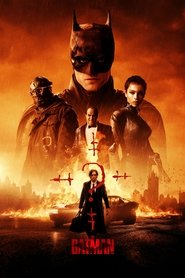
The Batman (2022)
Greig Fraser shoots the modern blockbuster like a 1970s crime picture: radically underlit, faces falling into shadow, a palette of near-monochrome darkness broken by sodium orange and blood red — a grammar inherited from The Godfather's cinematography. Watch how the film opens with watching itself: surveillance is the plot before anything else is. And watch how the killer's cipher-laden crime scenes address the detective directly, making decoding the action — a serial-killer procedural in a cape, built on documents and clues rather than set-pieces.
Why watch them together? Because this set lets you see influence flowing like water finding its channels. Double Indemnity's venetian blinds reappear, warmed to gold, in L.A. Confidential. Welles's crushing low angles in Touch of Evil echo his own Citizen Kane and forward into Sunset Boulevard's predatory mansion. Chinatown's doomed investigator becomes Angel Heart's. Hitchcock's watching-games in Shadow of a Doubt get rebuilt, decade after decade, by De Palma, Bigelow, and Reeves. Watched in sequence, these films stop being twelve mysteries and become one long argument — about whether seeing is knowing, whether light reveals or seduces, and why the sunniest city in America keeps producing the darkest pictures. Bring your attention; the shadows reward it.