Sightlines · a mini film course
The Verdict Is Only Half the Story: Eleven Films on Trial
Every film in this set passes through a courtroom — but not one of them believes the courtroom is where truth actually lives. These eleven films use the machinery of the law (the witness stand, the cross-examination, the countdown to a verdict) as a stage for something the law can't quite handle: a child learning to see, a man watching his own reason dissolve, an apartment turning into an interrogation room. What connects them is a fascination with seeing — who gets to look, from what height, through what glass, and what happens when looking is all a person has left. Watch these together and you'll notice the trial is never really about the case. It's about whether anyone in the room can perceive clearly at all.
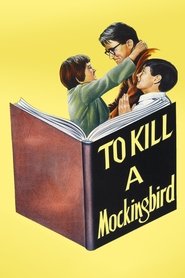
To Kill a Mockingbird (1962)
Watch where the camera sits: for most of the film it rests about four feet off the ground, at a child's eye level, so the adult world literally leans in over the frame — Atticus becomes a tower, the courthouse steps a monument. Russell Harlan's black-and-white photography holds deep shadow in the night scenes without ever tipping into nightmare, giving small-town Alabama a genuine Gothic charge. And remember that everything you see is narrated by a grown woman recalling a childhood summer: the hazy, diffused daylight and the single piano notes of the score are the look and sound of memory itself, half-understood.

The Lady from Shanghai (1947)
Welles builds a film about the impossibility of telling a thing from its reflection — and then constructs a literal hall of mirrors to prove it. Watch how the sunny Acapulco sequences feel deliberately wrong for a crime picture: brightness where you expect shadow, openness where you expect a trap. The whole film is narrated by a man who admits up front he couldn't see clearly, so treat every gorgeous image with the suspicion it's asking for.

The Postman Always Rings Twice (1981)
Sven Nykvist — Bergman's great cinematographer — shoots this Depression-era roadhouse in plain, dusty, available light, and that refusal of glamour is the whole point. Watch how appetite runs together here: hunger for food, for bodies, for money and escape, all filmed in the same flat daylight, as one continuous drive. Where the 1946 version had to sublimate everything, Rafelson and Mamet strip the story back to its raw pull — people sliding down a slope they don't understand.

The Last Wave (1977)
Russell Boyd shoots Sydney as a city under meteorological siege — bruised skies, sodium-lit wet streets, water pooling where no water belongs. Notice how often the lawyer hero is filmed from the dry side of a window while the wet keeps finding its way in: the film's courtroom plot is a Trojan horse, and inside it a rational man is slowly reduced from someone who acts to someone who can only watch and dream. A cornerstone of the Australian New Wave, and a legal drama that behaves like a slow-rising flood.
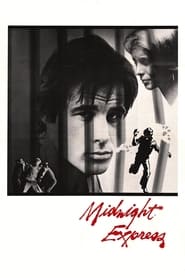
Midnight Express (1978)
Listen before you look: Giorgio Moroder's synthesizer pulse under the opening — a heartbeat ticking against the cuts — is the film's real narrator. Michael Seresin's photography charts a descent, from the hot, exposed light of the Istanbul airport into ever-darker, more expressionistic pools as the prison closes in. The film is built as a fall through descending circles, and the prison genre it wears on the outside conceals something older and stranger: a study of raw compulsion eroding a self.
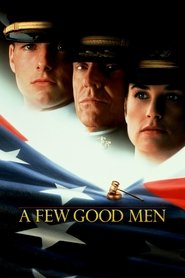
A Few Good Men (1992)
Nothing "happens" in the climactic stretch — two men sit in a room and talk — and yet it plays as combat. Watch how Reiner and cinematographer Robert Richardson keep tightening the frame between lawyer and witness, shortening the distance until there's nowhere left to stand. It's a masterclass in how pure argument, staged and cut with enough conviction, becomes action — the confined, talk-driven suspense of 12 Angry Men rebuilt at full studio scale.
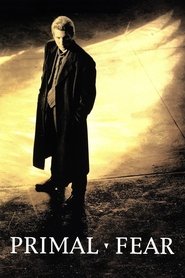
Primal Fear (1996)
Watch Edward Norton's face, and watch what the camera doesn't do: Michael Chapman simply holds the shot, adding nothing, letting a transformation complete itself with no cut to hide the seam. The film drops its question of performance and identity into the one genre built to settle truth — the legal thriller — and lets the courtroom's truth-machine strain against something it wasn't designed to process. Arriving at the peak of the '90s legal-thriller cycle, it's the entry that quietly sabotages the form from inside.
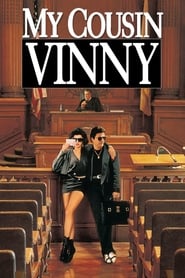
My Cousin Vinny (1992)
Hold onto the opening gap between two men and one sentence — a terrified question written down as a confession — because the whole film lives there. Beneath the comedy is one of the most rigorous studies of evidence American studio film has produced: what a witness could actually see, how confidence outruns accuracy, how expertise gets earned. Notice its almost radical faith that competent action still fixes things — every problem here yields to someone learning to do a job correctly — and notice its direct kinship with Mockingbird: a defense built on proving the physically impossible.
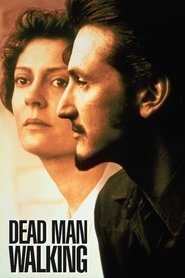
Dead Man Walking (1995)
Watch the wire mesh in the visiting room: Roger Deakins keeps catching it in reflection so that nun and condemned man slide over each other into the same pane of glass, and for a second you can't say whose face you're looking at. The film runs on a procedural countdown — appeals, pardon board, the scheduled hour — but its real subject is what remains when doing gives way to witnessing. Deliberately unshowy photography in service of the genre's hardest choice: a condemned man who is guilty.

Dancer in the Dark (2000)
Everything lives in the switch: jittery handheld camera and washed-out color for the dramatic scenes, then — when the heroine's imagination takes over — the factory's stamping press becomes a beat, the machines fall into rhythm, and grey labor becomes a musical number. Then the song ends and the press is just a press again. Von Trier casts Catherine Deneuve precisely to summon your memory of the classic musical, then runs the genre's engine without its consolations. Watch for how sound intensifies as sight fails.
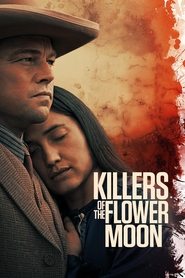
Killers of the Flower Moon (2023)
The man who made the tracking shot a verb holds still. Scorsese spent fifty years teaching us his crime films run on motion; here he switches it off, letting Rodrigo Prieto's widescreen frame render the Osage landscape as both paradise and trap, and letting long, unmoving close-ups on Lily Gladstone's face carry the film's moral weight. Watch what stillness does: the camera observes complicity unfolding in plain sight, refusing to make the crime exciting — a director turning his own genre against itself.
Watched together, these films become a conversation about the limits of the very room they share. Some believe in it wholeheartedly — A Few Good Men and My Cousin Vinny stage the trial as a place where skill and truth still win. Others let the machinery grind on while the real drama happens elsewhere: in a child's upward gaze, in mesh-screen reflections, in a face the camera refuses to leave. You'll start noticing the choices repeat and rhyme — where the camera sits, when it moves and when it refuses to, what light does to memory and what glass does to identity. The verdicts vary. The question underneath them — can we ever see another person clearly? — is the one every film here is really arguing.