Sightlines · a mini film course
The Untrustworthy Image: Twelve Films Where Seeing Is Never Simple
Every film in this set is, one way or another, suspicious of its own pictures. These are movies where the camera watches rather than chases, where memory does the storytelling and can't be cross-examined, where a face or a room or an absence carries more information than the plot does. Some are thrillers, some are romances, some are horror; what unites them is a shared wager that cinema's deepest work happens not in what happens but in how we're made to see it — through whose eyes, at what distance, with what warmth or chill. Watch them as a course in perception itself: desire that blinds, memory that rewrites, legend that outlives fact.
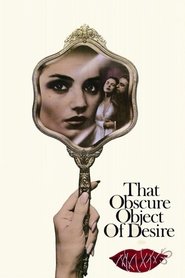
That Obscure Object of Desire (1977)
Buñuel's late style is a deliberate refusal of visual flourish — flat, even lighting that mimics affluent domestic comfort rather than movie glamour — and that plainness is the joke's straight face. Watch for two things: a burlap sack the hero carries through his own story that no one is polite enough to ask about, and the famous casting device in which two different actresses share a single role, the swap marked by nothing at all — no cut you'd notice, no dream to file it under. The editing behaves perfectly normally while the film quietly dissolves the idea that the woman he desires is one knowable person. It's the whole argument of the movie in formal miniature: he can describe her endlessly without ever managing to see her.

Poor Things (2023)
Here the lens itself grows up. Robbie Ryan shoots Bella's early scenes through fisheye and wide-angle glass, sometimes pinched inside circular irises — the frame bulges, the world pours in at the corners — because the distortion is her infancy, a consciousness meeting everything for the first time. Watch how the compositions gradually normalize as she matures: you are literally watching a mind calibrate its own eye. Underneath runs a Victorian satire built in episodes, each encounter chipping away at some confident authority.
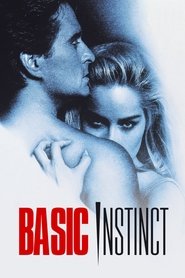
Basic Instinct (1992)
Jan de Bont's camera will not stop moving — cool, gliding, unhurried, circling its blonde enigma the way suspicion circles a fact it can't pin down. Watch the interrogation scene closely: five men question one woman in white, and by the end you realize the interrogation has run backward, the questioners the ones being read. The film's deeper game is a femme fatale who may be authoring the plot from inside it, so that confession, evidence, even sex become performances you can't peel apart from fact. Verhoeven bolted an art-cinema idea — narration that makes truth rather than uncovers it — onto a slick studio thriller engine.
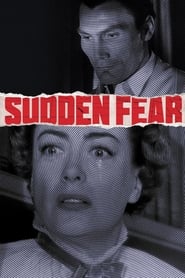
Sudden Fear (1952)
Charles Lang's Oscar-nominated photography splits the film in two: a warm, open San Francisco courtship that darkens, in the back half, into full noir — deep shadow, oppressive rooms. But the real event is Joan Crawford's face. In the film's pivotal scene, devastating information arrives by accident, through a machine, and she can do nothing but listen; Lang isolates her face in fields of black and asks her to travel an entire arc — contentment, horror, cold calculation — almost wordlessly. Watch the micro-movements: a face crossing over from victim to author of her own counter-plot.
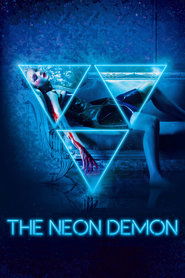
The Neon Demon (2016)
Refn opens on a tableau that tells you, before a word is spoken, that beauty here is something you hold still to be consumed. Natasha Braier's cinematography runs on saturated color and hard geometry, in the lineage of Suspiria's gel-lit dread and the fashion-house menace of Italian horror. Watch how rarely anyone acts: characters study each other in mirrors, paint faces from photographs rather than from the living person beside them, until you can't say which is the thing and which is its image. It's horror staged as pure looking.
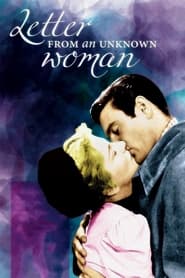
Letter from an Unknown Woman (1948)
Ophüls's gliding camera — inherited from the unchained German tradition — doesn't observe longing, it participates in it, floating up staircases and along courtyard windows beside its heroine. The frame is announced early: a letter, a voice from the past, a lifetime of love narrated to a man who cannot recall it — so nothing on screen is quite happening; it is being remembered. Watch for the staircase, climbed more than once: same banister, same spiral, different ache each time, the past returning like a needle to a worn groove.
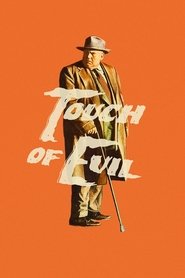
Touch of Evil (1958)
Start with the legendary opening: a three-minute unbroken crane shot that lifts off the ground and binds a whole border town — ticking car trunk, strolling couple, bleeding neon and music — into one breathing motion. Then watch what the wide-angle lenses do to Hank Quinlan, shot from floor level with the ceiling pressed down on his head, the frame itself rendering him monstrous. The film lives in the gap between a camera that can't stop telling the truth and a cop whose certainty rests on forged means. It's the last, most excessive statement of classical noir, made by a director at war with his own studio.
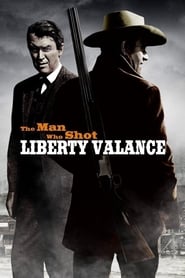
The Man Who Shot Liberty Valance (1962)
Ford's most famous vistas are absent here — this West unfolds indoors, in the saloon, the kitchen, the newspaper office, in restrained black-and-white and deep theatrical staging. The story arrives as recollection, a frame around a vanished past, and the film's great subject is the distance between what a town remembers and what its founding actually cost. Watch how Ford lets legend and fact sit side by side without letting either cancel the other — "print the legend" is not a cynical punchline but the film's whole melancholy architecture.
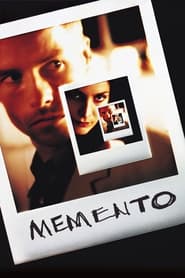
Memento (2000)
The famous structure: color scenes running backward, each ending where the previous one began, so every scene drops you in with no memory of how you arrived; a black-and-white strand running forward; the two meeting at a hinge. The point isn't cleverness — the form puts you inside the hero's condition rather than describing it from outside. Watch the opening Polaroid, developing in reverse, detail draining back into blankness: the whole film in three seconds. Pfister's restrained, legible photography is a mercy, given how hard your own memory will be working.
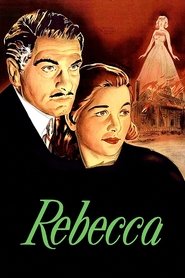
Rebecca (1940)
The title character never appears — no face, no flashback, no body. What she gets is a monogrammed R, a preserved bedroom, a yearning musical theme that gives her a body the image denies her, and George Barnes's gliding camera keeping her always just out of frame. Watch how the film builds an overwhelming presence entirely out of absence, and how the vast, shadowed architecture of Manderley dwarfs the nameless new wife at every turn. You keep waiting for the camera to turn and find her; it never can.
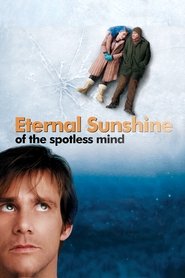
Eternal Sunshine of the Spotless Mind (2004)
Ellen Kuras shoots the present tense handheld, wintry and grained — off-season Montauk, raw available light — while the memory scenes go fluid and unstable, cutting mid-scene from now to then without flagging the jump. Watch the bookstore: as erasure works through Joel's mind, the signs go blank and titles slide off spines while he's still standing in the room — a remembered place subtracted in real time, no explanatory cutaway needed. The premise makes its hero a man who can see everything and change nothing, and the film finds both the comedy and the grief in that.
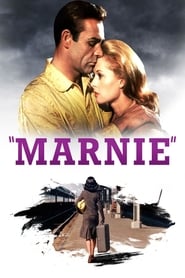
Marnie (1964)
It opens on a woman's back — a yellow handbag, a railway platform, no face, no name — withholding the one thing a thriller usually hands over first: someone to look through. Hitchcock films Tippi Hedren the way a clinician watches a patient, long lenses flattening her against the architecture, two-shots held past comfort, and the discomfort is deliberate: your own analytic curiosity gets implicated. Then watch what the film does with red — an inkspill, a jockey's silks — flooding the frame from inside her perception, feeling before explanation.
Watched together, these twelve films teach a single skill: distrust the straight story, and start noticing the frame. You'll see Buñuel's flat drawing rooms and Verhoeven's gliding lens making the same argument about desire from opposite directions; Ophüls, Ford, and Nolan each building a film out of memory rather