Sightlines · a mini film course
Knowing Too Much: A Short Course in the Cinema of Watching
Every film on this list is, on paper, a spy movie. But watch them side by side and a stranger, richer subject emerges: these are all films about knowing — what the audience knows that the characters don't, what a body knows that its own mind doesn't, what a camera in the sky can see but never understand. The spy thriller turns out to be cinema's great laboratory for the act of watching itself. Hitchcock made the contract explicit: tell the audience where the bomb is, then make them sit with that knowledge. Everything after is a series of renegotiations of that contract — through handheld chaos, through drone feeds, through a stuntman's real broken ankle left in the final cut. I've arranged them chronologically, because they genuinely talk to each other across the decades.
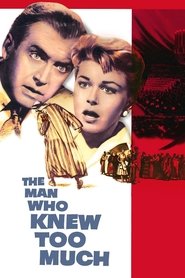
The Man Who Knew Too Much (1956)
The reason to see this is the Albert Hall sequence, which runs close to real time: a printed concert program is passed around, and once you learn that a single cymbal crash will cover the sound of a gunshot, the music stops being music and becomes a clock. You suffer every bar of it, because Hitchcock has given you the assassin's timetable and then seated you, helpless, in the audience. Notice too what's underneath the spy plot — a marriage already strained, a wife whose competence keeps being sedated or set aside — and how Robert Burks's bleached, sun-hammered Moroccan light gives way to the hushed interiors of London.
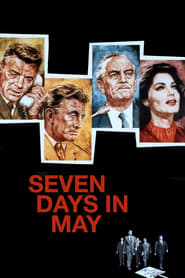
Seven Days in May (1964)
Frankenheimer and cinematographer Ellsworth Fredericks shoot in deep-focus black and white with aggressive wide-angle lenses, so a face looming huge in the foreground and the small, crisp figure who will undo him share a single frame — the room tells you who's dangerous before anyone speaks. Watch what the weapons are in this story of an American coup: not guns but memoranda, phone logs, letters. A political thriller in which a single disclosed document can open up a whole hidden world.
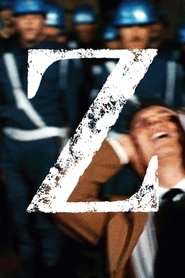
Z (1969)
When the assassination comes, Costa-Gavras puts Raoul Coutard's camera down in the legs and panic at ground level, cutting fast, deliberately denying you the clean overhead shot that would explain what happened — because officials will soon swear that no one could possibly say what they saw. The camerawork is staged to feel like the crime: engineered chaos, the withheld overview. This is the film that proved a furious, fast-moving political thriller could reach a mass audience, and its handheld urgency is the direct ancestor of the Bourne films further down this list.
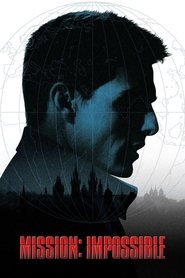
Mission: Impossible (1996)
Start with the drop of sweat in the Langley vault — a nearly wordless sequence you understand perfectly because De Palma has told you the rules in advance: heat, sound, pressure on the floor. That's the Hitchcock inheritance running at blockbuster scale — tension built from what you know could happen, not from surprise. Watch for the tilted frames whenever the hero's world comes apart, and for De Palma's signature shots that keep near and far in focus at once; this is a film obsessed with masks, surfaces, and the untrustworthiness of what you see.
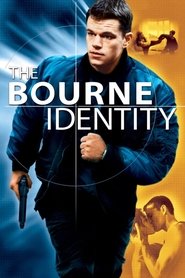
The Bourne Identity (2002)
The key scene is small: a man in a roadside diner reciting everything his eyes have gathered without his permission — the exits, the license plates, which stranger could become a problem — and being frightened by his own inventory. His body knows what his mind has lost, and the whole film turns on that uncanny gap. Notice how Oliver Wood's camera is restless and searching in the surveillance scenes but goes quieter in moments of intimacy, and how real European streets, shot on location, give the paranoia its texture.
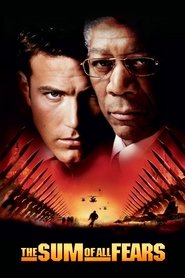
The Sum of All Fears (2002)
This one runs entirely on a gap that lives in you: from the first act, you know who really built the device and why, and you watch Washington and Moscow misread each other toward catastrophe with knowledge neither capital possesses. John Lindley shoots the war rooms and intelligence corridors in a clean, weighty, institutional style — and then, at the film's terrible hinge, everything stops moving, the sound gone to a flat ringing whine. Watch what fear does to men who must decide with bad information.
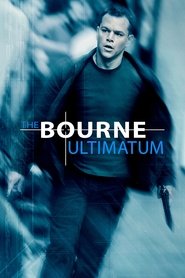
The Bourne Ultimatum (2007)
The Waterloo Station sequence is a stacked tower of watching: a man on a phone, a control room seeing him through the station's own cameras, a reporter walking blind through the crowd — and not a shot fired, the whole drama conducted through eyes and earpieces. Oliver Wood's camera is almost never still, drifting and reframing even in dialogue, an approach descended directly from The Battle of Algiers and Z. Listen for how the score drops out and surveillance chatter fills the space.
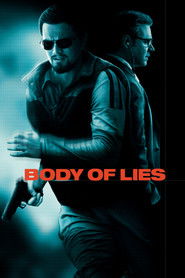
Body of Lies (2008)
Ridley Scott's organizing move is the vertical cut: a sweating, crowded street in Amman, then straight up into the cold clean geometry of a drone feed, where the man you were just beside becomes a pale shape on a monitor in Virginia. The same human being shown twice — once as a body in danger, once as information. The film's argument is right there in its images: the eye above sees everything and understands nothing, and trust can only be earned in person, at shared risk.
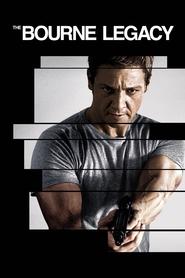
The Bourne Legacy (2012)
Tony Gilroy does something quietly contrary with the franchise: he hands the camera to Robert Elswit, who replaces the trademark jitter with stability, depth, and readable geography — you can follow this body through the Manila rooftops in a way you never quite could follow Bourne. And watch the opening: the most capable man in the film, surviving the Alaskan wilderness like one more feature of the landscape, whose first act at shelter is to count his pills. Capability resting on a dose — the super-soldier reframed as dependency.
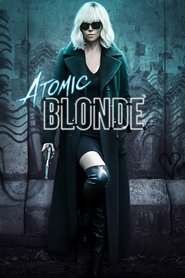
Atomic Blonde (2017)
The famous stairwell fight, staged as one long unbroken-seeming take, is the anti-Bourne argument in a single sequence: instead of cutting fast, the camera refuses to look away from the cost — the emptied gun, the improvised weapons, two people who have stopped winning and started merely outlasting. Notice Jonathan Sela's color-blocked palette (cold blues for surveillance and dread, hot pinks and reds for sex and violence), and the debrief that frames the story, which quietly asks how much of any testimony you should trust.
Mission: Impossible – Fallout (2018)
Tom Cruise broke his ankle jumping a London rooftop gap, and McQuarrie kept the shot: a real bone going, inside a fiction about a man who refuses to stop. That's the film's whole ethic — analog, body-at-risk stunt cinema mounted as a deliberate stand against digital spectacle. Rob Hardy's photography goes handheld and immediate in the fights but pulls to clean, geographically legible wides in the chases, a discipline inherited from De Palma's original: you always know where everything is, which is exactly why it works.
Mission: Impossible – Dead Reckoning Part One (2023)
A man rides a motorcycle off a Norwegian cliff — real body, real fall — but what's new is what he's running from: an artificial intelligence that predicts what people will choose before they choose it. The title is the thesis: dead reckoning is navigation by your own past course, and the film asks whether a person whose next move can be calculated was ever really free. Watch how a franchise built on decisive action turns that tiny hesitation between seeing and doing into its actual subject.
Watched together, these twelve films become a single long conversation. Hitchcock hands you the bomb under the table and makes your knowledge the engine of suspense; Frankenheimer and Costa-Gavras show how a lens can expose — or deliberately obscure — the machinery of power; De Palma scales the old contract to blockbuster size; the Bourne films fracture the image it