Sightlines · a mini film course
The Body Knows First: Eleven Films Where Watching Is the Action
Most movies are built like machines: a character sees a problem, acts, and the problem resolves. The films on your list — wildly different in period, country, and temperature — all quietly refuse that machine. In each one, the real drama lives in bodies, faces, and rooms: a camera that watches rather than chases, a posture that tells you more than a speech, time that's allowed to stretch until you feel it. Whether it's a six-year-old's eye-level view of a flooded world, a queen's face holding steady while something moves underneath it, or a boy hammering his feet against a brick wall, these films trust you to read what a body is saying before anyone explains it. Watch them that way and they start talking to each other.
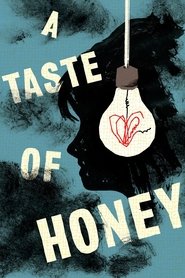
A Taste of Honey (1961)
Watch the walks. Jo moves through Salford — canal reflections, latticed ironwork, fairground neon against grey sky — and Walter Lassally finds real beauty in industrial desolation without ever prettifying poverty. Nothing is decided on these walks; that's the point. The film's great subject is a sharp young intelligence making continuous small adjustments to conditions she did not choose, and Richardson lets you see her seeing.
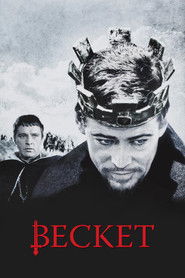
Becket (1964)
This is a film about two faces in a room. Built from long, literate confrontations rather than pageantry, it puts Geoffrey Unsworth's cool stone interiors and crimson vestments at the service of what registers on a face when a friend disappoints a king. Watch O'Toole's Henry in those moments: nothing is done, but everything is felt, and the camera stays to catch it.
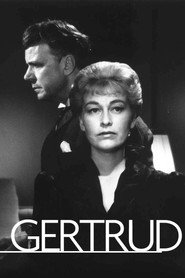
Gertrud (1964)
Notice where people look. Again and again, two people sit together, someone says the word love — and neither looks at the other; declarations go out into the empty air. Dreyer builds the film from extraordinarily long, unbroken takes, so scenes unfold in real time and you're left studying a woman who sees everything with perfect clarity and watches rather than schemes. It's one of cinema's great acts of patience; meet it with your own.

The Lion in Winter (1968)
Slocombe shoots the castle at Chinon as genuinely uncomfortable — drafty stone, rationed firelight, winter pallor — and in almost every shot the brightest, warmest thing is a human face. The lighting teaches you how to watch before a word is spoken: read the face, not the deed. Then watch Hepburn's Eleanor absorb a barbed line — the surface holds while something wounded moves beneath it, and the camera simply stays and trusts you.
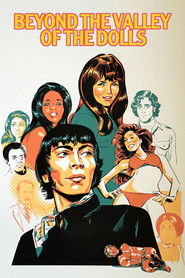
Beyond the Valley of the Dolls (1970)
Here the body-language is a punch. Meyer brought his grindhouse editing reflex onto the Fox lot intact: percussive, near-subliminal smash-cuts that bang faces, thighs, guitars, and pills together as pure visual shocks. Listen, too, for the solemn moralizing voice hovering over the gleeful wreckage — the gap between what the narrator preaches and what the film relishes is where the satire lives. It's the parody of the very melodrama it borrows its title from.
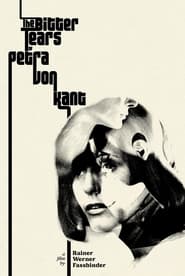
The Bitter Tears of Petra von Kant (1972)
A film set entirely in one room — and watch what the bodies do in it: the women sprawl, crouch, roll across the carpet; nobody stands up and walks out into weather. Within that immobile box, Michael Ballhaus's camera creates all the drama through foreground obstruction and lateral movement, while mannequins and a Poussin painting throw the spectacle of desire back at the living women below. Space itself becomes the trap.

The Madness of King George (1994)
Keep your eye on two chairs: the throne, and a heavy wooden restraining chair with wrist-straps — the same body in each. The film stages monarchy as relentless performance, blocking the court like a machine of postures (being dressed, dining, processing), and then shows you what happens when the body holding the pose starts to fail. Andrew Dunn's camera mirrors it: cool symmetry giving way to cramped, unbalanced frames as order slips.
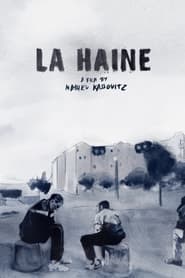
La Haine (1995)
Three friends across twenty-four hours, clocked off in inter-titles like a countdown — and notice how much they see and how little they can change. Pierre Aïm's high-contrast black-and-white makes the grey towers of the estate simultaneously harsh and monumental, and a circulating gun embodies the film's argument: the violence isn't imported, it's generated by the system and recirculated. Watch how the film keeps you suspended in the interval, mid-fall.
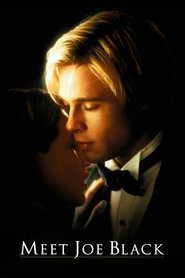
Meet Joe Black (1998)
Start at the breakfast table: a spoonful of peanut butter, and Brest holds the shot on a face discovering what a mouth is for. The film's famous length isn't a miscalculation — it's the subject. Lubezki's warm, amber light pools around these seated two-handers and domestic rituals, and the film asks you to feel a body learning to have a morning, and time.
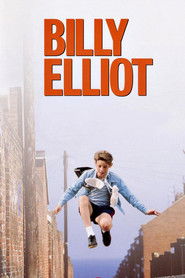
Billy Elliot (2000)
The centerpiece to watch for is the Angry Dance: a boy runs out of street and beats his feet against a brick wall, glam-rock hammering behind him — rage he can't name or spend, discharged into pure movement. The whole weight of a defeated mining town in 1984 gets pressed into eleven-year-old legs; the body speaks what the boy cannot. Tufano's muted, wintry photography connects it to British realism, but the film lets the body break loose of it.
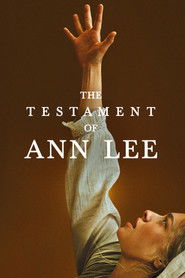
The Testament of Ann Lee (2025)
Watch the camera in the meeting room. For long stretches it holds — frontal, patient, planted like a witness — letting the ranked Shaker formations fill the wide frame; then the shaking starts and the camera goes handheld, pushing in among the worshippers as if seized by the same spirit. Cinematographer William Rexer calls the camera a participant, not an observer, and that's the whole film in one gesture: for the Shakers, worship was the body, and the doing is the belief.
Watched together, these films retrain your eye. You'll start noticing where the light falls (on faces, in Lion in Winter), where people look (away, in Gertrud), what the cutting does to you (assaults you, in Meyer), where the camera stands (at a child's shoulder, at a witness's height, inside a sealed room). None of these films asks "what happens next?" as its first question. They ask: what is this body doing, what is this face holding, what does this room permit? That's a slower, richer way of watching — and once you've practiced it here, you'll carry it into everything else you see.