Sightlines · a mini film course
The Draw and the Wait: Twelve Films About Seeing and Doing
Movies — especially Westerns, chases, and thrillers — run on a beautiful, simple engine: a person sees trouble and does something about it. The cut carries us from looking to acting; the world answers the deed. Every film in this set is in conversation with that engine. A few run it at full, glorious power. Most of the others do something stranger and more haunting: they keep all the parts — the desert, the guns, the deadline, the road — and quietly jam the machine, so that characters see everything and can change almost nothing, and we are left leaning in beside them, watching. Seen together, these films become a single long argument about what a camera does when it stops chasing and starts witnessing.
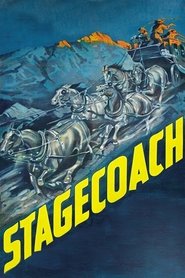
Stagecoach (1939)
Start here, with the machine in perfect health. Watch the famous introduction of John Wayne — the camera rushing toward him, low, buttes towering behind his head — a movie star minted in one move, and a promise that this is a world where a man answers every situation with his body. Notice how the journey strips social pretense off a coach full of passengers, and how the deep-focus landscape presses on people who press right back. Everything after this on the list is, in some way, a response to it.
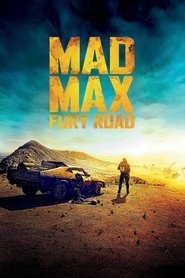
Mad Max: Fury Road (2015)
The old engine, rebuilt and floored. Miller centers his subjects in the frame so your eye never has to hunt, which means the film can cut at ferocious speed and stay perfectly legible — a two-hour chase you can always read. Hold the Doof Warrior in mind: a flame-throwing guitar bolted to a war truck, spectacle that's never only spectacle. This is what full-throttle seeing-into-doing looks like when it's been storyboarded down to the last frame, with a debt to Buster Keaton's bodies-on-machines.

3:10 to Yuma (1957)
Here's the first jam — and it comes early, wearing a cowboy hat. Most of the second half unfolds in one hotel room: an easy, charming outlaw on the bed, a desperate rancher gripping a shotgun at the window, and long stretches where nothing happens. That nothing is the film. Watch how Charles Lawton Jr.'s black-and-white trades sun-flattened open country for a boxed, shadow-cut interior, and how courage gets redefined as endurance — the refusal to let go of a commitment — rather than fast hands.
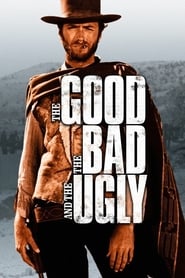
The Good, the Bad and the Ugly (1966)
Leone inherited the Western's grammar from Ford and Hawks, then stretched it until it became something else. Watch the ratio of waiting to acting: whole minutes of faces, holsters, and thumbs on hammers before anything moves. And listen — Morricone composed key pieces before shooting, they were played on set, and the editing follows the music rather than the other way around. Notice too the wild swing between vast wide shots and faces filling the entire frame: geography and psychology, nothing in between.
Pat Garrett & Billy the Kid (1973)
The manhunt is the movies' most reliable engine; this film refuses to run on it. It's almost always sundown here — John Coquillon shoots figure after figure as a silhouette against fading gold and deep blue — and the film moves like a procession rather than a pursuit. Watch the scene of a wounded sheriff walking down to the water while Bob Dylan sings: two actors doing almost nothing, and the song finishing the scene after they've stopped. Elegy, not suspense.
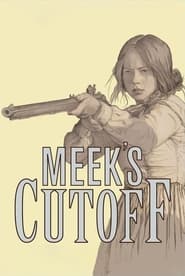
Meek's Cutoff (2011)
Reichardt keeps every ingredient of the Western — wagons, desert, a guide, a captured man — and lets the machine seize entirely. Watch the boxy, almost square frame, which refuses the genre's sweeping panoramas and gives you a partial, hemmed-in view; watch how the women's bonnets do the same work, drawing a hard border around what a person is permitted to see and hear. The film's true subject is the terror of acting on insufficient information: we get what the women get — a murmur down the slope, the shape of a decision, never its content.

El Topo (1970)
Jodorowsky borrows Leone's costume, horse, and ritualized standoff, then buries the genre to see what grows back. Watch how Rafael Corkidi's camera arranges the desert into frontal tableaux like religious paintings, and how even the gunfights register as ceremony rather than combat — duels staged as parables, the long approach kept but the ordinary payoff cut loose. A gunfighter film about what happens when shooting stops resolving anything.
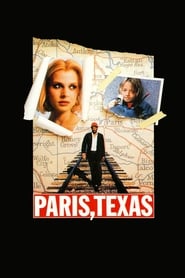
Paris, Texas (1984)
A man walks out of the desert and doesn't speak for twenty minutes of screen time, and the film builds itself entirely out of watching. Robby Müller's long lenses shrink a human figure to a fleck against the caliche flats and motel neon; Harry Dean Stanton's face becomes a landscape of registered feeling with nowhere to discharge. Watch how the road-movie's promise — freedom, escape, open possibility — gets routed back toward obligation, and how saturated color and framing say what the characters can't.
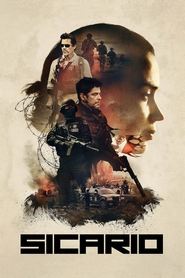
Sicario (2015)
Watch where Villeneuve keeps putting Kate Macer: in a doorway as the shooting starts, in the back seat of a convoy that won't say where it's going, at the edge of the briefing where the real plan is decided. The film's whole argument is in that blocking — a competent, clear-eyed agent who is always the person things happen near. Roger Deakins shoots the border as geology rather than postcard, dwarfing figures without romanticizing the space; the result is a thriller that keeps converting action into something you can only witness.
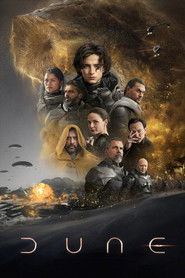
Dune (2021)
Villeneuve again, at planetary scale. Watch how long Greig Fraser holds a lone figure at the crest of a dune — past the point a studio note would trim it — until a man stops reading as a man and becomes a unit of measurement. In an old action film, landscape is terrain to be used; here the sand is sovereign, right down to the irregular "sand-walk" a body must adopt to cross it. The desert epic by way of Lawrence of Arabia and 2001: spectacle subordinated to gravity, image, and sound.
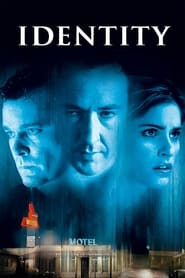
Identity (2003)
The one puzzle-box in the set, and a sly one. Watch the numbered room keys — a countdown stamped into the décor — and keep an eye on how Phedon Papamichael shoots the rain-soaked motel: sodium-amber, cold blue, every surface silvered and reflective, identical doors lined up like a multiple-choice question. Notice how deliberately artificial and sealed-off the place feels; that staginess is doing quiet, purposeful work. Say no more — just don't let anyone tell you the ending.
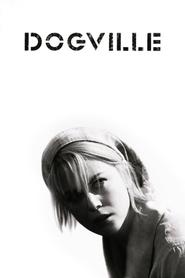
Dogville (2003)
Von Trier subtracts the visible world: a town rendered as chalk lines on a black floor, the word "dog" written where the dog should be, actors miming doors whose latches we somehow hear. Watch what that subtraction does to you — stripped of walls and furniture, every frame becomes something you must actively read, and reading makes you complicit. Anthony Dod Mantle's restless handheld camera hunts among the actors while the town's kindness slowly reveals its price.
Watched together, these twelve films teach you a single skill: noticing the exact distance between what a character sees and what a character can do. In Stagecoach and Fury Road that distance is zero, and the pleasure is kinetic and total. In Meek's Cutoff, Sicario, and Paris, Texas the distance yawns open, and the films ask you to sit inside it — in the bonnet's blind spot, at the threshold of the briefing room, on the far side of a long lens. The Leone, the Peckinpah, and the Daves show the gap opening historically, inside the Western itself; Jodorowsky, von Trier, and Mangold show what wild new forms grow once the old grammar is buried, chalked over, or reflected back at itself. Watch them in any order, but watch them for the same thing: the moment a film decides whether its camera will chase — or simply, devastatingly, look.