Sightlines · a mini film course
The Cinema of Watching: Ten Films Where Feeling Outruns Action
Most movies run on a simple engine: a character sees a problem, then does something about it. A punch, a chase, a confession, a rescue — seeing leads to doing, and doing moves the story. The ten films in this set all, in their different ways, unplug that engine. Their characters look, listen, remember, yearn — and cannot, or will not, convert any of it into decisive action. What rushes into that gap is everything cinema usually hurries past: the weight of an afternoon, the eloquence of a held face, the grief buried in a cut, the distance between two people standing close enough to touch. These are films where the camera watches rather than chases, where time is allowed to stretch, and where the real drama happens in a glance, a posture, a silence. Watch them as a set and you'll start to feel a secret history of the movies — passed from Occupied Paris to postwar Britain, from the French New Wave to Hong Kong, Tokyo, and beyond.
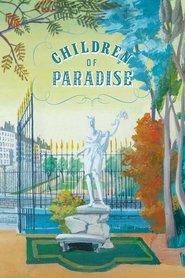
Children of Paradise (1945)
Begin with the silent man. Jean-Louis Barrault, trained in mime, plays Baptiste the Pierrot, and Carné builds the whole film around what that training knows: a body in the right posture is already a sentence. Watch how the film sets Baptiste's wordless eloquence against Frédérick Lemaître's spoken bravura — two whole traditions of performance placed side by side. And savor Roger Hubert's burnished, candle-and-gaslight photography, which turns the teeming Boulevard du Temple into a living painting, a studio-built world made under the Occupation as an act of cultural defiance.
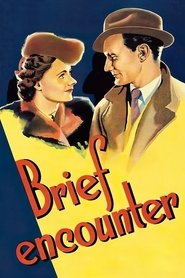
Brief Encounter (1945)
The whole film lives in Celia Johnson's face — specifically in what it doesn't show. Watch the refreshment-room scenes: a woman keeps her hands still around a teacup while a neighbour chatters, and enormous feeling registers in the barely perceptible compression around her eyes. Lean and cinematographer Robert Krasker split the world in two: interiors rendered in charged, shadowy contrast; exteriors in harder, documentary clarity. Notice too how the film treats restraint not as timidity but as a kind of honour — and how the railway station, all steam and intervals between arrivals, becomes the film's emotional weather.
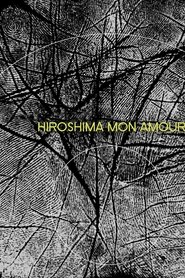
Hiroshima Mon Amour (1959)
The film opens on two bodies shot so close they stop being bodies, skin grained with something you can't identify — and Resnais means you not to. A woman's voice insists she has seen everything in Hiroshima; a man's voice answers, flat as a verdict: you saw nothing. Watch how the film stages that argument in its very images — the split between two cinematographers, one shooting France with meticulous compositional control, the other shooting Japan — and how it asks whether private grief and historical catastrophe can ever illuminate each other. This is where a screenwriter named Marguerite Duras invented a method she'd push much further sixteen years later.
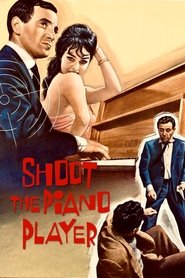
Shoot the Piano Player (1960)
Truffaut takes the crime picture — brothers on the run, gangsters closing in — and quietly unplugs its engine. The plot keeps handing Charlie cues to act; he keeps not acting, and Charles Aznavour plays this with unnerving economy: a small dip of the head, a beat of hesitation. Watch how Coutard's camera isolates him — in corners, doorways, behind the bar's counter as though behind a screen — and how the film swerves between brutal violence and unexpected tenderness within a single scene, refusing to let any tone stabilize. One early sight gag about a sworn oath will tell you everything about how this film handles cause and effect.

L'Avventura (1960)
A woman vanishes on a volcanic island; a search begins — and then the film does something no film had quite dared before. Watch how Antonioni inverts the usual hierarchy of the image: people drift to the edges of the frame, get obscured by walls and columns, or are dwarfed by rock and sea until they read as incidental marks on stone. The landscape isn't backdrop; it's a pressure. Nobody says what they mean because nobody, including themselves, knows what they mean — and the film holds its shots long enough for you to feel how long holding takes.
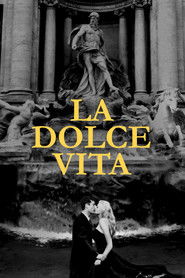
La Dolce Vita (1960)
The opening tells you everything: a statue of Christ dangles from a helicopter over Rome, Marcello follows in a second machine, mimes a request for phone numbers to sunbathing women — and the rotor wash swallows every word. Here is a man whose profession is watching (a gossip journalist, a perceiver by trade) and whose curse is that watching never becomes doing. Watch Mastroianni's radical passivity — a face of intelligent, helpless receptivity — and Martelli's wide anamorphic frame, which flattens the celebrities of the Via Veneto into hard, bleached photographic surfaces. Three hours of nights and dawns, drifting laterally, and every episode a form of distraction catalogued.
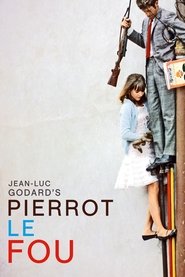
Pierrot le Fou (1965)
The first true image: a man in a bathtub, fully clothed, reading art history aloud to a daughter who isn't listening — a person who would rather narrate experience than have it. The whole film is the punishment of that wish. Watch how Godard wears the gangster picture and the romance as costume without accepting their logic, and how Coutard's camera swings between drifting handheld freedom and static tableaux held so long they feel like paintings being consulted. The saturated primary colors carry emotion rather than describe space — a trick learned from Nicholas Ray's melodramas and pushed into full comic-strip expressionism.
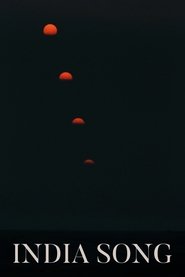
India Song (1975)
The strangest and boldest film here: nobody on screen speaks. Figures drift through the amber heat of a colonial embassy, lips shut, while disembodied voices — somewhere off, half in love with the woman they're mourning, unsure of their own memories — do all the talking. Duras lets sound and image come completely unstuck, each telling its own story across the gap. Watch Bruno Nuytten's long, slow takes, the smoky gold light that pools and fades, and above all the mirror shot near the start, where Delphine Seyrig appears twice — once as a body, once as reflection — and you can't always say which is which. Everything here is a present we're told, again and again, is already finished.
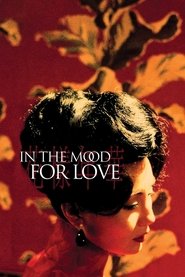
In the Mood for Love (2000)
She goes down for noodles. A thermos swings from her hand, a string waltz comes in, and the image drops to a quarter speed. Nothing happens — and that is the event. Wong Kar-Wai gives his two protagonists perfect knowledge of their situation and then watches them do nothing about it: no revenge, no affair, only a drama that deepens in place rather than advancing. Watch how the architecture does the talking — stairwells, corridors, doorways as positions characters occupy instead of crossing — and how a plot you could summarize in one sentence runs two hours and feels bottomless.
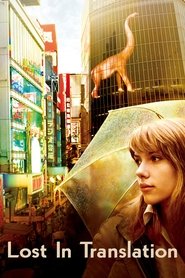
Lost in Translation (2003)
Start with the window: a young woman on a hotel sill, knees drawn up, looking out at a Tokyo that goes on past the limit of looking. She isn't waiting for anything. She just sees, and the film lets her. Coppola and cinematographer Lance Acord build the whole picture out of this — soft warm interiors against the cool neon nightscape, shallow focus isolating faces in crowds, telephoto shots that flatten the city into a wash of light behind the characters. Notice how directly it inherits from Brief Encounter's restraint and L'Avventura's trust in mood over plot — this list folding back on itself, fifty years later.
Why watch these together? Because they teach each other. Brief Encounter hands its template of restraint directly to Lost in Translation; Duras writes Hiroshima Mon Amour and then radicalizes her own invention in India Song; Antonioni's dwarfed figures and dead time echo in Wong's corridors and Coppola's windows; Godard and Truffaut take apart the same genre machinery from two different temperaments. Watched in sequence, these films retrain your attention. You stop asking what happens next and start asking better questions: what is that face holding back, what did that cut skip over, why is the camera still watching after the scene should be over? By the end, you'll find that the films where "nothing happens" are the ones where everything does — just not where movies usually put it.