Sightlines · a mini film course
The Cinema of the Held Breath: Twelve Films About Love That Cannot Act
There's a certain kind of love story where nothing "happens" — no duel, no elopement, no confrontation in the rain — and yet everything happens. The films in this set belong to that tradition. Each one is about desire meeting a wall: marriage, war, illness, class, history, geography, the sheer weight of the world. And each one solves the same problem in its own way — how do you film a feeling that has nowhere to go? The answers are astonishingly varied: a camera that glides where the lovers cannot; a face held so close it becomes a landscape; a stairwell descended in slow motion; a mirror that won't let a woman escape her own reflection. Watch these films for what they withhold, and for how the camera itself becomes the vessel for everything the characters can't say or do.
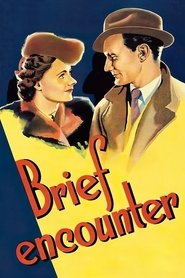
Brief Encounter (1945) — dir. David Lean
Start with the oldest film here, because it sets the template. Watch Celia Johnson's face — Lean and cinematographer Robert Krasker stake everything on it, using shadowy, high-contrast lighting to make interior spaces (the refreshment room, the railway carriage) feel psychically charged, almost dangerous, while the outside world stays hard and clear. Notice too how the film opens and closes on the same few minutes, so you gradually realize you've been living inside a loop someone is silently replaying. The drama is almost entirely in the tiny calibrations of a composed public face — what a stage could never show, and what cinema was practically invented for.
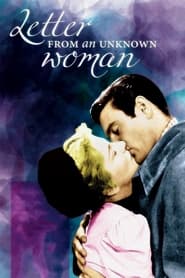
Letter from an Unknown Woman (1948) — dir. Max Ophüls
A whole life told in a letter, read in the present, narrating a past its recipient cannot recall. Watch the staircase: Ophüls's camera glides up it beside his heroine more than once, and each return to the same banister, the same spiral, means something different. Franz Planer's famous mobile long takes don't just observe — they participate, moving with the rhythm of longing itself. Notice the film's deep asymmetry: a love that defines one life entirely while barely registering in another, and a camera that seems to remember better than the characters do.
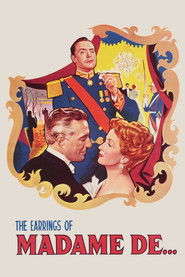
The Earrings of Madame de... (1953) — dir. Max Ophüls
Ophüls again, and here the camera is in nearly perpetual, gliding motion — following characters through doorways, around corners, across rooms — as if modeling the story's inescapable logic. Watch the first scene closely: we meet Louise through her mirror, a woman appraising the surface she's been taught to be, and the film never lets private feeling and public performance fully separate again. Watch, too, how a pair of earrings travels — a small object set spinning through a glittering, closed world with no exit. The elegance is the trap.
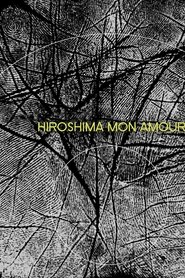
Hiroshima Mon Amour (1959) — dir. Alain Resnais
The film opens with bodies shot so close they stop being bodies — skin grained with something you can't identify, and Resnais means you not to. Two voices argue over the images: I saw everything. You saw nothing. Watch how the film holds personal grief and historical catastrophe side by side without pretending they're the same size, and how two cinematographers split the work along national lines — the French sequences composed with meticulous control, the fragments of memory held in precise frames. This is a love story built like an essay, and it changed what a love story could be.
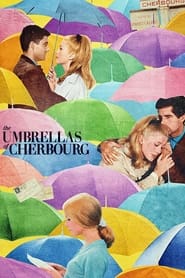
The Umbrellas of Cherbourg (1964) — dir. Jacques Demy
Every word is sung — Demy eliminates ordinary speech entirely, making song the universal medium — and the color is coordinated down to the wallpaper. But watch what he does with the musical's usual promise. The classic musical is cinema's most confident form: feeling rises, the body dances, the world reorganizes. Demy keeps all the bright surfaces and quietly removes the motor: his lovers face forces (war, money, time, biology) too large and too slow to fight, with no villain to blame. Start with the overhead shot of umbrellas blooming across a wet square — weather turned into choreography — and notice how the sweetness is doing serious work.
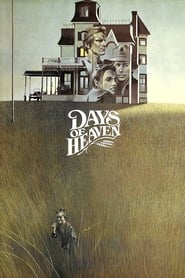
Days of Heaven (1978) — dir. Terrence Malick
Here the camera is taken away from the people and given to the world. Néstor Almendros organized shots around what the light was doing — not what dialogue or action demanded — and the golden-hour wheat fields glow as if lit from below. Watch how the frame holds long after the action in it has finished, reluctant to leave; watch how long lenses flatten the human figures against the horizon, small at the edge of the wheat. It's not contempt for the characters — it's a claim that they live inside nature on the same terms as the birds and the wind.
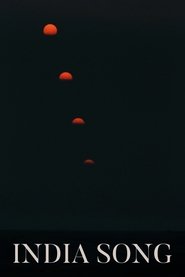
India Song (1975) — dir. Marguerite Duras
The most radical experiment in the set. Nobody on screen speaks — lips stay shut while disembodied voices, somewhere off, recall the woman we're watching, half in love with her, unsure of their own memories. Duras splits sound and image into two separate tracks that tell two different stories at once, communicating only across the gap. Watch Bruno Nuytten's amber, smoky long takes, figures held at a distance like exhibits in memory, and the mirror shot where a reclining woman appears twice — body and reflection — and you can't always say which is which. Let it be slow. The slowness is the subject.
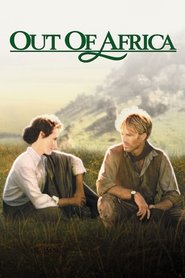
Out of Africa (1985) — dir. Sydney Pollack
Watch for the moments when Pollack stops telling the story and lets the land do the feeling. In the famous biplane sequence, nobody speaks for minutes; a hand reaches back over an open cockpit, and it's the earth — tilting and unscrolling below — that performs the love. David Watkin's soft, naturalistic light lets the Kenyan landscape carry the emotion, and John Barry's score works where dialogue can't. The film's deepest theme is possession and its impossibility — of land, of people, of a lover — and its most beautiful passages are about learning to hold something without owning it.
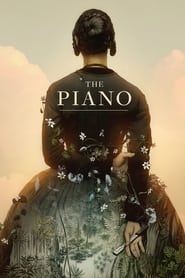
The Piano (1993) — dir. Jane Campion
Ada does not speak — she stopped as a child, and Campion is right never to explain it. The muteness is a refusal, not a void: she's routed everything through her hands. Watch how Stuart Dryburgh's camera alternates between the wide, wet, cold wilderness and extreme close-ups — a face, then hands on the keys — and how the desaturated palette makes the rare moments of warmth (candlelight, firelight) land with disproportionate force. Holly Hunter won an Oscar for a performance with almost no lines. Hold the opening image: a piano abandoned on a black-sand beach, a voice left where no voice should be.
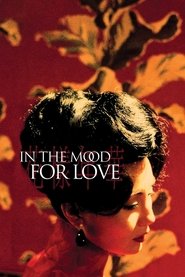
In the Mood for Love (2000) — dir. Wong Kar-Wai
A plot you could summarize in one sentence runs two hours and feels bottomless. Watch the repetitions: the same narrow stairwell, descended in slow motion to the same string waltz, a different dress, another hour of the night. Nothing happens — that is the event. Wong shoots his two neighbors through corridors, doorways, and thresholds, positions they occupy instead of crossing, and the drama doesn't advance so much as deepen in place. This is the melodrama of restraint at its most concentrated: desire expressed entirely through what is withheld.
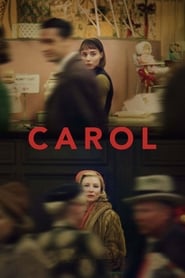
Carol (2015) — dir. Todd Haynes
Watch the glass. Edward Lachman shot on Super 16mm so the grain sits on the image like weather, and he keeps framing the lovers through something — rain-streaked cab windows, storefronts, condensation on a diner's pane — faces partly obscured, doubled by reflections. The obstruction isn't décor: it's the film's entire manner of seeing, making you watch these two women the way 1950s society forced them to watch each other — glimpsed, partial, rarely in the clear. Notice the debt to Brief Encounter, reprised almost beat for beat, and the borrowed look of Saul Leiter's color street photographs.
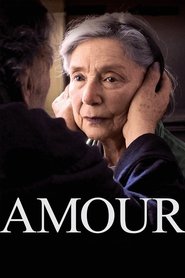
Amour (2012) — dir. Michael Haneke
The sternest film here, and the tenderest. Watch the early concert scene: Haneke points the camera at the audience instead of the stage, filling the screen with strangers, and makes you hunt for the couple in the crowd — quietly assigning you the only job the film will give you: to watch. Darius Khondji's camera stays static, at a respectful middle distance, with cuts slow enough that you wait inside rooms in something close to real time — a meal prepared, a body lifted. Two of the greatest French actors alive perform with an austerity that refuses every easy gesture. This is what love looks like at the limit.
Why watch them together? Because they teach each other. Once Brief Encounter has trained you to read a held face, you'll see what Wong Kar-Wai and Todd Haynes are doing with theirs. Once Ophüls's gliding camera has shown you how movement can express what characters can't, you'll recognize its descendants in Wong's stairwell and Demy's floating tracks. These twelve films, spanning seventy years and four continents, keep returning to the same discovery: that cinema is uniquely equipped to film the un-acted — the look held a beat too long, the threshold not crossed, the world moving while a person stands still. Most movies chase. These watch. Give them your patience, and they'll give you back a way of seeing that changes every film you watch afterward.