Sightlines · a mini film course
When Feeling Can't Become Action: Twelve Films That Wait
Most movies run on a simple engine: someone sees a problem and does something about it. The chase, the confession, the punch, the kiss. The twelve films on your list all quietly remove that engine — and what rushes in to fill the space is extraordinary. These are films about desire held in place: by history, by marriage, by class, by war, by manners, by geography, by a body that won't speak. When characters can't act, the camera learns a new job. It watches instead of chases. It lets time stretch. It reads a face the way another film would stage a battle. Watching these together, you'll start to feel how a held glance, a repeated staircase, a color palette, or a piece of glass can carry more drama than any deed.
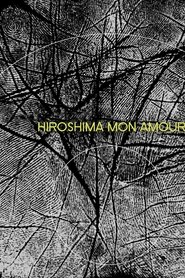
Hiroshima Mon Amour (1959)
Resnais opens at extreme closeness — two bodies filmed so near they almost stop being bodies, skin grained with something you can't identify, and he means for you not to. Listen to the opening exchange: a woman insists she has seen everything in Hiroshima; a man answers, flatly, that she has seen nothing — while the images seem to obey her. Notice that the film was shot by two different cinematographers, one for France and one for Japan, so memory and present literally have different textures. This is a film about what can and cannot be witnessed, and it makes you feel that problem in your own eyes.
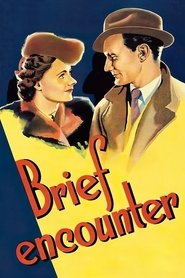
Brief Encounter (1945)
Watch Celia Johnson's face — that's where the whole film lives. Lean and cinematographer Robert Krasker shoot the interiors (the station refreshment room, borrowed rooms) in charged, shadowy contrast, while the outside world gets a harder, plainer light: the private and public selves have different photography. The drama here is the gap between a total feeling and zero action, registered in the tiniest compressions around the eyes, the effort of keeping a public mask intact over a teacup. Nothing the stage could show; only a camera this close could.
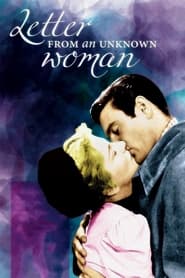
Letter from an Unknown Woman (1948)
Ophüls's gliding camera is the star: fluid tracking shots that climb staircases and drift along windows, participating in longing rather than merely recording it. Watch how the film returns to the same staircase, the same street — repetition as the very structure of memory. And notice the asymmetry at its heart: a love that defines one life entirely while barely registering in another. Nearly every film on this list learned something from it.
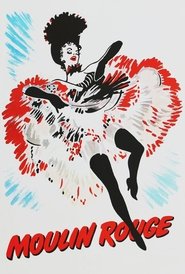
Moulin Rouge (1952)
Huston and cinematographer Oswald Morris fought Technicolor's own technicians to dirty the format — fog filters, colored smoke, reds gone to brick, ambers gone to haze — so the film could match Toulouse-Lautrec's palette rather than reality's. The result: color that stops describing the world and starts being the feeling — gaiety arrives as brassy warmth, loneliness as drab cool, before anyone says a word. Watch the opening can-can from where the film puts you: down low, at the edge, beside a small man with a sketchpad who watches rather than dances.
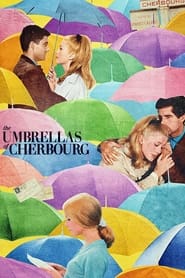
The Umbrellas of Cherbourg (1964)
Demy takes the Hollywood musical — cinema's most confident form, where feeling always discharges into a dance number — and keeps every bright surface while removing the motor. Everything is sung, even errands and arguments; the candy-colored town is entirely designed; and yet the forces pressing on these lovers (conscription, money, time) are too large and too slow to fight with a song. Watch the overhead opening: umbrellas blooming across a wet square, weather turned into choreography, telling you the rules in one minute.
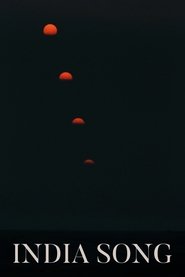
India Song (1975)
The strangest and boldest experiment here: nobody on screen speaks. The figures drift, statue-still, through amber embassy rooms, while disembodied voices — somewhere off — remember them, half in love with what they're recalling, unsure of their own memories. Sound and image have come completely unstuck, telling two stories at once across a gap. Start with the mirror shot: a woman appearing twice, once as body, once as reflection, and you can't always tell which is which. Everything here is seen at one remove.
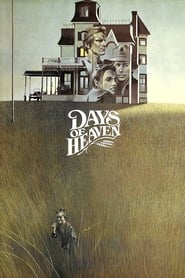
Days of Heaven (1978)
Malick and Néstor Almendros did something radical: they subordinated the camera to the light instead of the story. Shots are organized around what the sun is doing — wheat glowing at the golden hour as if lit from below — and the frame lingers after the action has finished, reluctant to leave. People appear small at the edge of the field, glimpsed past machinery, existing inside nature on the same terms as the birds and the wind. It's one of the most influential bodies of cinematography ever shot; you'll see its fingerprints on half the films made since.
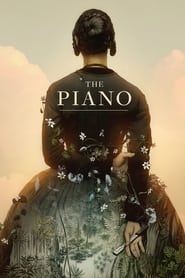
The Piano (1993)
A piano abandoned on a black-sand beach, too heavy to carry inland, the tide making a slow threat of it — hold that image, because the film is in it. Ada doesn't speak; her muteness is a refusal, not a void, and Campion routes everything through her hands. Watch how Stuart Dryburgh's camera alternates between wide, cold, wet wilderness and extreme closeness — a face, then fingers on keys — and how the desaturated palette makes the rare moments of candlelight and firelight land with disproportionate force. Holly Hunter gives a nearly wordless performance and lets you read everything.
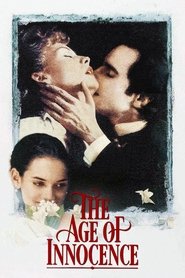
The Age of Innocence (1993)
Scorsese called this among his most violent films, and he meant it: in 1870s New York, manners are weaponry, and the most brutal acts are committed with perfect politeness. Watch what he does with a hand — reaching for a flower, a fan, the gap between glove and wrist — as Michael Ballhaus's gliding, almost predatory camera isolates the gesture the way another Scorsese film would isolate a drawn gun. The engine that drives his gangster pictures — see it, then act on it — has been quietly severed, and the discovery is that a drawing room can paralyze a man as completely as any catastrophe.

Happy Together (1997)
A cheap lamp in a Buenos Aires apartment, a paper waterfall turning slowly on its shade — a destination you can hold in your hands, present and forever postponed. Two men from Hong Kong, half a world from home, in the year before the handover. Christopher Doyle constricts space to the point of suffocation: cramped kitchens, corridors, extreme wide-angle lenses warping faces up close. Watch how waiting, cleaning up, listening at doors — the smallest, least heroic verbs — become the entire drama.
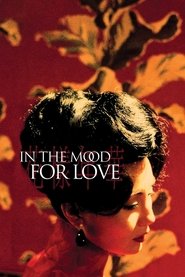
In the Mood for Love (2000)
Watch the noodle run: a thermos swinging, a string waltz in 3/4, the image slowed to a quarter speed — the same narrow stairwell, a different dress, another hour of the night. Repetition is the film's grammar; corridors, doorways, and thresholds are positions people occupy instead of crossing. Two cinematographers shot it (Christopher Doyle and Mark Lee Ping-bin), and the drama never advances so much as deepens in place: a plot you could summarize in a sentence that runs two hours and feels bottomless. Watch what lowered eyes are doing.
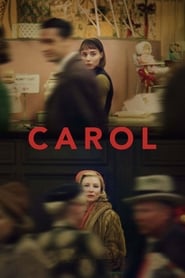
Carol (2015)
Start with the window. Haynes and cinematographer Edward Lachman — shooting on grainy Super 16mm, borrowing the look of Saul Leiter's color street photographs — keep framing the lovers through something: rain-streaked cab windows, storefront glass, condensation, reflections. You watch them the way the 1950s forced them to watch each other — glimpsed, partial, rarely in the clear. The obstruction isn't decoration; it's the film's whole way of seeing. And watch the first held look across the toy counter: nothing happens, in plot terms, and everything does.
Why watch them together? Because these films are in open conversation. Duras wrote Hiroshima before directing India Song; Ophüls's circling camera taught Wong Kar-Wai his stairwell choreography; Days of Heaven's palette and voiceover flow directly into The Piano; Brief Encounter gives Carol its very architecture. Watched in sequence, they train your eye toward a different kind of drama — one carried by light, color, repetition, and the astonishing amount a still face can hold. By the end you'll find you've stopped asking "what happens next?" and started asking the better question these filmmakers were all posing: what does it look like to feel something you cannot act on? That's a skill, and it stays with you long after the last frame.