Sightlines · a mini film course
The Cinema of the Held Breath: Twelve Films Where Feeling Never Becomes a Deed
Most movies run on a simple engine: someone sees something, and then they do something about it. A wrong is spotted, a punch is thrown, a chase begins. The films on this list quietly unplug that engine. In each of them, characters see everything — a love they cannot pursue, a catastrophe they cannot undo, a life they cannot enter — and the film refuses to let seeing turn into doing. What fills that gap is astonishing: faces held in close-up until the smallest flicker becomes an event, color and light that carry the emotion the characters can't speak, cameras that watch rather than chase, time allowed to stretch until a stairwell or a teacup feels bottomless. These are films about yearning, renunciation, memory, and the untaken step — and each one invents a different way to make stillness electric.
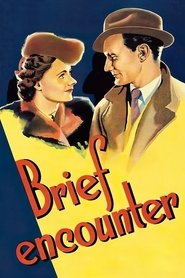
Brief Encounter (1945)
Watch Celia Johnson's face — the whole film lives there, in the tiny compressions around the eyes while she keeps a public mask intact over a teacup. Lean opens and closes on the same minutes, so you're living inside a loop a woman is rehearsing silently behind her composure. Notice too how Robert Krasker's photography splits the world: shadowy, charged interiors versus the harder documentary light outside, and the way the railway station — steam, timetables, intervals between trains — becomes the erotic and moral architecture of the whole story.
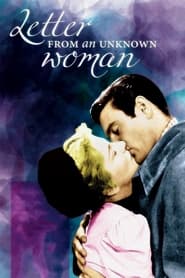
Letter from an Unknown Woman (1948)
Ophüls's camera glides — up staircases, through doorways, alongside bodies — as if longing itself were doing the tracking. Watch for one staircase in particular, climbed more than once, each ascent a different life. The frame is a letter read in the small hours, a voice addressing a man as "you" across a lifetime he cannot recall — the whole film is memory made visible, and the gap between how much a love mattered to one person and how little it registered in another is the wound the camera keeps circling.
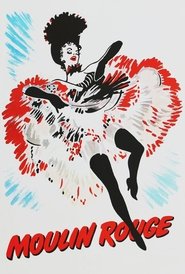
Moulin Rouge (1952)
Huston and cinematographer Oswald Morris fought Technicolor's own technicians to dirty the format — fog filters, colored smoke, reds gone to brick, ambers gone to gaslight haze — so the screen would look like a Toulouse-Lautrec canvas. Watch the celebrated opening inside the dance hall: the can-can churns, and at the edge of the frame a small man sits sketching, not dancing. The film's real subject is that low, sidelong vantage — the outsider who belongs precisely because he can only look — and you'll read the mood off the palette before you read it off any face.
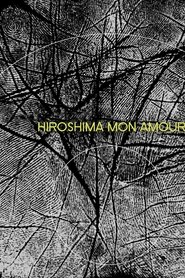
Hiroshima Mon Amour (1959)
The film opens with two bodies shot so close they stop being bodies — skin grained with something you can't identify, and Resnais means you not to. Listen to the opening exchange: a woman insists she has seen everything in Hiroshima; a man answers, flat as a verdict, that she has seen nothing. That argument — can private grief and historical catastrophe illuminate each other, or must they stay sealed apart? — is the film's engine. Notice how two cinematographers split the work along national lines, documentary texture against precise studio composition, so the film's very surface holds two kinds of memory in tension.

L'Avventura (1960)
A woman vanishes on a volcanic island; a search begins — and then Antonioni does something no film had quite dared: he lets the mystery-engine quietly wind down and watches what's left. Watch how the frame inverts the usual hierarchy: people drift to the edges, get obscured by walls and rock, are dwarfed by landscape until they read as incidental marks on stone. Two figures can stand close enough to touch and remain unreachable — the geometry of the shot tells you everything nobody in the film can say.
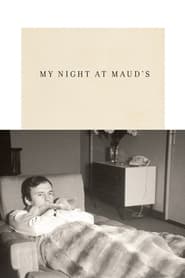
My Night at Maud's (1969)
The suspense here is entirely moral: a man has made a private vow — to a woman he's never spoken to — and spends a long snowy night in another woman's apartment keeping it, with a stubbornness that begins to look less like virtue than vanity. Watch what Rohmer and Almendros do with almost nothing: soft grays, snow-flattened streets, a white bed in the middle of a gray room becoming the film's silent center of gravity. It's proof that patient framing and brilliant talk can generate more tension than any chase.
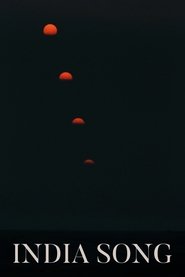
India Song (1975)
The strangest and most radical film here: nobody on screen speaks. The figures drift through amber embassy rooms, lips shut, while off-screen voices — remembering, longing, unsure of their own memories — conjure them into being. Duras has detached sound from image completely, so soundtrack and picture become two stories told across a gap. Start with the great mirror shot, where a reclining woman appears twice — body and reflection — and you can't always say which is which. Everything in this film is a thing seen at one remove.
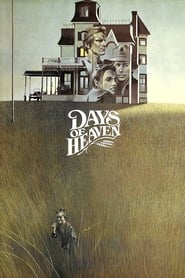
Days of Heaven (1978)
Begin with light. Almendros organized every shot around what the light was doing — not around dialogue, not around action — and the golden-hour wheat fields glow as if the gold were rising out of the ground. Watch how the camera lingers after the action in a frame has finished, reluctant to leave; watch how long lenses flatten the people against the horizon until they exist inside nature on the same terms as the birds and the wind. It's not contempt for the characters — it's a claim that the world itself is the protagonist.
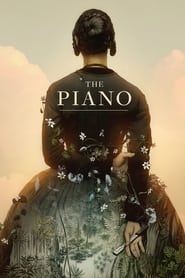
The Piano (1993)
Ada does not speak — she stopped as a child, and Campion is right never to explain why — so the film routes everything through her hands, her eyes, and the piano itself. Watch the alternation Dryburgh builds: wide shots of cold, wet, dark-green wilderness, then extreme close-ups of a face and fingers on keys. The desaturated palette makes the rare moments of warmth — candlelight, firelight — land with almost transgressive force. Holly Hunter won an Oscar for a performance with almost no lines; watch how much a withheld intensity can carry.
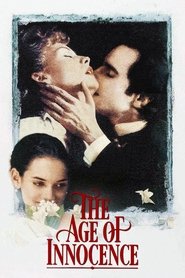
The Age of Innocence (1993)
Scorsese has called this among his most violent films, and the claim is serious: watch what he does with a hand. Ballhaus's camera — the same predatory, gliding instrument from GoodFellas — isolates a reach toward a flower, a fan, the gap between a glove and a bare wrist, the way it might isolate a drawn weapon. In 1870s New York, manners are the weaponry; dinners and calling cards are instruments of control; and the most brutal acts are committed with perfect politeness. The camera prowls a world where nobody can act at all.
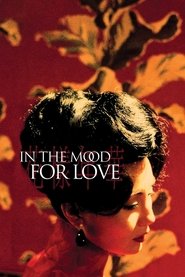
In the Mood for Love (2000)
Watch the stairwell. A woman descends for noodles, a string waltz comes in, and the image drops to a quarter of its speed — and you'll see this descent again, same narrow stairs, different dress, another hour of night. Nothing happens; that is the event. Wong builds the film from thresholds — corridors, doorways, stairs — positions his two protagonists occupy instead of crossing. A plot you could summarize in a sentence runs two hours and feels bottomless, because the drama doesn't advance; it deepens in place.
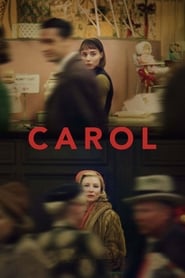
Carol (2015)
Start with the window. Lachman shot on Super 16mm so the grain sits on the image like weather, and he keeps framing the lovers through something — rain-streaked cab glass, storefronts, condensation on a diner pane — borrowing the look of Saul Leiter's street photographs. The obstruction isn't décor: you watch these two women the way the 1950s forced them to watch each other — glimpsed, partial, rarely in the clear. Watch too for its open conversation with Brief Encounter and the Sirk melodramas: a whole tradition of coded feeling, reclaimed and rewritten.
Watched together, these films teach you a different way of paying attention. They form a genuine conversation across decades: Ophüls's circling camera reappears in Wong's stairwell; Sirk's imprisoning windows return in Haynes's rain-streaked glass; Duras writes Hiroshima Mon Amour and then pushes its method to the limit in India Song; Lean's looping café frame is reprised, almost beat for beat, in Carol. Each film asks you to stop waiting for the plot to deliver and start reading the frame itself — the palette, the pane of glass, the held face, the light on the wheat. What you'll find is that restraint isn't the absence of drama. It's drama compressed to its densest form — and once you learn to see it, a woman walking downstairs for noodles becomes as gripping as any chase.