Sightlines · a mini film course
The Watchers: A Dozen Films Where Seeing Outruns Doing
Most movies run on a simple engine: a character spots a problem, acts on it, and the action changes the world. The films on your list — nearly all of them born in or descended from the French New Wave — quietly unplug that engine. Their characters look, listen, wander, talk, remember; the camera watches rather than chases; time is allowed to stretch until a face, a street, or a silence becomes the event itself. Watching these together, you'll see a whole generation of filmmakers discover that what a person can't do is often more revealing than what they can — and invent new grammar (the held shot, the jump, the freeze, the gap between scenes) to film it.
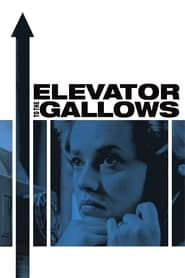
Elevator to the Gallows (1958)
The bridge between the old studio craft and the new freedom. Notice Henri Decaë's two visual registers: hard-shadowed, tightly framed interiors for the carefully planned crime, and something looser and more nocturnal for the Paris streets outside. Watch how every modern convenience — the car, the elevator, the camera — turns on its user, so that a man of decisive action ends up sealed in a box while the night undoes his arrangements. Miles Davis's score and real Paris locations make it feel like the future arriving early.
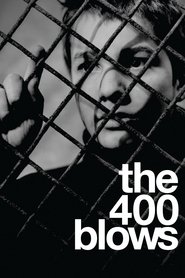
The 400 Blows (1959)
Truffaut's debut, shot in austere Paris winter light, follows a boy whom every adult institution — parents, teachers, psychologists — processes through categories that don't fit him. Watch how sharply Antoine perceives his world and how little any of his actions land the way he intends. Notice, too, the psychologist's interview: methodical, professional questions that never quite make contact with the particular child in front of them.
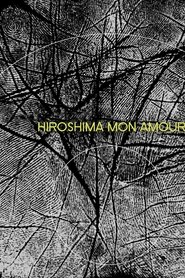
Hiroshima Mon Amour (1959)
It opens with two bodies filmed so close they stop being bodies — skin grained with something you can't identify, and Resnais means you not to. Listen to the opening argument between a woman who insists she has seen everything in Hiroshima and a man who answers, flatly, that she has seen nothing: that exchange is the whole film in miniature, a meditation on whether private grief and historical catastrophe can ever illuminate each other. Note also that two cinematographers split the film along national lines, giving the French past and the Japanese present visibly different textures.
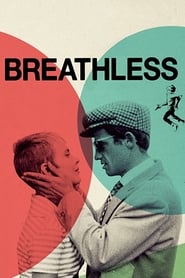
Breathless (1960)
Watch Belmondo's thumb cross his lip — a gesture borrowed from Bogart, tested again and again to see if a pose can hold a life up. The famous jump cuts slice moments out of the middle of shots, and Coutard's raw, unpolished photography treats Paris as reportage. This is a crime picture that keeps the genre's cool and iconography while letting all its suspense drain away — a man on the run who mostly wanders, cadges money, and talks.
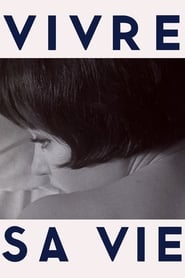
Vivre Sa Vie (1962)
The first thing Godard shows you of Nana is the back of her head — a film about a woman's face that begins by refusing to show it. Watch how the film rations the close-up, saving the face for moments when nothing "happens" and feeling itself becomes the event, most movingly when Nana sits weeping in a cinema before Dreyer's Joan of Arc. Coutard's long, patient takes refuse conventional coverage at every turn.
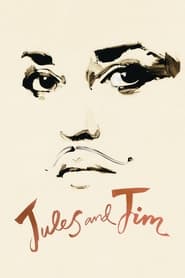
Jules and Jim (1962)
Truffaut inherits Renoir's warmth: natural light, river locations, a camera that tracks an ensemble without moralizing about anyone. The image to watch for is the freeze frame — not saved for an ending but deployed mid-laugh, in the middle of happiness, holding a face longer than any living face would let you look. A story about the collision of absolute freedom and lasting love, told with a lightness that makes the melancholy sharper.
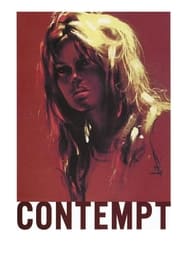
Contempt (1963)
The centerpiece is a half-hour argument in a half-furnished Rome apartment, and Godard refuses to cut away — the doublings-back, the wounded silences, the traffic filling in where words should be. Watch how the widescreen frame places husband and wife at opposite edges of the image, and how Bardot plays estrangement not as outburst but as micro-adjustments of attention, a turning-away. The thing that matters has happened off-screen; the film is about living in its aftermath.
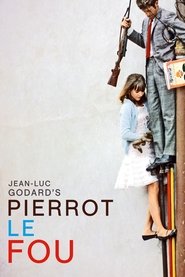
Pierrot le Fou (1965)
It begins with a man reading art history aloud in a bathtub — a person who'd rather narrate experience than have it — and the film is, in a sense, the punishment of that wish. Watch Coutard's color: saturated primaries carrying emotion rather than describing space, interiors like Matisse paintings, tableaux held long enough to feel consulted rather than passed through. Godard borrows the gangster picture and the romance as costume, then lets his hero watch the genre happen to him.
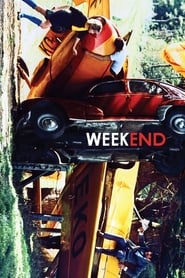
Weekend (1967)
The shot everyone remembers: a camera gliding sideways along a country road for seven or eight unbroken minutes, past stalled cars, picnickers, a sailboat on a trailer, scored by nothing but car horns. Watch how the even, indifferent glide refuses to tell you what matters — a satire of consumer society filmed as if by a camera that has stopped taking sides. The New Wave's youthful freedom, curdled into something harsher, on the eve of 1968.
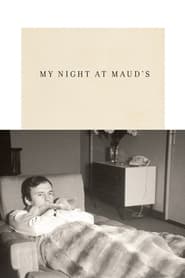
My Night at Maud's (1969)
Rohmer proves that talk alone can carry dramatic tension: the film's centerpiece is one long night of conversation in a single apartment, filmed in soft grays with patient, unemphatic framing. Watch a protagonist — an engineer at home with probability, wrestling with Pascal's wager on faith — who perceives constantly and acts almost not at all. The suspense is entirely moral and intellectual, and it grips like a thriller.
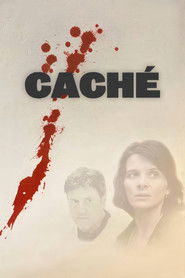
Caché (2005)
Haneke's opening does something small and total: a static shot of a quiet Paris street holds and holds, past the point of comfort, until you learn you weren't watching the movie at all — you were watching a videotape, with the characters. From then on, no frontal, unmoving image can be fully trusted, and the thriller's costume (anonymous tapes, creeping dread) dresses a story about guilt and the refusal of responsibility. Watch how the denial of camera movement denies you a comfortable place to sit.
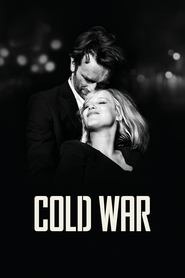
Cold War (2018)
Fifteen years and half a continent in eighty-eight minutes: watch how the biggest events — the border crossings, the ruptures — happen in the black between scenes, so the film's grief lives in what it refuses to show. Żal's silvery, boxy frames place the lovers low under looming skies and walls, dwarfed by the architecture of their era. Listen to one folk melody travel from peasant field recording to state anthem to Paris jazz — the whole history of the century carried in a song's changing clothes.
Seen in sequence, these films become a conversation across sixty years. Malle's trapped man, Truffaut's unseen boy, Godard's posing gangster, Rohmer's talker, Haneke's watched watcher, Pawlikowski's severed lovers — all are variations on one discovery: that when the camera stops chasing and starts watching, when action goes slack and time stretches, cinema finds subjects it never had before. Memory, guilt, contempt, faith, history itself. Watch them for what the frame holds, and just as much for what it withholds — the cut that skips a year, the event that has no scene, the face held still long enough to become a question. That patience is the pleasure. Bring yours.