Sightlines · a mini film course
There's a lazy way to think about crime movies: cops chase crooks, plans go wrong, guns go off. But gather these twelve films together and something stranger emerges. Every one of them is secretly a film about looking — about surveillance and performance, about faces that hide and bodies that reveal, about the gap between what a camera shows you and what you can actually trust. Some of these films strip the world down to chalk lines and darkness so you have to read every frame like a page. Others build worlds so dense with period detail or neon reflection that the texture itself becomes the argument. All of them ask you to watch how they watch: where the camera stands, when it refuses to cut, what it lets a body confess that dialogue never could. Don't worry about plot summaries — worry about the glass between you and the screen, and who's standing on which side of it.
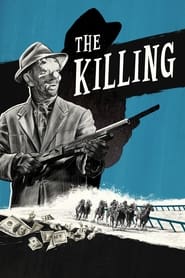
The Killing (1956)
Kubrick's racetrack heist is a clockwork machine — a plan of ruthless rational design, told in a fractured, non-chronological structure that mirrors the planner's own ambition to master time. Watch how the deep-focus rooms and dollying camera moves (Kubrick famously overruled his veteran cinematographer on the lens choice) make every space feel diagrammed, controlled, accounted for. The film's real subject is the collision between control and chance — so notice how much weight small, unforeseeable things are allowed to carry. This is where the modern heist film learns its grammar.
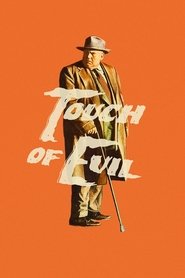
Touch of Evil (1958)
The famous opening is a single unbroken crane shot lasting minutes — a camera that leaves the ground and binds a whole border town into one breathing motion before anything is even explained. Then compare that soaring camera to how Welles shoots the corrupt cop Quinlan: from floor level, wide-angle, ceilings pressing down on him like a lid. Welles and cinematographer Russell Metty barely use conventional shot-reverse-shot; actors move toward and away from the lens instead, so proximity replaces cutting. Watch it as the last, most extravagant statement of classic noir — every element pushed to gorgeous excess.
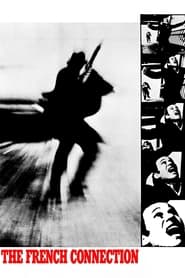
The French Connection (1971)
Friedkin shot this like a documentary crew embedded in a New York winter: telephoto lenses, grubby available light, greys and fluorescent greens, no decorative color anywhere. Watch for one early image — a cold detective on a sidewalk eating bad pizza, watching a French criminal enjoy a fine meal through restaurant glass. Nobody explains it; the film just lets you stand in the cold and look. The whole movie works this way: knowledge assembled inch by inch through tails, frisks, and wiretaps, with obsession presented not as heroism but as something closer to sickness.
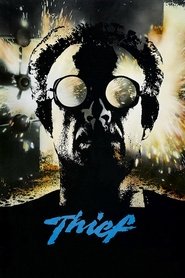
Thief (1981)
Michael Mann's debut invents a visual language he'd spend decades refining: wet streets that return light, neon smearing across asphalt, a Tangerine Dream electronic pulse keeping time. The centerpiece is a safecracking sequence shot with real tools on the advice of real thieves — filmed the way you'd film a master craftsman, every step legible, the duration real. Watch how the film worships professional competence and then asks whether being superb at your work buys you anything at all. The heist tradition of Rififi and The Killing, rewired in neon.
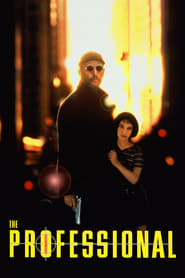
Léon: The Professional (1994)
Besson opens on a paradox and holds it: the deadliest hitman in New York drinks milk, does sit-ups in the dark, and tends a houseplant he calls his only friend "because it has no roots — like me." Watch the rhythm between the jobs — pure procedure, in the lineage of Melville's silent professionals — and the in-between spaces, where cinematographer Thierry Arbogast lets faces simply fill the frame in warm ambers and golds. Jean Reno plays much of the film as a still, unreadable surface behind round black glasses. The film's whole argument lives in what that stillness holds.
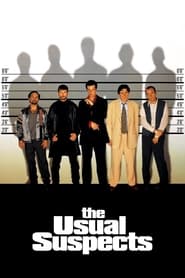
The Usual Suspects (1995)
A man sits in a bureaucratic white-box interrogation room and talks, and the film shows you what he describes — fully lit, fully scored, fully convincing, the way flashbacks have always worked. Watch how deliberately the movie exploits your trust in that convention: we're trained to believe the image is evidence. Notice too how identity itself is performed here — how weakness, compliance, and disability function as visual cues you're invited to read. It descends from Double Indemnity's confession-to-an-authority-figure structure, but with the contract between narrator and viewer quietly renegotiated.
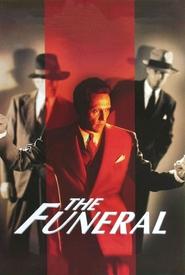
The Funeral (1996)
Ferrara opens where gangster pictures traditionally end: a coffin in the front room, candles burning, the living arranging themselves around a dead brother. Watch Ken Kelsch's deep chiaroscuro — faces emerging from near-total darkness, interiors lit by a few practical sources — and how the wake keeps being interrupted by the past, so the film moves like memory rather than plot. This is a gangster film built to refuse everything the genre romanticizes: no rise, no empire, no glamour — just a Catholic argument about whether these men choose their violence or were always doomed to it.
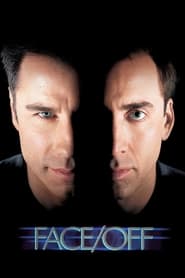
Face/Off (1997)
John Woo brought the full grammar of his Hong Kong films — slow-motion gun ballet, doves, church candles, the cop and killer as mirrored brothers — into a Hollywood blockbuster about two enemies who literally exchange faces. Watch for the two-way mirror standoff: two men aiming pistols at panes of glass, each firing at the reflection of his own stolen face. Woo composes the entire film around doubling and reflection, so that action sequences become emotional crescendos rather than breaks from character. Melodrama and spectacle fused at operatic pitch.
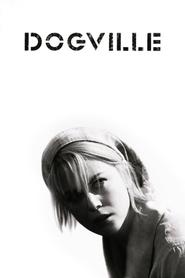
Dogville (2003)
Von Trier strips away the world: a town rendered as chalk outlines on a black floor, "Elm St." hand-lettered on the ground, doors that exist only as mimed hinges and off-screen latch-clicks. Watch the tension between that geometric bareness and Anthony Dod Mantle's restless handheld camera, which hunts among the actors and refuses composed stillness. Because nothing is furnished, everything must be read — you become the film's reader, and there's nowhere to hide. The bare-stage template comes from Thornton Wilder's Our Town; the moral chill is entirely von Trier's own study of how a community's charity can curdle once a vulnerable stranger depends on it.
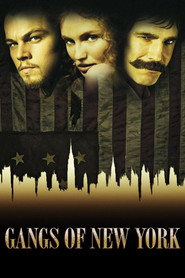
Gangs of New York (2002)
Scorsese built nineteenth-century New York on Cinecittà's stages in Rome — an intensely American origin story physically fabricated in Italy — and Michael Ballhaus lights the Five Points in soot, candlelight, and infernal reds, in the painterly tradition of Visconti and Barry Lyndon. But above all, watch Daniel Day-Lewis. Watch how Bill the Butcher lays out his cleavers like an argument, taps his glass eye for emphasis, drapes the flag over his shoulders as a performance for an invisible audience. Nothing he does is merely done; everything is shown — a whole theory of violent American belonging staged through one body.
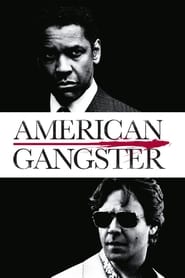
American Gangster (2007)
Read this film through wardrobe. Frank Lucas dresses in grey, mid-priced, accountant's cloth because invisibility is his first business principle — then his wife gives him a chinchilla coat, he wears it to a prizefight, and the camera finds the men watching him before he knows he's been seen. Watch how Harris Savides's cinematography splits the film chromatically: amber warmth for Lucas's ordered penthouse world, institutional grey cold for the detective tracking him. Scott, an informed outsider to American mythology, analyzes the drug empire as a business — branding, pricing, market share — rather than celebrating or mourning it.
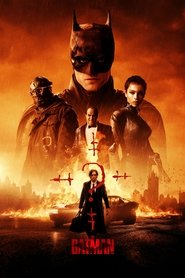
The Batman (2022)
Greig Fraser's cinematography is famously underlit by blockbuster standards — near-monochrome darkness broken by sodium orange and blood red, faces falling into shadow in the lineage of Gordon Willis's Godfather photography. Watch how thoroughly this is a film about watching: everyone in Gotham is under surveillance, and the hero is simply the most patient watcher of all. Built on the Zodiac and Se7en template — a cipher-leaving killer who addresses his clues directly to the detective — the film makes you decode over Batman's shoulder, a knowing third party at every crime scene.
Watch these together and the crime film stops being a genre and becomes a laboratory. You'll see the same experiment run twelve ways: what happens when a camera refuses to cut (Touch of Evil), refuses to explain (The French Connection), refuses even to show you walls (Dogville)? What can a body confess — Bill the Butcher's cleavers, Lucas's chinchilla coat, Léon's stillness — that no line of dialogue could? And what happens when the image itself lies to you (The Usual Suspects), or doubles back on itself like a bleeding mirror (Face/Off)? Spanning nearly seventy years, these films keep passing techniques hand to hand — The Killing's clockwork feeds Thief's craftsmanship; The French Connection's cold streets feed American Gangster's surveillance; noir's shadows feed The Batman's underlit Gotham. Watched in sequence, they teach you the most valuable skill a moviegoer can have: not to ask what happens next, but to notice how you're being made to see.