Sightlines · a mini film course
The Cost of Looking: A Dozen Films About Hunting a Killer — and Watching Yourself Watch
Every film on this list is, on paper, about a serial killer. But watch them together and you'll notice the killer is almost beside the point. What these films are really about is looking — who gets to look, who gets looked at, and what looking costs. Some of them hand you the predator's eyes and dare you to feel comfortable there. Some make you the detective, piecing together clues before anyone on screen can. And some do something stranger still: they show you investigators who see everything, know everything — and discover that knowing changes nothing. Across ninety years, these films keep asking the same two questions: Can anyone act on what they see? And: What are you doing, sitting there, watching this?
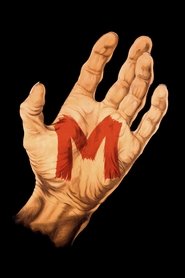
M (1931)
The founding text — and its first lesson comes in the opening minutes, when a terrible thing happens entirely offscreen. Lang shows you a ball rolling to a stop, a balloon caught in telephone wires, a mother calling into an empty stairwell, and trusts you to assemble the rest. Notice too how a whistled tune becomes a warning system: you learn to dread a melody before you ever see a face. This is a film that hands you the periphery and makes you supply the center — a trick every other film here inherits.
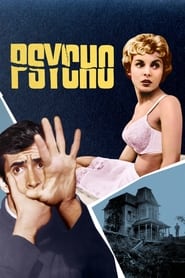
Psycho (1960)
From the first scenes, someone is always watching Marion Crane — a boyfriend, a boss, a highway patrolman staring through a car window in a sustained, wordless standoff. Hitchcock quietly makes you one of the watchers, and the film's shocks land partly because of what that complicity costs you. Shot fast and lean with a television crew in stark black and white, it trades lush atmosphere for confinement and depth. And when violence arrives, notice how it's built: not shown whole, but assembled from rapid fragments — a grammar borrowed from silent Soviet montage and never bettered.
Peeping Tom (1960)
Released the same year as Psycho and even more brazen about the same idea: this is a film about a man who kills with a camera, and it tells you so almost immediately. There's no mystery here — the dread comes from the gap between what the warm-hearted girl downstairs sees in Mark and what you already know. Watch for Otto Heller's photography, which is beautiful in ways that feel faintly wrong, and for how the film keeps folding the act of filming into the act of harm — until you start to wonder about your own seat in the audience.
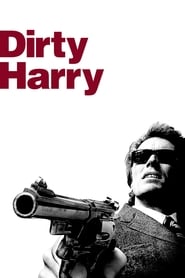
Dirty Harry (1971)
The opening shot puts you behind a rifle scope, looking down at a rooftop swimming pool, before you've been asked whether you want to be there. Siegel then builds a film about a man who can act — see the threat, draw, resolve it — and lets you feel both the pleasure and the queasiness of that fantasy. Watch how the widescreen frame uses San Francisco itself: the killer perched high above the city, Harry pushed to the margins, the metropolis filmed as a hunting ground that seems to demand a lone enforcer.

Henry: Portrait of a Serial Killer (1986)
The bleakest and most rigorous film here, and the one that most fully refuses to entertain you. Its signature device: static shots of aftermaths, held like evidence photographs, while the soundtrack carries audio from another moment entirely — you hear what you were never shown, over an image with nothing left to give. There's no detective, no chase, nothing to root for. You can only watch, and the film knows it, and it wants you to notice that you're still watching.
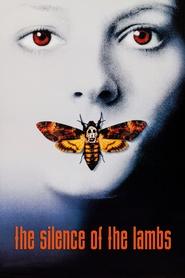
The Silence of the Lambs (1991)
Demme and cinematographer Tak Fujimoto build the whole film out of one radical choice: when people address Clarice Starling, they look almost directly into the lens. For the length of each shot, you stand where she stands, absorbing every appraising, condescending, predatory gaze aimed at her. Notice how sparingly the device is used — saved for the moments of sharpest scrutiny — so that by the time the most unblinking stare arrives, you've been trained to flinch.
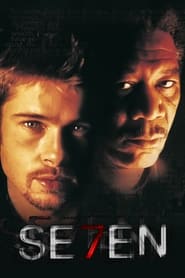
Se7en (1995)
A detective story that wants you to do homework. Each crime arrives with its caption, and the film's real suspense is the patient act of reading — index cards in a library at night, Dante and Chaucer pulled off shelves, meaning assembled rather than chased. Darius Khondji's photography is among the most influential of the decade: every light source lives inside the frame — a bare bulb, a flashlight, rain-streaked neon — and the camera positions itself to let shadow win.
Memories of Murder (2003)
Watch the very first crime scene: the camera doesn't rush to the body. It drifts sideways, wide and patient, giving the landscape the same weight as the people in it — where most thrillers isolate the corpse in close-up, Bong lets the rice paddies absorb it. This is a procedural about the limits of procedure, made in dialogue with Se7en but tuned to a different key: what happens to detectives when seeing a situation clearly isn't the same as being able to change it.
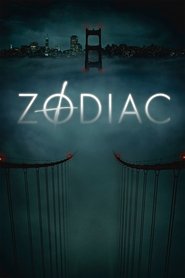
Zodiac (2007)
Fincher's most patient film, shot by Harris Savides in available light that lets faces fall into darkness — a direct descendant of the great 1970s paranoid procedurals, all desk lamps and dark voids. Notice how the film honors the unglamorous grind: binders, cross-references, handwriting samples, deadlines. Its deepest subject is obsession — what it costs to pursue certainty past the point where anyone else will follow you — and the eerie experience of knowing something in your body that you cannot prove, book, or even say aloud.
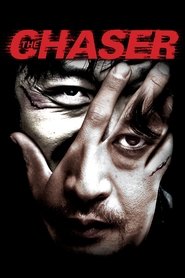
The Chaser (2008)
Na Hong-jin does something cruel and brilliant to the manhunt machine: he makes finding out easy and acting on it nearly impossible — and he does it early, by design. Watch how the film uses the actual geography of a hilly Seoul neighborhood: narrow stepped alleys, blind corners, steep grades, so that every foot chase is spatially legible — you always know who is above and who is below. The tension isn't who; it's whether anyone, police or otherwise, can convert knowledge into rescue before the clock runs out.
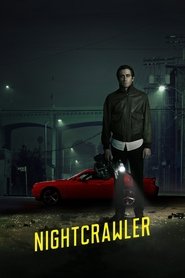
Nightcrawler (2014)
Robert Elswit films nocturnal Los Angeles as genuinely beautiful — glittering freeways, fluorescent convenience stores, a depopulated grid — and that beauty is the trap. Lou Bloom is a man who watches for a living, filming the city's wounds for the morning news, and the film's most chilling idea is what happens when the observer starts arranging what he observes. Watch how the film refuses to flinch at his ambition; its satire of a fear-hungry news economy is all the sharper for playing it straight.
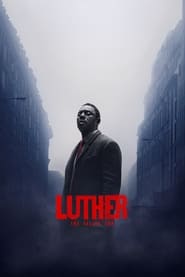
Luther: The Fallen Sun (2023)
After so many films about watchers who can't act, here's the throwback: a hero who sees the threat and moves on it with his hands, in the old grand style. Watch the coat — a rumpled overcoat worn like weather, telling you before a word is spoken that this is a man expelled from the institutions he serves. And watch the photography: London as sodium-lit rain and deep architectural shadow, the series' nocturnal house style pushed to feature scale and set against blinding white elsewhere. It's the tradition of M and Manhunter — killer marked early, city as manhunt map — running at full, unapologetic power.
Watched together, these films become a conversation across nine decades. You'll see one movie's invention become another's inheritance: Lang's offscreen violence resur