Sightlines · a mini film course
The Watchers: Ten Films About Looking — and What Looking Costs
Every film in this set is, at heart, about a person who watches. A detective, a dealer in stolen sensations, an actress losing herself in a role, a man with a telescope, a man with a camera and something hidden in his tripod. And in every one of them, the filmmakers turn the act of looking back on us — reminding us that we bought a ticket to stare, that the camera is a machine for watching, and that watching is never innocent. Some of these films glide; some fragment; some strand their heroes in worlds where seeing is all that's left, because acting no longer works. Watch them as a set and you'll start noticing not just what's on screen, but how you're being made to see it — which is exactly what these directors want.
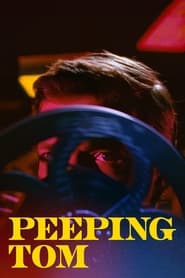
Peeping Tom (1960) — Michael Powell
The film hands you its central secret almost immediately — no mystery, just dread. That's the design: the horror lives in the gap between what a kind woman sees in a shy man and what you already know about him. Notice Otto Heller's frames, which are beautiful in ways that feel vaguely inappropriate — airy, colourful, wrong for the material — and the way the camera itself becomes the film's true subject. This is the movie that dared to say that filming someone is a form of power, and it enlists you as accomplice.
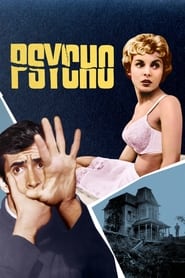
Psycho (1960) — Alfred Hitchcock
Watch how thoroughly this film is built on looking: a boyfriend, an employer, a highway patrolman staring wordlessly through a car window, a peephole. Hitchcock, a British formalist working inside the American studio system, shot it lean and fast with a television cinematographer — wide lenses, deep focus, confined spaces — and that stripped-down clarity makes the dread sharper, not softer. And pay attention to how active the first stretch feels: a woman who decides things, whose every shot serves her forward motion. Notice when that energy changes, and what the film does with your expectations once it has them.
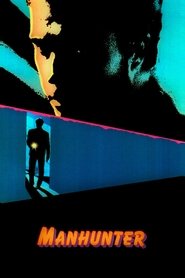
Manhunter (1986) — Michael Mann
Will Graham's gift is occupying another person's gaze — standing where a killer stood, speaking his reasoning aloud in the present tense, as though renting his eyes. Mann builds the whole film around watching a watcher: a man alone in the dark, running home movies, his face lit only by the screen. Dante Spinotti's palette — cold blues, teals, clinical whites, hard symmetry, huge negative space — turns architecture into psychology. This is a thriller where perception, not deduction, is the entire drama.
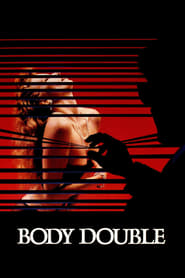
Body Double (1984) — Brian De Palma
Start with the telescope. De Palma never lets you forget the apparatus — the round black vignette of the eyepiece, the wobble of magnification — so you feel the looking as hardware, and feel a little ashamed of it. Watch for the split-diopter shots that hold a face in the foreground and a doorway deep behind it, both razor-sharp, and for the glossy, saturated L.A. light that makes surveillance look seductive. It's a film built openly out of Hitchcock — Rear Window, Vertigo, Psycho — but pushed to a self-conscious pitch where the watching itself becomes the crime scene.
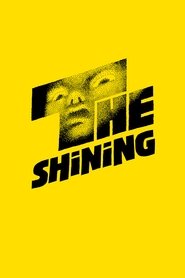
The Shining (1980) — Stanley Kubrick
Listen to the trike. A boy pedals through empty corridors, the brand-new Steadicam floating inches off the floor behind him, and the sound — carpet, hardwood, carpet — makes you brace before every corner. Kubrick took a rig invented to smooth out shaky shots and turned it into a way of thinking: the camera doesn't chase the characters, it glides through a hotel that seems to be arranging itself ahead of them. Note the one-point-perspective compositions, hallways receding to a single vanishing point, and the bright, evenly lit clarity that's somehow more frightening than shadow. Try to map the hotel's layout. You can't. That's the point.
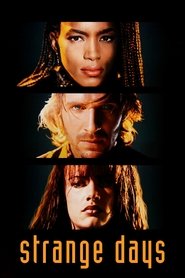
Strange Days (1995) — Kathryn Bigelow
The opening puts you inside someone else's eyes before it tells you whose. The film's premise — a rig that records the full sensorium, sold like a street drug of stolen feeling — lets Bigelow split the movie into two ways of seeing: a grimy, neon-soaked noir Los Angeles, and long, unbroken first-person sequences shot on custom rigs, years before GoPro or bodycam footage made that vision ordinary. Watch how the film treats reliving recorded experience as addiction, and how it asks the uncomfortable question: is witnessing a recorded atrocity a form of complicity?
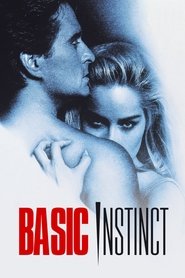
Basic Instinct (1992) — Paul Verhoeven
Watch the interrogation scene closely — not the famous moment, but the camera. Five men around one woman, and the lens circles unhurried, as if she were the still point and the entire machinery of the law were the thing in motion. By the end, notice who's actually being read. Jan de Bont's gliding camerawork and cool, affluent palette — pale blues, bleached coastal light against noir-murky interiors — make the surface as seductive as the story. Verhoeven brought a cooler, more ironic European sensibility into a Hollywood thriller, and the result is a film where confession, evidence, and even desire are all potential performances.

Dark City (1998) — Alex Proyas
Hold onto the image of a city rebuilding itself while its citizens sleep standing up — towers screwing out of the pavement, streets folding into new streets, no witnesses. Dariusz Wolski shoots in near-total night, hard sourced light carving figures out of darkness in the manner of 1940s noir, while the visual DNA runs straight back to German Expressionism: painted shadows, canted angles, a stratified megacity built from miniatures. Watch for how the film uses one word — Shell Beach, a place everyone can name and no one can reach — as the single crack of sunlight in a sealed world.
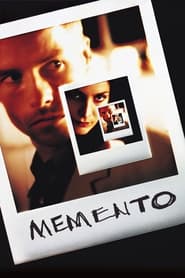
Memento (2000) — Christopher Nolan
The colour scenes run backward — each one ending where the previous began — while a second strand, in noir black-and-white, runs forward, and they meet at a hinge. The result: every scene drops you in with no memory of how you got there. You aren't watching a man with a broken memory; for two hours, you're the one who can't remember. Notice how Wally Pfister keeps the photography restrained and legible — a generous choice, given how much work the structure asks of you — and how Leonard builds a prosthetic mind out of Polaroids, notes, and tattoos. The film asks whether a self can exist without the ability to accumulate experience.
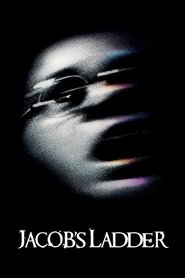
Jacob's Ladder (1990) — Adrian Lyne
Watch what Jacob does about the horrors he sees: almost nothing. He looks. The film hands you thriller machinery — a veteran, a conspiracy, threads to pull — and then lets every thread dissolve, stranding its hero as a witness in a world that morphs faster than any response could keep up. Note the in-camera effects, like a figure whose head shakes at a frequency the eye can't resolve (an actor whipping his head while the camera ran slow), which print the wrongness into the image rather than layering it on top. And note the palette: greenish swamp light for Vietnam, sickly fluorescent whites for the civilian nightmare.

Shutter Island (2010) — Martin Scorsese
Keep your eyes on the small things: a glass of water in a woman's hand that isn't quite behaving. Scorsese seeds tiny impossibilities into throwaway gestures, and the film quietly shifts you from watching images to reading them — every apparent excess might be a coded message. Robert Richardson's signature hard top-light haloes faces and blows out backgrounds, giving the institutional interiors an overheated unreality, while Thelma Schoonmaker's editing begins with the measured tread of a procedural and then starts admitting ruptures. It's also a loving anthology of older forms — noir paranoia, gothic storm-lashed asylum, studio-era B-picture — made by cinema's great keeper of that memory.

Inland Empire (2006) — David Lynch
Lynch shot much of this himself on a consumer camcorder, and that's not trivia — it's the aesthetic. Grainy, smeared, dim, faces swelling in extreme close-up where the cheap wide lens bends them, carved out of blackness by a single lamp: it looks like something recorded by accident and watched alone at night. There's a weeping woman in a hotel room who does nothing but watch a television — and what's on that television is the film itself. She can't intervene; she can only look. She is you. Come to this one last, unhurried, and let it take away every handhold. It teaches you how to watch it by refusing to be watched any other way.
Seen together, these films form a conversation across half a century about the same unsettling idea: that a camera is never neutral, and neither are you. Powell and Hitchcock set the terms in the same year — 1960 — by making the audience's gaze part of the crime. De Palma and Mann inherited and sharpened it; Bigelow literalized it with a rig that rents out eyes; Verhoeven let the watched woman turn the tables; Kubrick, Lynch, Lyne, Proyas, Nolan, and Scorsese built whole worlds where seeing can no longer be trusted and looking is the only act left. Watch them in any order, but watch them actively — notice when the camera glides versus when it fragments, when light exposes versus when it lies, when you know more than the characters and when you know less. By the end, you won't just have seen ten films. You'll have learned to catch yourself in the act of seeing.