Sightlines · a mini film course
The Room Is a Mind: Twelve Films Where Space Does the Thinking
Most thrillers are about what people do. The twelve films on your list are about what people notice — and about places that seem to notice them back. A cell, a flat, a motel, a hotel, a farmhouse bedroom, a cabin in the woods: again and again these filmmakers take a confined space and let it become the true main character, a room that watches, remembers, and slowly reveals what's happening inside a person's head. The camera in these films tends to watch rather than chase. Time is allowed to stretch. Objects — a spoon, a key, a ceiling fan, a ceramic penguin — carry more dread than any monster. Watch them in order and you'll see a century of cinema learning the same lesson from different angles: the scariest architecture is the one you carry with you.
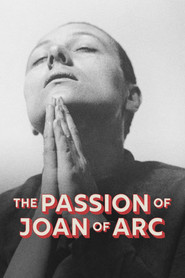
The Passion of Joan of Arc (1928)
Dreyer and cinematographer Rudolph Maté made the extreme close-up of the human face the entire language of a film — not punctuation, but scene after scene at pore-level distance, shot on new film stock that could read skin like weather. Notice that you can never quite map the room: the usual rules of screen geography are deliberately suspended, so the whole drama lives in what crosses Falconetti's face while she endures. Since Joan is chained and outnumbered, she can't act — so feeling itself becomes the event. Watch the tear.
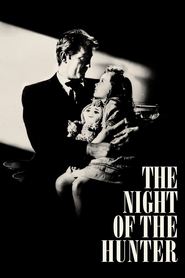
The Night of the Hunter (1955)
Charles Laughton, an actor directing his only picture, built a thriller out of shapes: Stanley Cortez's photography throws the preacher's silhouette huge on bedroom walls, the conical hat arriving before the man does. The film thinks the way a frightened child thinks — in pictures too large and too clear — borrowing its shadows from German silent cinema and its storybook stillness from the earliest American films. Watch for the "LOVE" and "HATE" tattooed knuckles, and for a villain rendered less as a psychology than as an appetite in a black coat.
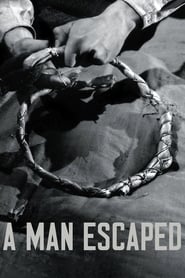
A Man Escaped (1956)
Bresson gives away the outcome in the title, then makes you lean forward anyway. The camera stays on hands, wood, wire, a sharpened spoon working at a door seam — you never get an overview of the prison, only fragments, so you come to know the space the way a prisoner does: by touch, surface by surface. Listen as much as you look; the sound of scraping and footsteps carries what other films would show. It's the purest demonstration on this list that attention itself can be suspense.
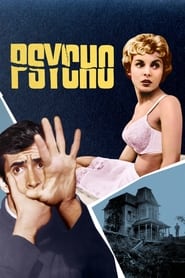
Psycho (1960)
Watch who looks at whom. From the first scenes, the heroine is observed — by a boyfriend, an employer, a highway patrolman staring wordlessly through a car window — and Hitchcock quietly makes you one of the watchers. Notice the deliberately plain, television-trained photography (a departure from Hitchcock's usual lushness) and the way the famous shower sequence assembles terror from rapid fragments rather than a single graphic image, a technique inherited from silent-era montage. And keep an eye on the drains and spirals; the film speaks in circles.
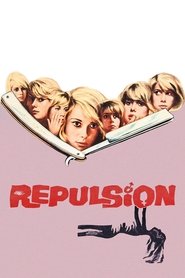
Repulsion (1965)
Polanski's great innovation here: almost nothing happens, and everything decays. A skinned rabbit left on a plate becomes a clock measuring rot instead of minutes; dishes pile up, cracks branch across plaster, and the flat itself starts to warp around its inhabitant. Gilbert Taylor's black-and-white turns peeling wallpaper and salon equipment into a landscape of latent threat. Watch how the film refuses to tell you what's real inside Carol's experience — the walls do the confessing.
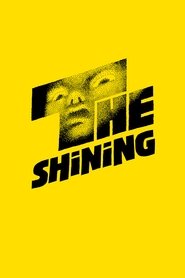
The Shining (1980)
Listen to the trike: carpet, hardwood, carpet — the wheels going loud and soft as Danny rounds each corner, the brand-new Steadicam gliding inches off the floor as if the hotel were arranging itself ahead of him. Notice Kubrick's rigorously symmetrical corridors receding to a single vanishing point, lit with bright, flat, unnerving clarity rather than gothic gloom. The Overlook's geography is famously impossible — viewers have tried for decades to draw its floor plan and failed — and that failure is the point. This isn't a haunted house; it's a place the characters are moving around inside of.
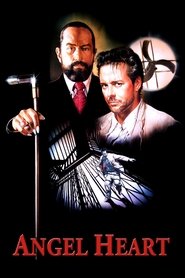
Angel Heart (1987)
Alan Parker fuses the 1940s private-eye picture with occult horror, filming everything through smoke and dust — cold grey New York, humid amber New Orleans. Watch the ceiling fans: there's one turning in almost every room, chopping the light into flicker, and the detective keeps not looking at them while you keep looking. Notice how the standard gumshoe routine — follow the clue, interview the witness, drive to the next town — keeps feeling subtly wrong, and how near-invisible flash-cut images seed the film with dread before you can name it.
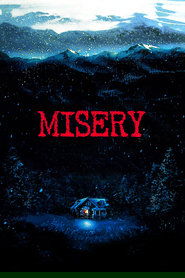
Misery (1990)
A masterclass in wringing dread from one bedroom, a hallway, and a staircase. Watch the objects: a ceramic penguin that always faces one direction, a manuscript page squared to a desk, the exact angle of a wheelchair against a doorjamb. The suspense lives not in what happens but in what you know — the film has you memorize the geography of a room and then sweat every detail of its reassembly. It's Hitchcock's immobilized-hero trick (think Rear Window) turned into pure domestic terror.
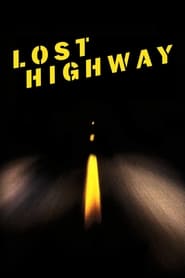
Lost Highway (1997)
Lynch and cinematographer Peter Deming shoot a Los Angeles house as near-total darkness — rooms defined by what can't be seen, characters walking into blackness and dematerializing. Don't try to hold the story to a straight line; the film deliberately melts the boundary between what's happening, what's remembered, and what's dreamed, and it refuses the explanatory cut that would sort them out. Watch the doublings — faces, voices, one actress in two guises — and let the film's mood, not its logic, be your guide.
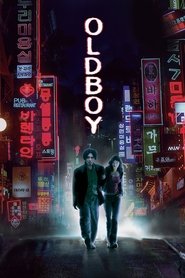
Oldboy (2003)
The centerpiece is a corridor fight filmed flat from the side in one unbroken take, the camera gliding along the wall like an eye reading a line of text, permitting movement in exactly one direction — like a side-scrolling game, like a frieze of massed combat. Watch what that shot quietly insists: this man isn't choosing his path; he's moving along a track someone else laid down. Notice too how the frame keeps judging him — canted angles, overhead views that shrink him inside geometry. Fifteen years of confinement, and the film asks whether revenge is escape or just a longer sentence.
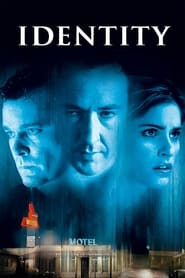
Identity (2003)
Ten strangers, one rain-lashed Nevada motel, a storm sealing the exits — Agatha Christie's countdown machinery grafted onto a modern thriller. Phedon Papamichael shoots it in sodium-vapor amber and cold blue, rain silvering every surface, identical numbered doors lined up like a multiple-choice question. The staging is deliberately artificial, almost theatrical — trust that the film knows it. Watch the numbered keys, and ask yourself what, exactly, they're counting.

Antichrist (2009)
Von Trier opens with a lustrous black-and-white slow-motion overture — every droplet legible, consciously beautiful — that the rest of the film will corrode into restless handheld unease. Listen to the acorns falling on the cabin roof all night: not weather, but a forest tirelessly making more of itself, indifferent to human grief. Watch the collision at the film's core — a therapist husband trying to reason a wound closed, and a natural world that answers language with sheer production and rot. The dedication to Tarkovsky is earned: nature here is not scenery but pressure.
Watched together, these films train a particular muscle: the patience to read a room. You'll start noticing how a rabbit on a plate, a fan on a ceiling, and a penguin on a table are all doing the same job — keeping time in a register no clock uses. You'll feel how a close-up of a face, a hand at a door, and a corridor receding to a vanishing point are three answers to one question: when a person can't act, where does the drama go? These twelve filmmakers, across eighty years and half a dozen countries, all found it in the same place — in the walls, in the objects, in the watching itself. Bring your full attention. These films will notice if you don't.