Sightlines · a mini film course
The Look That Costs Something
Every film on this list is, in one way or another, about watching — and about what watching does to the watcher. Some of them turn the camera into a pair of eyes you can't quite trust. Some turn buildings into things that seem to think, so that walking down a corridor feels like moving through someone's head. And several give us characters who can see everything and do almost nothing about it — figures who watch, endure, and absorb. Taken together, these eleven films form a sixty-year conversation about the act of looking: who gets to look, who gets looked at, and how a filmmaker can make you feel the weight of your own gaze. Watch them with that question in mind and they start answering each other.
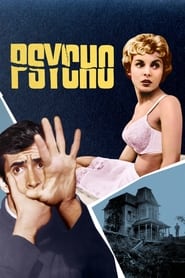
Psycho (1960)
Notice how often someone is being looked at: a boyfriend, an employer, a highway patrolman staring wordlessly through a car window, a face behind a peephole. Hitchcock builds the film out of these acts of observation and quietly makes you one of the observers. Shot in black and white by a television veteran rather than Hitchcock's usual prestige cameraman, it has a clean, functional look suited to cramped rooms — plainness as a trap.
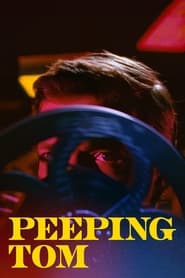
Peeping Tom (1960)
Released the same year as Psycho, and its dark twin: a film about a man whose camera is fused to what he does. Powell tells you early who is dangerous — the dread comes not from mystery but from the gap between what a kind neighbor sees in him and what you already know. Watch Otto Heller's photography, which is beautiful in ways that feel faintly inappropriate: airy, handsome frames around terrible material, making you notice your own comfort.

The Silence of the Lambs (1991)
The signature device is simple and devastating: when men address Clarice Starling, they look almost straight down the lens. For the length of those shots you stand exactly where she stands, and every appraising, condescending, predatory glance lands on you. Demme rations the technique carefully, so that by the time the most unblinking stare arrives, you've been trained to flinch.

Henry: Portrait of a Serial Killer (1986)
The camera here watches rather than chases. Its most discussed device is a series of near-motionless shots of aftermath — still, evidence-like images — while the sound carries what you were never shown, arriving from another moment in time. The film refuses to explain its subject or make him thrilling; that refusal, and your discomfort with it, is the whole point.
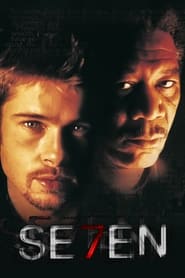
Se7en (1995)
Most detective films want you to watch a chase; this one wants you to do homework. Each crime arrives with its caption, and the investigation is an act of reading — late nights in a library, index cards, old books. Watch Darius Khondji's lighting: every glow is sourced inside the frame — a bare bulb, a flashlight, streetlight through rain-streaked glass — and the camera sits where the shadow is deepest.
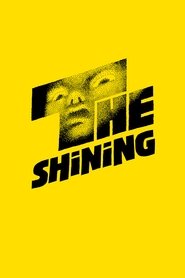
The Shining (1980)
Listen to the trike: carpet, then hardwood, then carpet, the wheels going loud and soft as Danny rounds each corner, and feel yourself bracing before every turn. The brand-new Steadicam doesn't follow him so much as glide through a hotel that seems to be arranging itself ahead of him. Try to map the Overlook and you'll fail — its geography is famously impossible — because this is a building behaving like a mind, not a floor plan.

Dark City (1998)
At midnight the whole city falls asleep standing up, and the buildings begin to move — towers screwing up out of the pavement, streets folding into new streets, with no one awake to witness it. Proyas builds a sunless, edgeless metropolis out of miniatures and hard, sourced noir light, with shadows straight out of silent-era German cinema. Hold onto the words "Shell Beach": everyone can name it, no one can say how to get there.
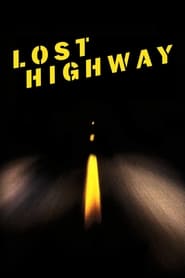
Lost Highway (1997)
It opens with a voice through an intercom delivering a message from no one visible, and never lets you back onto solid ground. Lynch refuses the cut that would separate what's real from what's dreamed — one actress, two women, or perhaps one woman imagined twice — and Peter Deming shoots rooms as pools of blackness that characters walk into and simply vanish. Don't try to solve it on first viewing; try to feel where the film changes temperature.
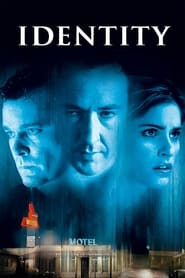
Identity (2003)
A storm seals ten strangers into a Nevada motel, and every time someone falls, a numbered room key turns up — a countdown stamped into the décor. It openly reworks Agatha Christie's closed-circle puzzle through rain-slicked slasher grammar, shot in sodium-amber and cold blue. Notice how deliberately artificial and hermetic the place feels, like a stage set with the doors locked; the film knows exactly what it's doing with that feeling.

The Sixth Sense (1999)
A boy's breath fogs in a warm kitchen, and nothing else has happened — the whole film lives in small, wrong details like that, the ordinary turned a few degrees. Shyamalan and Tak Fujimoto drain Philadelphia to chilled blues and grays, then ration the color red like a drug: wherever red appears, something hidden is showing through. Cole is a watcher, not a fighter — a child whose seeing goes nowhere — and the film's tension comes from perception with no action to answer it.
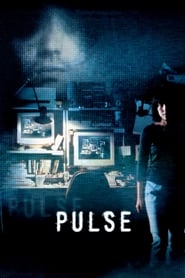
Pulse (2001)
Where most horror shows you the thing, Kurosawa shows you the space where the thing was — a dark stain spreading on a wall like the after-image of someone switched off. Shot in bruised grays and smothering underexposure, in long, wide takes, it's a film in which characters see the terrible question and then mostly stop: sit, stare, withdraw. The scariest thing in it may be an unlit corner of a room, held just a little too long.
Watched together, these films teach each other. Psycho and Peeping Tom — twins from the same year — put a camera where a conscience should be, and everything after inherits the problem: Silence of the Lambs hands you the victim's eyeline, Henry hands you the aftermath, Se7en hands you the homework. Meanwhile The Shining, Dark City, Lost Highway, Identity, and Shutter Island's cousins in this set build spaces that behave like minds — sealed, unmappable, rearranging themselves — while The Sixth Sense and Pulse strand their characters as pure watchers, seeing what they cannot change. By the end of the run you'll notice something uncanny: every one of these films is, quietly, about you — the person in the dark, looking, unable to intervene, and unwilling to look away. That's not a flaw in the experience. It's the subject.