Sightlines · a mini film course
When Movies Stop Trusting Their Own Eyes
Every film in this set is built around a moment when seeing stops being safe. A portrait that outshines the woman it depicts. A mirror that lags half a beat behind the body. A Polaroid that fades instead of develops. A voice that keeps singing after the singer falls. These twelve films — spanning six decades, from the studio-system elegance of Laura to the neon chill of The Neon Demon — share a single obsession: what happens when an image, a memory, a reflection, or a performance becomes as real as the person who cast it? Watch them together and you'll notice the same currents running underneath: cameras that circle and glide rather than chase; time that folds back on itself or is allowed to stretch; characters who look and endure when they can no longer act; and spaces — mansions, hotels, cities — that behave less like settings than like minds. This is a course in learning to distrust your eyes, in the most pleasurable way possible.
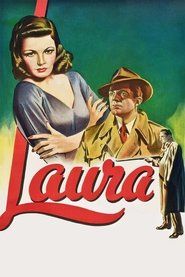
Laura (1944)
Start with the portrait. Preminger lights the painted Laura a half-shade warmer than the room around it, so the image keeps a small reserve of life while the apartment goes dark — a woman rendered ideal by everyone who claims to love her. Watch how the detective assembles her out of objects, letters, and other people's distorted testimony, so that by the time the film's central hinge arrives, you can no longer say where the real woman ends and the picture begins. The restrained, selective lighting matters: this is noir as seduction, not shadow-play.
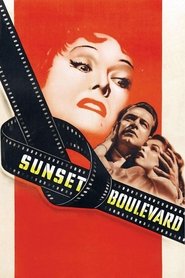
Sunset Boulevard (1950)
The film opens with a dead man narrating, calm and past-tense, which means the story you're watching has already finished — time here circles rather than pushes forward. Watch the Desmond mansion: Wilder and cinematographer John Seitz shoot it with low angles and deep shadows borrowed from Citizen Kane's Xanadu, so the rooms feel enormous and predatory. And watch the scene where Norma screens her own silent films: her young face thrown by projector light into the room where she sits, the past and present sharing the same darkness, impossible to peel apart.
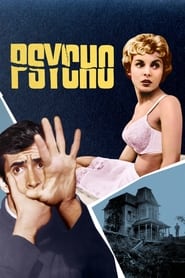
Psycho (1960)
Notice how much of this film is about looking — Marion is watched by her boyfriend, her employer, a highway patrolman staring wordlessly through her car window — and notice how Hitchcock makes you one of the watchers. Notice too the clean, television-trained photography of John L. Russell: efficient, unadorned, which makes the confined spaces feel matter-of-fact rather than gothic. The famous drain-to-eye dissolve is the film's hinge — pay attention to how the movie behaves differently on either side of it, how a story driven by a woman's decisions becomes something else entirely.
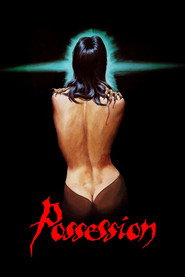
Possession (1981)
Here the camera is not an observer but an anxious participant: Bruno Nuytten's wide-angle lens presses close, circles the actors, swings after sudden movement, and refuses the calm grammar of ordinary conversation scenes. Żuławski directed his actors to the edge of collapse as a deliberate system, not an accident — so when Isabelle Adjani's Anna convulses through a Berlin underpass, you're watching a body endure something no plot could discharge. Watch for how marriage and divorce are staged as cosmic catastrophe, and how the film's operatic pitch is sustained, not lapsed into.
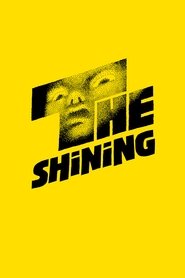
The Shining (1980)
Listen to the trike. As Danny pedals through the Overlook, the brand-new Steadicam glides inches off the floor behind him, and the sound — carpet, hardwood, carpet — makes you brace before every corner. Watch the one-point-perspective corridors receding to a single vanishing point, lit by John Alcott to look natural yet somehow wrong. And try, if you dare, to map the hotel: its geography is famously impossible, windows where walls should be, rooms that can't connect — because this is not a building the characters move through so much as a mind they're moving inside.
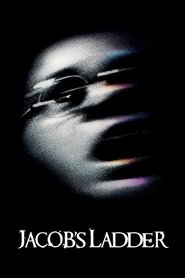
Jacob's Ladder (1990)
The subway figure whose head shakes too fast to read: Lyne got that effect by filming the actor's movement with the camera running slow, so the wrongness is printed into the photograph itself rather than layered on top. Watch the palette shift between the greenish humidity of Vietnam and the sickly fluorescent whites of hospitals and subways. And watch what Jacob does about the horrors he sees — almost nothing. He looks. The thriller machinery promises a hero who acts; the film keeps stalling that engine, and the stall is the point.
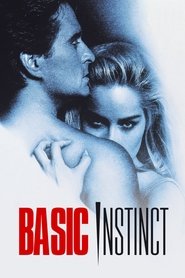
Basic Instinct (1992)
The interrogation scene: five men around one woman in white, and the camera circles her, unhurried, as if she were the still point and the entire apparatus of the law were the thing in motion. By the scene's end, the questioning has run backward — the askers are the ones being read. Watch Jan de Bont's seductive surface, cool pale blues against San Francisco noir murk, and watch how Verhoeven, borrowing Vertigo's spiraling camera and obsessive geography, makes the femme fatale not just a temptress but possibly the author of the very story the detective thinks he's investigating.

Dark City (1998)
At midnight the city falls asleep standing up, and the buildings rebuild themselves while nobody watches — a skyline swelling and contracting like a lung. Wolski shoots in near-total night, hard low light carving figures from darkness in the 1940s manner, while the looming coat-and-hat figures descend straight from Nosferatu's silhouette menace and the miniature city from Metropolis. Watch for the film's one word for elsewhere — Shell Beach, a place everyone can name and no one can reach — and for its central question: if memory can be removed and swapped, what's left of a self?
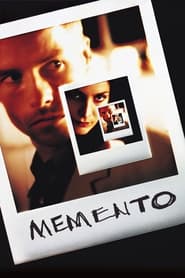
Memento (2000)
Watch the Polaroid fade — an image draining back into blankness, footage simply run in reverse, and the whole film in three seconds. Leonard can't make new memories, so he builds a mind out of objects: photos, notes, tattoos. Nolan's real invention is structural: the color scenes run backward, each ending where the last began, so you enter every scene with no memory of how you got there, while a black-and-white strand runs forward toward the hinge. Pfister's photography stays deliberately clean and legible — the structure carries all the vertigo the images don't need to.

Mulholland Drive (2001)
The Club Silencio scene is Lynch handing you his engine: "There is no band," says the emcee, and still the music plays; a singer collapses and her voice keeps pouring from the dark. Emotion that is real and manufactured at once. Watch Peter Deming's two lighting registers — golden Hollywood glow for one part of the film, something harsher elsewhere — and watch how cuts are motivated by emotional rhyme rather than cause-and-effect, a dream logic inherited from the surrealists. This is Sunset Boulevard's Hollywood-as-illusion-machine, rebuilt from the inside.

Black Swan (2010)
Watch the back of Nina's head. Libatique's camera rides inches behind her shoulder through corridors and dressing rooms, putting you somewhere with no name — not inside her mind, not safely outside it, close enough that intimacy curdles into surveillance. Then watch the mirrors, which a ballet studio supplies without limit: Nina multiplied, fragmented, her reflection lagging a half-beat behind or moving when she doesn't. The film descends from The Red Shoes and Polanski's apartment films — European nightmares of a woman's space becoming her unraveling — retooled as an American backstage thriller.
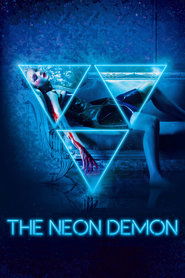
The Neon Demon (2016)
The opening image tells you everything: a beautiful girl posed as a corpse, and then the photographer steps in to fix her hair. Beauty here is something you hold still to be consumed. Watch Braier's photography split between cold geometry and saturated color, the gel-lit spectacle inherited from Suspiria, the fashion-world-as-hunting-ground from Italian horror. And notice how people in this film watch rather than act — a makeup artist paints a face from a photograph rather than the living face beside her, rivals study each other in mirrors, never head-on. An industry of images replacing persons, filmed as ritual.
Why Watch These Together
Run in sequence, these films teach each other. Laura's glowing portrait becomes Norma Desmond's projected younger self, becomes Nina's disobedient mirror, becomes Jesse posed as her own beautiful corpse — the same image passed down through seventy years, growing stranger each time. Psycho's highway-patrolman stare returns as Basic Instinct's circling interrogation camera; the Overlook's impossible corridors reappear as Dark City's midnight-rebuilt streets; Sunset Boulevard's dead narrator and Memento's backward scenes are two answers to the same dare — what if a story refused to move forward? What connects them all is a kind of courage: each film, in its own decade and its own genre, decided that the most frightening thing it could show you was not a monster but a doubt — about what you're seeing, when you're seeing it, and whether the image looking back at you is the real one. Watch closely. That's the whole course.