Sightlines · a mini film course
The Watcher in the Frame: A Mini Course in Looking, Dread, and the Killer Next Door
Every film in this set is, one way or another, a serial-killer film — but that's the least interesting thing they have in common. What actually binds them is a shared obsession with watching: who is looking, from where, and what it does to us that we're looking too. These are films where the camera itself becomes a moral instrument — sometimes it's the killer's eyes, sometimes the victim's, sometimes it simply holds still and refuses to look away. Across ninety years, from Weimar Berlin to Neon-era art-horror, these directors keep asking the same question in different accents: when you watch violence, where exactly are you standing? Watch these films for their frames — where people are placed in them, what's left out of them, and how long they're held — and a whole hidden conversation opens up.
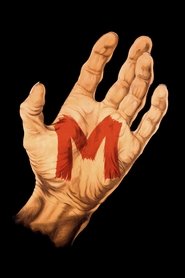
M (1931)
The founding text, and still one of the most daring. Lang never shows you the crime that sets the story in motion; instead he gives you the objects left behind — a ball rolling to a stop, a balloon caught in telephone wires — and trusts you to assemble the horror yourself. Listen for the little whistled tune: the film teaches you a rule about it, and from then on your ears do the work of dread before your eyes get any evidence. Notice too how the film cross-cuts between police and criminals hunting the same man, mapping an entire city as a machine of pursuit.
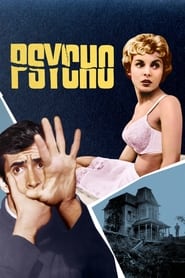
Psycho (1960)
Watch how much of this film is about being watched: by employers, by a highway patrolman staring through a car window, through a peephole. Hitchcock makes you a participant in that surveillance before you understand why it matters. Notice also the famous shower sequence's construction — violence assembled from rapid fragments, a grammar inherited from silent Soviet montage — and pay attention to a certain dissolve involving a drain, which quietly changes what kind of film you're in.

Halloween (1978)
Carpenter and cinematographer Dean Cundey compose the widescreen frame for its edges: the threat appears at the soft margins, half-glimpsed, then gone when a character looks properly. You'll find yourself scanning the image with the same uneasy vigilance as the babysitters onscreen — that's the design. The opening is a single gliding first-person take that lends you a pair of eyes before telling you whose they are, one of cinema's most unnerving uses of the subjective camera.
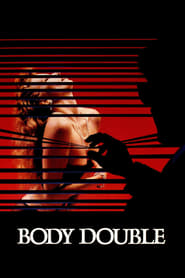
Body Double (1984)
De Palma's telescope shot is the whole erotic-thriller tradition made honest: you look through the eyepiece with the hero, vignette and wobble included, and the film never lets you forget you paid to do this. Watch for the split-diopter shots — face razor-sharp in the foreground, doorway razor-sharp in the deep background — and for the constant doubling: bodies, identities, and Hitchcock films (Rear Window, Vertigo) reflected in a glossy Los Angeles funhouse mirror.

Henry: Portrait of a Serial Killer (1986)
The most demanding film here, and the most rigorous. McNaughton's camera holds on still, aftermath tableaux — crime scenes composed like evidence photographs — while the soundtrack carries audio from another moment in time. Nothing is choreographed for thrills; nothing is explained. Notice how the film refuses the comfort of motive, and how a camcorder sequence turns your own act of watching into the film's subject.
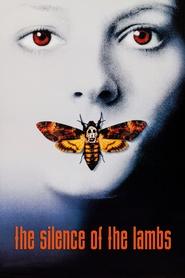
The Silence of the Lambs (1991)
Demme and cinematographer Tak Fujimoto build the film out of near-frontal close-ups: when men address Clarice Starling, they look almost straight down the lens, so you stand where she stands and absorb every condescending, clinical, predatory gaze aimed at her. Watch how sparingly the device is used — the most direct eyelines are saved for the moments of sharpest scrutiny — and how a whole argument about power and looking is carried in a few degrees of camera angle.

Dark City (1998)
A detective story dropped into a metropolis of perpetual night, shot in hard, sourced light carved straight from 1940s noir and German Expressionism — the looming hat-and-coat figures descend directly from Nosferatu's shadow-play. Watch the city itself: it rebuilds and rearranges while its citizens sleep, a place with no sun, no edge, and no history you can trust. Notice how everyone speaks of a place called Shell Beach, and how the film uses that name.
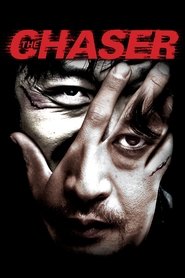
The Chaser (2008)
Na Hong-jin builds his manhunt out of real geography: the narrow stepped alleys and blind corners of a hilly Seoul neighborhood, filmed so you always know who is above, who is below, and how far apart they are. The bold structural move: the film hands over knowledge early and then shows how little knowing is worth when institutions fail. Watch how the tension comes not from mystery but from procedure, bureaucracy, and a clock that keeps running.
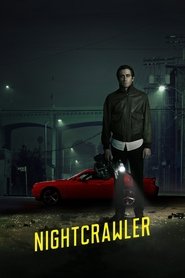
Nightcrawler (2014)
Robert Elswit shoots nocturnal Los Angeles as a glittering, depopulated grid — genuinely beautiful, which is exactly the trap. Watch for the moment Lou Bloom stops merely filming crime scenes and starts composing them: the observer becoming the author of what he observes. It's a media satire descended from Ace in the Hole and Network, told through a protagonist who is pure appetite wired straight to motion.
The Batman (2022)
Greig Fraser's radically underlit photography — faces top-lit, eyes lost in shadow, light motivated by visible lamps and neon — imports the visual grammar of 1970s crime cinema into the blockbuster. Watch the film as a decoding exercise: a killer who leaves ciphers addressed to the detective, so that you interpret every crime scene over the hero's shoulder. Notice how the whole city runs on watching — surveillance, stakeouts, a figure at a rain-streaked window.
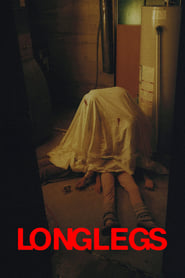
Longlegs (2024)
Andrés Arochi's compositions are wide, symmetrical, drained to institutional grey — and mostly empty, with the small human figure marooned in dead space your eye anxiously scans. Watch where the film puts its monster: at the top edge of the frame, cut off, slightly out of focus, pressing in from somewhere the shot refuses to hold. The dread here is a question of where, exactly, the bad thing is — and the framing keeps refusing to answer.
Why watch them together? Because they're arguing with each other. M invents the form; Psycho weaponizes it; Halloween and Body Double turn the camera into an accomplice; Henry strips out every comfort and stares; Lambs hands the gaze to the person being gazed at; The Chaser and Nightcrawler ask what watching is worth in a world of broken institutions and hungry markets; Dark City, The Batman, and Longlegs build entire cities out of surveillance, ciphers, and empty frames. Seen in sequence, you'll start noticing the same choices recurring — the edge of the frame, the withheld image, the eyeline that finds you in your seat — and you'll realize these films aren't just about killers. They're about you, watching. Which is the most delicious kind of unease cinema has to offer.