Sightlines · a mini film course
The Weight of a Look: Twelve Films About Watching
Every film on this list is, in one way or another, about seeing — who gets to look, who gets looked at, and what the act of looking costs. Some put you behind a killer's eyes and make you complicit. Some make you stand exactly where a woman stands as men size her up. Some withhold the terrible thing entirely and trust you to assemble it from a rolling ball, a hummed tune, an empty frame. Watched together, they form a quiet course in how cinema means: not through what happens, but through where the camera stands, what it refuses to show, and how long it dares to hold. Keep asking one question as you go: whose eyes am I borrowing right now?
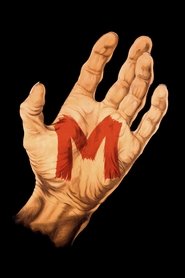
M (1931)
Lang never shows you the crime — he shows you what's left behind: a ball rolling out of the grass, a balloon caught in telephone wires, a mother's voice in an empty stairwell. You supply the rest, and that collaboration is the film's engine. Listen, too: made at the dawn of sound, M invents the audible signature — a hummed tune you learn to dread before you ever see a face. Watch how Fritz Arno Wagner's photography holds deep expressionist shadow and cool street-level realism in the same frame.
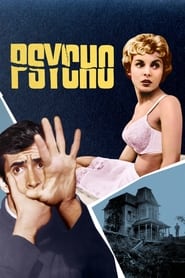
Psycho (1960)
From her first scene, Marion Crane is watched — by a boyfriend, a boss, a highway patrolman whose sustained, wordless stare through a car window is one of the most quietly menacing shots in Hitchcock. Notice how the film keeps handing you the watcher's position, and how it feels. Shot by television veteran John L. Russell rather than Hitchcock's usual prestige cinematographer, its look is clean, efficient, deep-focused — the plainness is part of the trap.

Halloween (1978)
The opening is one long gliding first-person take — you're issued a pair of eyes before you know whose they are. After that, Dean Cundey's anamorphic widescreen turns you into a nervous sentry: the threat is placed at the soft edges and blurred backgrounds of the frame, so you scan every composition the way the characters should but don't. Half the dread here is a small failure of attention — yours.

Henry: Portrait of a Serial Killer (1986)
A film made of aftermaths. Charlie Lieberman's camera holds on static, near-still images while the soundtrack carries audio from another moment entirely — you're given a picture and a sound that don't belong together, and nothing to do with either but sit with it. No suspense scaffolding, no chase, no thrill choreography: evil rendered ordinary, ambient, banal. It's the harshest lesson in the set about what our appetite for watching actually wants.
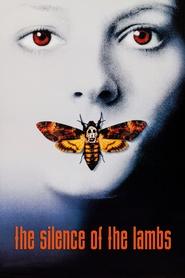
The Silence of the Lambs (1991)
Watch the eyelines. When men address Clarice Starling, Tak Fujimoto has them look almost straight down the lens — not past you, the way movies usually cheat it — so for the length of the shot you stand where she stands and absorb every appraising, condescending, predatory gaze aimed at her. The device is rationed, saved for the moments of sharpest scrutiny, which is why it never goes slack. One camera choice carries the film's entire argument about power.
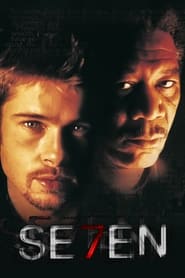
Se7en (1995)
A detective story that wants you to do homework rather than watch a chase: crime scenes arranged like texts, a word left at each one, a detective pulling Dante off library shelves at night while guards play cards. Darius Khondji's hugely influential photography lights only from sources you can see in the frame — a bare bulb, a flashlight, streetlight through rain-slicked glass — and lets everything else fall into shadow. The suspense lives in reading, not running.

Dark City (1998)
A noir in near-total night: hard, low, sourced light carving figures out of darkness, a restless and often canted camera climbing through vertical space. Its shadow-and-silhouette menace descends straight from the German silent cinema of Nosferatu and Metropolis — painted darkness as a language. Notice how the city itself behaves like a character with something to hide, and listen for the name of a sunlit place everyone remembers and no one can quite reach.
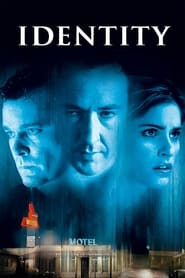
Identity (2003)
Ten strangers, one storm-sealed Nevada motel, and numbered room keys that start turning up like a countdown — the Agatha Christie closed-circle machine rebuilt in sodium-amber light and silver rain. Phedon Papamichael keeps the space deliberately artificial and hermetic: identical doors lined up like a multiple-choice question, every surface wet and reflective. Watch the mirrors and the rain-glass closely. The film is counting something — pay attention to what.
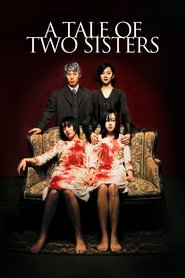
A Tale of Two Sisters (2003)
You'll remember the wallpaper before you remember the plot: green and floral, warm woods, deep ambers, rooms framed through doorway after doorway with a painter's symmetry. Kim Jee-woon hides his horror not in the dark but in the well-lit corner of a lovely room — the prettiness is the trap. Descended from The Innocents and The Haunting, it generates fear from sound, suggestion, and a house that seems to breathe, and its beautiful surfaces are screens worth distrusting.
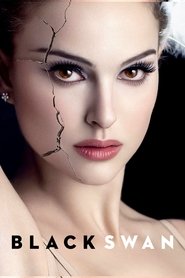
Black Swan (2010)
Matthew Libatique's camera rides inches behind Nina's shoulder, threading her down corridors — never inside her head, never safely outside it, close enough that intimacy curdles into surveillance. Then there are the mirrors, which a ballet studio supplies wall to wall: reflections multiplied, fragmented, sometimes lagging a half-beat behind the body that cast them. Normally a mirror reassures — there I am. Watch what happens when it stops doing that.
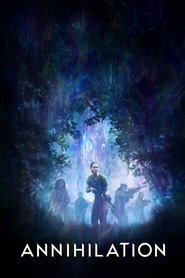
Annihilation (2018)
Two deer step from the brush moving in perfect mirrored unison, and the expedition can only stand and look — nobody explains it, nobody can act on it, and the looking is the event. Rob Hardy shoots the Shimmer as a soap-bubble membrane tinting a world of toxic greens and oily refractions, and the film keeps stalling its competent, armed protagonist into pure astonishment. By the near-wordless final stretch, score and sound design fuse into a single throbbing texture. Let it wash over you rather than solve it.

X (2022)
Ti West and Eliot Rockett rebuild the grammar of 1979 rural horror — golden dusty exteriors, lamp-lit interiors, wide patient framing, slow zooms instead of jittery handheld. The film's real subject is desire across a lifespan: an old woman at the edge of a doorway watching young bodies move the way hers once did. West lets dread pool in the gap between a look and an act. Stay in that gap; it's where the film lives.
Seen back to back, these twelve teach each other. M and Henry show how much a film can mean by withholding; Halloween and Silence show how a lens can be loaned out — to a killer, to a woman being appraised — until you feel the borrowed gaze in your own body. Se7en turns you into a reader; Identity, Dark City, and *Black