Sightlines · a mini film course
The Ones Who Watch: A Course in Looking, from M to X
Every film on this list is, on paper, about a killer. But watch them together and you'll notice the murders are almost beside the point. What these twelve films actually study is looking — who gets to look, who gets looked at, what it costs to see clearly, and what happens when seeing is all a person can do. Some of these films put you behind the predator's eye and make you feel the discomfort of sitting there. Others follow investigators whose whole craft is borrowing someone else's gaze. And a few — the strangest and saddest — are about people who see everything and can change nothing, films where the camera stops chasing the action and simply, patiently, watches. Move through them in any order; the conversation between them is the course.
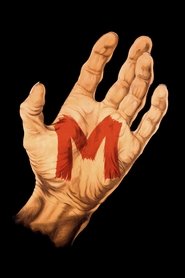
M (1931)
Watch the opening minutes: a child's ball rolling to a stop, a balloon caught in telephone wires, a mother calling up an empty stairwell. Lang shows you the edges of a terrible event and trusts you to assemble the center yourself — the empty frame does the work. Notice, too, how a hummed tune becomes a signal you learn to dread: the film teaches you a rule, then makes you flinch every time it applies. Nearly everything else on this list descends from these choices.
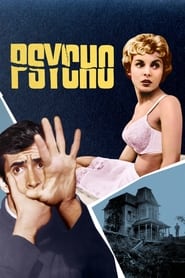
Psycho (1960)
From her first scene, Marion Crane is being looked at — by a boyfriend, a boss, a highway patrolman staring through her car window in one of the most quietly menacing wordless scenes ever shot. Hitchcock makes you one more of those watchers, and the film is partly about what that watching costs. Notice the lean, functional black-and-white photography, shot by a television veteran rather than Hitchcock's usual prestige crew: it strips away glamour and leaves you closer to the glass than you may want to be.
Peeping Tom (1960)
Released the same year as Psycho, and even more unnerving about the camera itself. You learn almost immediately what Mark does and how — the film runs not on mystery but on the terrible distance between what you know and what the warm girl downstairs sees in him. Watch the central object: a camera with a small mirror bolted to it, recording and reflecting in the same instant. It's the whole film folded into one device, and a dark mirror held up to moviegoing itself.
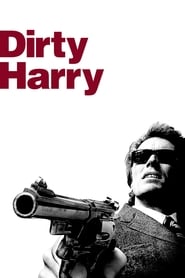
Dirty Harry (1971)
The opening puts you literally in the crosshairs — the camera bolted to a rifle, looking down at San Francisco before you've met anyone. Siegel then hands the widescreen city to his two hunters: notice how often Scorpio is perched above the populace on rooftops and towers, while Harry is shoved to the margins of the frame. The city isn't a backdrop here; it's a moral terrain that seems to summon the violence played out across it.
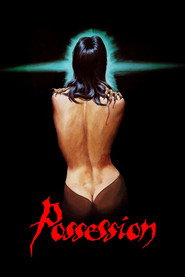
Possession (1981)
The wildest card in the deck. Bruno Nuytten's handheld camera behaves like an anxious participant — circling the actors, swinging after sudden movement, refusing the calm back-and-forth grammar most dramas rest on — and Żuławski directed his actors to the edge of collapse as a deliberate system, not an accident. Watch for the scenes where nothing "advances the plot" and everything is happening: bodies not acting but undergoing, marriage rendered as catastrophe. Let it be operatic; that's the design.
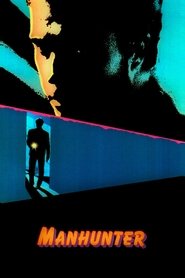
Manhunter (1986)
Will Graham's method isn't deduction — it's occupation. He runs a murdered family's home movies in the dark and speaks the killer's reasoning aloud, in the present tense, as though renting the man's eyes. Mann and cinematographer Dante Spinotti build the whole film as a camera watching a watcher, in a cold designed world of blues, teals, and hard symmetrical architecture where surface and atmosphere carry as much meaning as plot. This is the foundation stone of the modern profiler film.

Henry: Portrait of a Serial Killer (1986)
The most confrontational film here, and the most austere. Its signature device: static shots of aftermath, posed like evidence photographs, while the soundtrack carries audio from another moment entirely — you're handed an image and a sound that don't belong together, and nothing to do with either. Notice how the film refuses every comfort of the genre: no suspense scaffolding, no explanation that would let you file the violence away, just flat, ordinary rooms and your own watching.
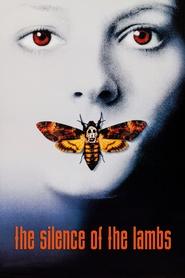
The Silence of the Lambs (1991)
Watch the eyelines. When men address Clarice Starling, they look almost straight into the lens — not a few degrees off, as actors usually do — so that for the length of the shot you stand exactly where she stands, receiving every appraising, condescending, or predatory look aimed at her. Fujimoto rations the device carefully, saving the most direct stares for the moments of sharpest scrutiny, so it never goes slack. One camera choice, and it's the film's entire argument about power and the gaze.
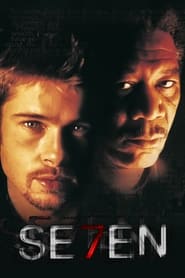
Se7en (1995)
Most detective films want you to watch a chase; this one wants you to do homework alongside its detective — library nights, Dante and Chaucer, index cards under Bach, crime scenes arranged like texts to be read. Watch Darius Khondji's lighting: every glow in the frame comes from something in the frame — a bare bulb, a flashlight, streetlight through rain-slicked glass — positioned to allow maximum shadow. The city is never named, and that placelessness is the point.
Memories of Murder (2003)
Notice what the camera does at the first crime scene: it doesn't rush to the body. It drifts sideways, wide and patient, giving the landscape the same weight as the people in it — a quiet refusal of the genre's usual close-up urgency. Bong is in open dialogue with Se7en, but watch how differently he treats certainty itself: evidence that shifts meaning, an investigative system whose own violence corrupts what it can know. Let the film's patience become yours.
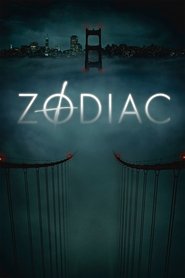
Zodiac (2007)
Fincher's second serial-killer film inverts his first: procedure without adrenaline, and a fascination with what obsession extracts from the people who can't put a case down. Harris Savides shoots it like the great 1970s paranoid thrillers — practical desk lamps, faces falling into darkness, deep-focus rooms where everything is equally, forensically clear. Watch for the scenes where a character knows something in his bones and the knowing changes nothing; the gap between seeing and being able to act is the film's true subject.
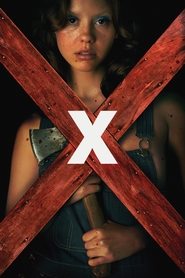
X (2022)
West and cinematographer Eliot Rockett rebuild the grammar of late-1970s rural horror — golden dusty exteriors, lamp-lit interiors, slow zooms instead of handheld chaos — but the film's real preoccupation is desire across the whole span of a life: youth's hunger and age's rage at becoming invisible. Watch the watching: an old woman at the edge of a doorway, looking at young bodies moving the way hers once did, dread pooling in the gap between a look and an act. And keep an eye on mirrors and doubled compositions; the film is quietly insisting on something it will trust you to notice.
Why watch them together? Because each film teaches you to see the next one. M shows you how an empty frame can hold a crime; Henry pushes that idea to its coldest extreme. Peeping Tom welds the camera to the act of killing; Manhunter and Silence of the Lambs turn that same welded gaze into an investigator's tool and a viewer's burden. Dirty Harry gives you the pure pleasure of a man who sees and acts; Zodiac and Memories of Murder show you what it feels like when that circuit breaks and looking is all that's left. Watched as a set, these aren't twelve killer films — they're one long argument about the ethics of the eye, conducted across seventy years and four countries. Bring your full attention. Every one of these films is watching how you watch.