Sightlines · a mini film course
Looking Is Never Innocent: A Dozen Films About Watching, Performing, and Power
Every film on this list is, in one way or another, about the act of looking — and about what looking costs. Half of them circle the great catastrophe of the twentieth century, fascism and its wars, and ask what a camera (or a clown, or a child's imagination) can do in the face of it. The other half turn the lens back on us: the thrill of watching violence, the strangeness of watching at all. Across all twelve, notice a shared instinct: the camera watches rather than chases. It holds still, lets time stretch, and quietly asks what you're doing in your seat. Performance is everywhere here — as survival tactic, as weapon, as disguise, as disease. Watch for who is performing, who is watching, and who holds the power in that exchange.
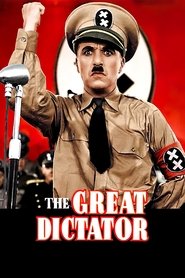
The Great Dictator (1940)
Chaplin builds the tyrant's palace as a deliberate inversion of Nazi rally films — the podium angles and crowd geometry parodied shot for shot — while lighting the ghetto scenes with the luminous intimacy Karl Struss brought from Sunrise. Watch the famous scene of Hynkel alone with a balloon painted like the earth: for four minutes, nothing "happens," and everything is said. Notice how the dictator goes still and dreamy while the world floats around him — bliss as diagnosis, megalomania felt from the inside.
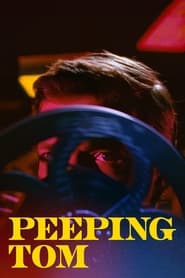
Peeping Tom (1960)
Powell tells you almost everything about Mark Lewis right away — and that early honesty is the engine. The dread isn't mystery; it's the distance between what the warm girl downstairs sees in him and what you already know. Watch Otto Heller's lighting, beautiful in ways that feel faintly inappropriate, and watch the film's central object: a camera with a mirror bolted to its side, recording and reflecting at once. This is a film about filming, and it never lets you forget you're the one looking.
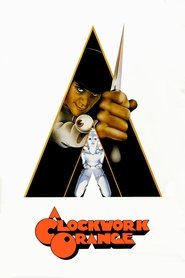
A Clockwork Orange (1971)
The film greets you before anyone is hurt — a stare down the lens, a slow retreat, a charming voice in your ear — and that handshake is the trap. John Alcott's extreme wide-angle lens makes rooms bulge and loom: not how the world looks, but how it looks to Alex, curved toward him, his. Watch how Alex doesn't just act but performs — the violence choreographed, sung, staged — and how the film's satire of the state turns on the question of whether goodness without choice is goodness at all.

Salò, or the 120 Days of Sodom (1976)
Approach with care: this is cinema at its most austere and confrontational. Pasolini borrows Dante's structure — a graded descent through named circles instead of a plot — and Tonino Delli Colli lights it cool, even, and undramatic, like an official document. Watch the measured distance: painterly frontal compositions, no close-up sensationalism, power presented with a bureaucrat's blandness. The horror lives in the calm — in how appetite dresses itself in furniture, protocol, and taste.
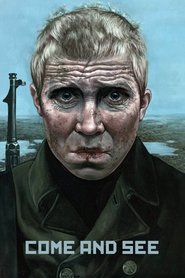
Come and See (1985)
Klimov set out to dismantle the heroic Soviet war film, and the demolition happens on one boy's face. The camera cleaves to Florya with wide lenses pressed within centimeters, so that atrocity often reaches you through his reactions before — or instead of — direct depiction. Watch what happens to that face across the film: nothing in the plot ages him, yet the aging is the most literal fact on screen. This is a war film about someone who can only see, and it makes seeing an ordeal you share.
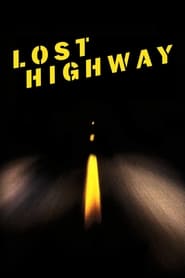
Lost Highway (1997)
Peter Deming photographs the Madison house as near-abstraction: rooms defined by what can't be seen, people walking into blackness and dissolving. Lynch takes the furniture of noir — the femme fatale, the gangster, the surveillance — and strips out motive, explanation, and detection. Watch how the film refuses to keep reality and dream in separate rooms; identities blur, scenes echo, and the timeline coils rather than travels. Don't try to solve it. Try to feel where it folds.

Life Is Beautiful (1997)
Tonino Delli Colli again — the man who shot Salò — here lighting a film with a split personality: sun-warmed romantic comedy and something much darker. Watch the pivot, modeled on Chaplin's slide from slapstick to pathos, and watch the film's boldest device: a father who translates the world for his son, inventing a game over the top of horror. Two incompatible stories laid over the same images — one for the child, one for you — and the gap between them is where the film lives.
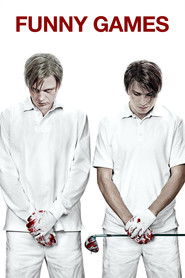
Funny Games (2008)
Haneke made this shot-for-shot from his own Austrian original, aimed squarely at the torture-thriller cycle around it — and at you. Michael Khondji's photography pursues neutrality: wide, stable frames in a house whose geometry refuses to signal danger. Watch the casting as a loaded gun: recognizable stars whose presence trains you to expect certain outcomes. Then watch how the film uses your training against you. It's a thriller about why you wanted a thriller.
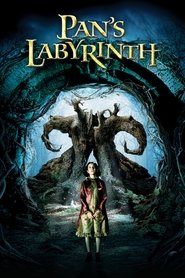
Pan's Labyrinth (2006)
Guillermo Navarro's Oscar-winning photography runs on a strict color logic — cold steel blues for the captain's world, warm ambers for the fairy tale — but the deep trick is that the film never ranks its two stories or tells you which is true. Watch the thresholds: a chalk door drawn on a blank wall, objects the adults can't see. And watch the moral pattern — a girl tested less by danger than by prohibition, in a film where disobedience is the highest virtue.
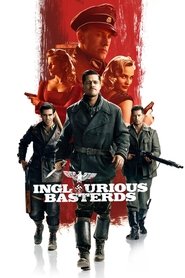
Inglourious Basterds (2009)
Everybody here is performing, and everybody is reading the performance. Tarantino builds his most celebrated scenes as long, unhurried chamber pieces — a farmhouse conversation over milk, a tavern game of identities — where a pause, an accent held like a breath, or the wrong fingers raised to order three glasses carries mortal weight. Watch how the camera sometimes knows more than anyone in the room. And notice that this is a war film obsessed with cinema itself — projection, propaganda, the flammability of film — as a historical force.

You Were Never Really Here (2017)
Ramsay knows the vigilante picture down to its grain — she even shoots on 35mm for that bruised Taxi Driver texture — then quietly pulls its spark plugs. Fragments of memory flare up without dates or places, refusing to assemble into the explanatory backstory the genre owes you. Watch the Bressonian discipline: hands and objects in extreme close-up, violence placed off-screen or rendered through aftermath. The action movie's engine keeps its shape, but nothing discharges. That withholding is the portrait.
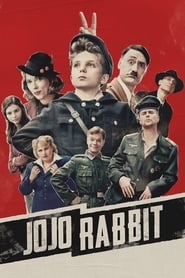
Jojo Rabbit (2019)
Waititi revives Chaplin's gambit — the comedian personally playing Hitler to shrink him into a buffoon — but relocates it inside a child's head. Watch the opening cut: archival rally footage laid over the Beatles, ecstatic crowds recut as fan hysteria. Mihai Mălaimare Jr. shoots the boy's world in bright, symmetrical, picture-book frames — order as a ten-year-old imagines it. The imaginary Hitler who bums cigarettes and does bits is the film's quiet thesis: fascism here isn't an argument a child accepts, but an imaginary friend he built from posters and want.
Watched together, these films become a conversation across eighty years. Chaplin, Benigni, and Waititi test whether laughter can be aimed at tyranny without disarming itself; Pasolini and Klimov refuse comfort entirely and make you sit with what power does to bodies and minds; Powell, Kubrick, Haneke, and Tarantino turn the camera into a moral instrument that implicates the person holding the popcorn; Lynch, del Toro, and Ramsay dissolve the line between what happened and what was imagined — and trust you to live in the uncertainty. The reward of the sequence is a sharpened eye. You'll start noticing when a film cuts away and when it holds, whose gaze you've been handed, who in the frame is performing and for whom. By the end, the simplest act in cinema — looking — won't feel simple anymore. That's the course.