Sightlines · a mini film course
Most movies use looking as a means to an end — the glance leads to the kiss, the clue leads to the arrest, the cut hurries you along. The twelve films in this set do something rarer and stranger: they make looking itself the event. In each of them, the camera watches rather than chases. Faces are held past the point of comfort. Time is allowed to stretch until you can feel it. Rooms become worlds; reflections become rivals of the real; and desire, memory, and grief are rendered not through what characters do but through what they see and cannot act on. Watch these films with patience, and they will teach you a whole other way of watching.
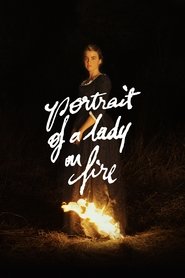
Portrait of a Lady on Fire (2019)
Notice how often you are watching someone watch. The camera repeatedly frames characters in the act of looking — the painter studying her subject, the subject watching the painter work — until you realize the film's real subject is the gaze itself, and the discovery that it runs in both directions. The looking is never one-way theft; the model studies the artist right back. Sciamma inherits from Chantal Akerman the long, unhurried take as a form of respect — duration as the medium of a woman's experience — and from Dreyer the conviction that a face, held long enough, is a whole landscape.
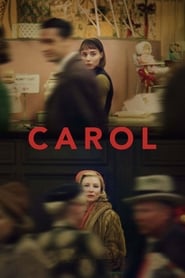
Carol (2015)
Start with the glass. Edward Lachman shot on Super 16mm so the grain sits on the image like weather, and he keeps framing the lovers through something — rain-streaked cab windows, storefronts, condensation on a diner pane — borrowing the look from Saul Leiter's color street photographs. The obstruction isn't decoration: you see these women the way the 1950s forced them to see each other, glimpsed and partial, rarely in the clear. And watch the toy-counter scene where nothing "happens" except a look held, returned, held again — the whole film lives in moments like that.
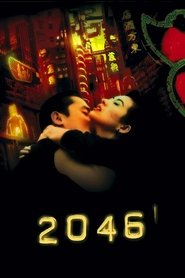
2046 (2004)
Watch for the hesitations. Wong Kar-wai uses step-printing — individual frames repeated two or three times — so that a single second of delay swells into something you can climb inside. The film's amber 1960s hotel corridors and its cold blue science-fiction train are not "story" and "flashback"; they are two faces of one turning stone, memory and its reflection exchanging places faster than you can separate them. Telephoto compression flattens bodies against walls; slatted partitions catch figures in reflection. This is a film about love arriving a beat too late — and about how that lag feels.
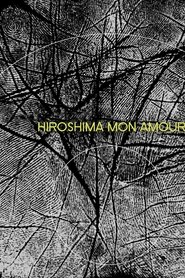
Hiroshima Mon Amour (1959)
Listen to the argument between voice and image. A woman insists she saw everything in Hiroshima; a man answers, flat as a verdict, that she saw nothing — while the images seem to obey her. Resnais opens on bodies shot so close they stop being bodies, skin grained with something you can't identify, and he means you not to. Two cinematographers split the film along its two worlds — France and Japan — and the whole thing turns on a devastating question: can private grief and historical catastrophe ever illuminate each other, or must they stay sealed apart?

The Bitter Tears of Petra von Kant (1972)
Look for the door that leads anywhere. You won't find one. Fassbinder builds a room with no outside — no establishing shot of a street, no cutaway to relief — and fills it with mirrors, nude mannequins like a frozen chorus, and a Poussin canvas that throws desire back at the women beneath it. Within this sealed box, Michael Ballhaus's camera generates all the drama through foreground obstruction and lateral glides. The décor keeps showing Petra to herself; space becomes a trap, and the trap is the meaning.
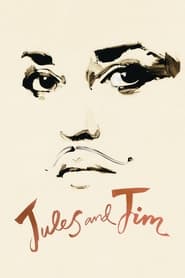
Jules and Jim (1962)
Wait for the image that stops. Truffaut freezes Catherine mid-laugh, head half-turned, and simply holds her there while Delerue's theme swells — not at an ending, but in the middle of happiness, for no reason except love. Before the men ever meet her, they make a pilgrimage to a photograph of a stone statue whose smile haunts them; the film keeps asking what happens when a living person is turned into an image. Coutard's warm, river-lit photography inherits Renoir's pastoral melancholy: beauty that intensifies the sadness of things that can't last.
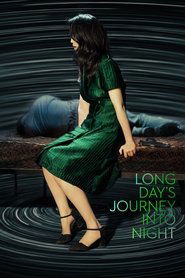
Long Day's Journey Into Night (2018)
Roughly an hour in, the film will ask you to do something with your hands. A title card appears — the film's own name, withheld until then — and you're instructed to put on 3D glasses. Then comes a single unbroken take of nearly an hour: no cuts, the image swollen into depth, a dream you have physically put on. Before that, watch how Bi Gan (following Tarkovsky's Mirror) lets a lyric voiceover drift over images that refuse to anchor to any timeline. Memory here isn't a record; it's a gravitational force that warps the present.
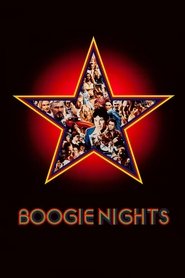
Boogie Nights (1997)
The opening shot is the thesis. The camera drops off a neon marquee in Reseda and pushes into a nightclub without cutting — handing off from character to character, threading the whole ensemble into a single moving body, before settling on a seventeen-year-old busboy who doesn't yet know this room will become his family. Anderson and Robert Elswit's gliding Steadicam, learned from Goodfellas and Altman's ensemble mosaics, keeps insisting on that wholeness: this chosen family breathes, parties, and panics together, and the long takes refuse to cut them apart.
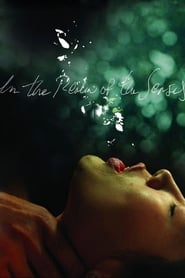
In the Realm of the Senses (1976)
Watch for the one moment the outside world appears: a man threading against a column of marching soldiers, walking the opposite direction — back toward a room, back toward a bed. The wider world enters only so it can be walked away from. Hideo Itō shoots in lacquered, saturated color with a stillness and frontality drawn from traditional Japanese erotic prints, and Ōshima turns the tatami-height framing of Ozu toward claustrophobic ends. Notice how the decorative period surface — kimono, geisha songs, 1936 — keeps thinning, as if something older and more savage were pressing through from underneath.
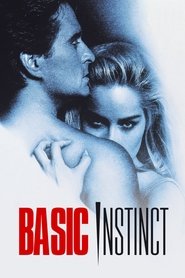
Basic Instinct (1992)
Watch the interrogation scene run backward. Five men around one woman in white, Jan de Bont's camera circling, unhurried — and by the end you notice the questioners are the ones being read. Verhoeven takes an idea from difficult art cinema — that a story can manufacture truth rather than uncover it, so fact and fabrication can't be peeled apart — and bolts it to the engine of a glossy studio thriller. The femme fatale here is literally an author; the film is obsessed with the terror of a person who cannot be read or possessed. Its DNA runs straight back to Vertigo's spiraling camera and Double Indemnity's outmaneuvered investigator.

Happy Together (1997)
Keep your eye on the lamp: a cheap one, with the Iguazú Falls printed on its shade, a paper waterfall turning in a dark Buenos Aires apartment half a world from home — a destination you can hold in your hands and never reach. Christopher Doyle's wide-angle lenses constrict space to the point of suffocation, and the film's great verb is not do but wait. Made entirely outside Hong Kong in the year before the handover, this is a film about exile at every level — geographic, linguistic, emotional — and about a face you can only look at, because there is nothing to be done with it.
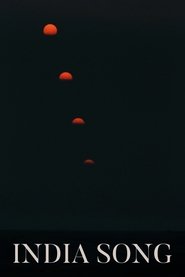
India Song (1975)
The strangest and most radical film here. Nobody on screen speaks — lips stay shut while voices from somewhere else recall the woman we're watching, half in love with her, unsure of their own memories: Did she die? I think she died. Duras unsticks sound from image completely, so the two tell different stories at once across a gap. Bruno Nuytten's camera barely moves; light pools and fades in amber and gold; a mirror shot doubles Delphine Seyrig so you can't say which figure is the body and which the reflection. Everything is a present we are told, again and again, is already finished.
Why watch these together? Because they form a conversation across seventy years about what happens when cinema stops rushing. Duras wrote Hiroshima Mon Amour before making India Song; Wong's step-printed hesitations in Happy Together flow into 2046; Haynes and Fassbinder both build on the same 1950s melodramas, imprisoning lovers in glass and décor; Sciamma inherits Akerman's patience and Dreyer's faces. Seen in sequence, these films retrain your eye. You start noticing what's reflected, what's obstructed, what's withheld — and you discover that a held gaze, a frozen frame, an unbroken take, or a voice unstuck from its body can carry more feeling than any plot. The reward isn't knowing what happens. It's learning how to look.