Sightlines · a mini film course
The Mini Course: Twelve Ways of Watching Someone Come of Age
Every film in this set circles the same tender territory — childhood and adolescence pressing against the walls of family, school, and neighborhood — but what makes them a course rather than a pile is how differently each one uses the camera to hold a young person in the frame. Some of these films trap their characters visually: a narrow frame, a policed sky, a library you can't leave. Others let the camera drift alongside, patient and unhurried, trusting a posture or a dance step to say what dialogue can't. And a few make you the most knowing person in the room, handing you information the characters don't have and letting the tension do the rest. Watch for the recurring choice: does the camera chase the story, or does it wait, watch, and let a body, a room, or a stretch of time speak for itself?
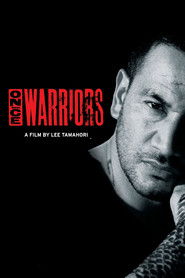
Once Were Warriors (1994)
Notice the opening image: postcard-blue mountains and still water that turn out to be a billboard bolted over a roaring motorway — the whole film lives in that gap between painted paradise and the concrete beneath it. Stuart Dryburgh, fresh off The Piano, shoots in a completely different register here: hard, glossy, neon-inflected, with pub interiors glowing amber and red while the domestic spaces sit flatter and cooler. Watch for the way the film refuses to cut away from a marriage under strain — a debt to Cassavetes' A Woman Under the Influence — and how Temuera Morrison channels the magnetic working-class brute in the Brando/Streetcar lineage. The title is the key: an ancestral warrior spirit with no battlefield left, pressing up through pubs and kitchens.
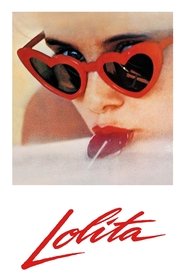
Lolita (1962)
Kubrick opens at the end — a killing in a cluttered mansion — then circles back four years, so the whole story arrives as a confession rather than a plot. That reordering (borrowed from Citizen Kane, Sunset Boulevard, and Double Indemnity) is Kubrick's invention, not Nabokov's, and it changes everything: you're not asking what happens but how much of this narrator to believe. Watch how Oswald Morris's black-and-white camera favors long, fluid takes over quick cutting, letting scenes stretch so you can catch the gap between what Humbert's voice-over claims and what the image quietly shows.

Fish Tank (2009)
The first thing to clock is the frame itself: a boxy, nearly square ratio that crops the wide world away and traps fifteen-year-old Mia in tall, narrow compositions — the fish tank of the title, built into every shot. Robbie Ryan's handheld camera trails her like a shadow, adopting the Dardennes' body-locked grammar from Rosetta: close, mobile, never judging, never cutting away. Watch how the film trusts dance over speech — Mia rehearsing alone in a gutted flat, her body saying what her situation won't let her say. It's British social realism in the Kes and Ratcatcher lineage, but tactile and poetic rather than preachy.
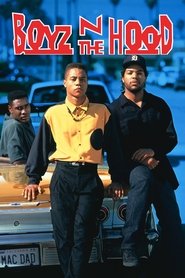
Boyz n the Hood (1991)
Listen before you look: the helicopter is there under everything — the barbecue, the porch talk — a policed sky humming beneath ordinary life. Singleton and cinematographer Charles Mills keep it restrained and legible, warm sunlight on the daytime blocks, the camera steady enough to give weight to domestic moments and to refuse turning violence into spectacle. Watch how they frame bodies inside the architecture of the neighborhood — corners, fences, yards — until the geography itself becomes a character pressing on everyone in it. This is the founding film of the 90s "hood film" cycle, but its deepest debt is to Killer of Sheep: South Central as a lived place, not a backdrop.
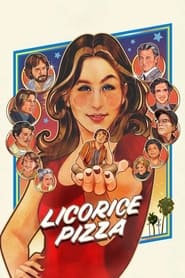
Licorice Pizza (2021)
The signature image is two people running toward each other across a dark parking lot while a long lens compresses the space so the distance refuses to close — thrilling, and almost nothing "happens." That's the film's whole method: no goal, no mission, just Gary and Alana tumbling sideways through the 1973 San Fernando Valley in loosely connected episodes, the American Graffiti structure crossed with Hal Ashby's drift. Watch how Michael Bauman's handheld long-lens camera follows characters in motion rather than pinning them down, catching feeling on the fly. Time is allowed to stretch here, and strangely, that's the source of the film's buoyancy.
Rushmore (1998)
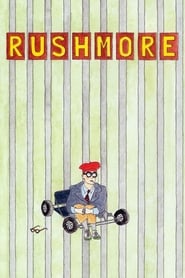
Robert Yeoman's camera established the Wes Anderson house style here: characters dead-center in a wide anamorphic frame, architecture squared flat to the lens, everything composed like a proscenium stage. That's not decoration — it's the film's argument. Max Fischer can't fix his life, so he stages it: clubs, plays, poses held until the feeling becomes visible, culminating in a Vietnam epic with real in-camera pyrotechnics that resolves nothing and expresses everything. Watch for the moments that advance no plan at all — Bill Murray's cannonball into the pool, sinking and staying — and notice how the film builds Max out of Truffaut's Antoine Doinel and the anarchic schoolboy rebels of Zéro de conduite and if....

Dead Poets Society (1989)
John Seale shoots Welton in burnished autumn — amber leaves, fog on the lake, candlelight in wood-panelled rooms — so the season itself carries the theme of ripening and passing. Watch for the small, almost silly gesture the film keeps returning to: a teacher standing on his desk. It wins no argument and changes no rule; it's a posture that shows something rather than an action that fixes anything, and Weir builds the whole film's emotional language around it. Notice too the school's opening minutes — banners, identical blazers, stone arches — a world that promises a story of problems solved, which the film quietly declines to be.
Moonlight (2016)
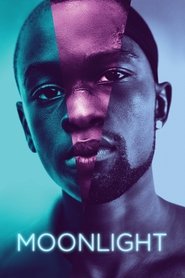
Start with the water: a man holding a boy afloat in the Miami surf, one hand under the small of his back, the camera staying, and staying, until the holding is the meaning. Jenkins inherits the 90s hood-film milieu — the drug corner, the addicted parent — and drains it of spectacle, replacing action with looking. Watch how James Laxton's camera orbits conversations instead of cutting between them, and how the film borrows a transnational grammar of longing: Wong Kar-wai's saturated yearning, Beau Travail's eloquence of male bodies in motion, Hou Hsiao-hsien's patient triptych structure. Everything crucial here is carried by gesture, color, and duration rather than dialogue.
Monster (2023)
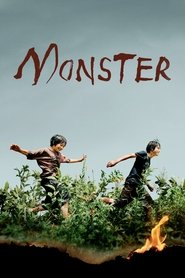
A mother sits across from a row of bowing teachers who apologize in smooth, depersonalized cadences — she knows something is wrong, she's right, and every action she takes makes it worse. Kore-eda hands you a familiar movie (wronged parent versus stonewalling school) and then rewinds, replaying events from different vantage points in the Rashomon tradition. Watch how Ryuto Kondo's camera literally changes character with each perspective — anxious, compressed framings in the mother's section — so the image itself withholds and reveals along with whoever you currently inhabit. Ryuichi Sakamoto's final score works the same way: sparse piano against long silences, saying less so you'll listen harder.
Carrie (1976)
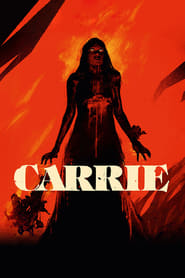
Everything lives in the gap between what you know and what the characters don't: De Palma's camera finds the bucket of pig's blood early and keeps climbing back to it while, below, a girl is happy for the first time in her life. You are enlisted as the knowing third presence in the room — the whole prom sequence is engineered, shot by shot, around your dread. Watch Mario Tosi's photography shift registers: soft, hazy realism in the school and home scenes, escalating stylization as the supernatural asserts itself, and a swooning 360-degree camera move that quotes Vertigo's rotating embrace and turns romantic ecstasy into premonition.
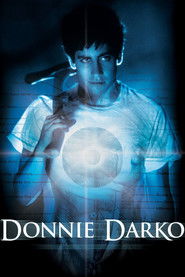
Donnie Darko (2001)
The film opens on a fact that refuses to explain itself — a jet engine through a bedroom roof, from a plane no one can identify — and everything after is a boy walking around inside that refusal. Donnie perceives brilliantly (he can dismantle a motivational guru in a sentence) but his perceptions never hook up to actions that resolve anything; instructions arrive from a giant rabbit instead. Watch Steven Poster's cool, slightly desaturated palette turn comfortable suburbia faintly sinister — the Blue Velvet trick of estranging the ordinary — and notice how the film keeps its central ambiguity honest, in the Harvey tradition: gentle madness or genuine visitation, and the movie won't pick for you.
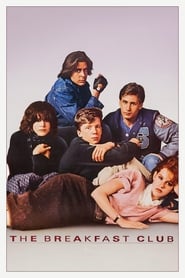
The Breakfast Club (1985)
Hughes's boldest move is confiscating the engine of ordinary movies: five teenagers locked in a library for eight hours with one instruction — do nothing. The whole feature is built from the stretches Hollywood usually cuts away from. Watch how Thomas Del Ruth solves the single-room problem architecturally, staging characters at different heights on the library's galleries and railings so power shifts read spatially; and watch Allison, who doesn't speak for nearly an hour while the camera learns to wait on her face. Editor Dede Allen (of Bonnie and Clyde) cuts on the rhythm of breath and reaction rather than plot — feel the difference.
Why Watch These Together
Seen in sequence, these twelve films become a conversation about the same question: how do you film a young life that can't yet act on the world? Some answer with entrapment — the boxed frame of Fish Tank, the policed sky of Boyz n the Hood, the locked library of The Breakfast Club. Some answer with performance — Max's plays, Keating's desk, Mia's dance, a body saying what speech can't. Some answer with knowledge itself — the confessing narrator of Lolita, the shifting perspectives of Monster, the bucket you can see and Carrie can't. Watched together, they train your eye to notice how a frame holds a person: whether space is a trap or a stage, whether time is a clock or weather, whether the camera chases or waits. That noticing is the course. The films will do the rest.