Sightlines · a mini film course
The Camera That Refuses to Look Away
There's a certain kind of film that gives up the oldest pleasure movies offer — the pleasure of watching someone see a problem and fix it. The twelve films in this set all belong to that stranger, braver tradition. They're built around people caught in situations too large to punch through: poverty, addiction, violence inherited like furniture, institutions that grind on regardless. And because the characters can't act their way out, the filmmakers change what the camera does. It stops chasing plot and starts watching — bodies, postures, hands, faces held a beat too long. Nearly all of these films share a family tree running back to Italian neorealism (you'll notice Bicycle Thieves haunting almost every one), and nearly all of them use handheld, close-quarters, real-location filmmaking not as grit for its own sake but as a moral position: stay with the person, don't flinch, don't cut away to comfort. Watched together, they teach you to read stillness, waiting, and gesture as drama.
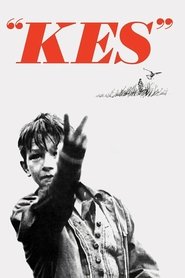
Kes (1970)
Chris Menges shoots from across the room or across the field, on long lenses, so the actors are never crowded by the camera and behavior unfolds unselfconsciously. Watch Billy's body: he flinches through home and school, braced for the next blow — then goes utterly still when the kestrel comes to his fist. The film builds its whole meaning out of that contrast between a boy's guardedness and his one moment of open-faced mastery. This is the foundational grammar of British observational realism, and half the films below descend from it.
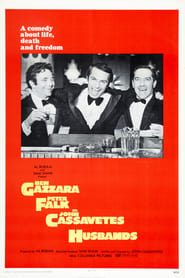
Husbands (1970)
Cassavetes throws out conventional movie machinery — tidy pacing, clean framing — and lets a handheld camera hunt for faces, catching them off-balance, half-cut by the frame, held past comfort. Watch the long bar scene where three men demand a stranger sing "with feeling," over and over: they're auditioning for an emotion they can't reach themselves. Grief enters in the first minutes, and everything after is men fleeing it through drink and clowning. Let the scenes run longer than feels polite; the discomfort is the point.
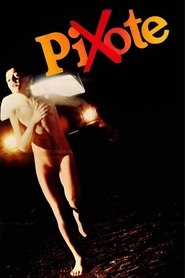
Pixote (1980)
Rodolfo Sánchez places the camera at a child's height, so adults and institutions physically loom. Watch the face of Fernando Ramos da Silva, a real street kid cast for authenticity in the neorealist tradition: where a trained child actor would supply tears, he gives you watchfulness — a stillness that reads as survival. The film treats childhood not as innocence corrupted but as a condition stripped of protection from the start, and its refusal of sentimentality is its deepest honesty.
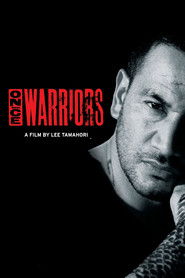
Once Were Warriors (1994)
Watch the opening image carefully — a postcard-perfect New Zealand landscape that turns out to be a billboard bolted over a roaring motorway. The whole film lives in that gap between painted paradise and concrete. Stuart Dryburgh (fresh off The Piano, in a totally different register) gives the pub and party scenes a hot amber-and-neon glow against cooler, flatter domestic spaces. And watch Temuera Morrison channel the magnetic-brute tradition of Brando's Stanley Kowalski: charisma and menace in the same body, ancestral warrior energy with no battlefield left but a marriage.
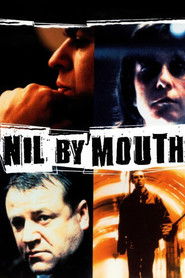
Nil by Mouth (1997)
Gary Oldman, directing what he knew, favors long handheld takes that let confrontations build and detonate in real time, in tight, lived-in South London rooms. Watch how the film handles the past: no flashbacks, ever. Family history arrives through behavior and monologue — a man in a chair, talking about his father, and what you're really watching is his posture, the weight of saying anything at all. The inheritance of violence sits in the body, in the present tense.

Dancer in the Dark (2000)
Robby Müller — famous for lyrical celluloid beauty — shoots the dramatic scenes deliberately ugly: jittery handheld, washed-out color, snap zooms. Then watch what happens when industrial noise becomes rhythm: a factory press, a train on rails, and suddenly the grey world becomes a musical number, only to snap back. Von Trier weaponizes the whole golden-age musical tradition (casting Deneuve is part of the trap) against a story of maternal sacrifice. Notice the switch between the two visual worlds — it's where the film's entire argument lives.
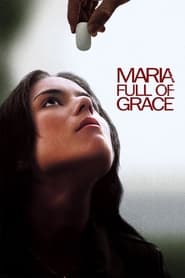
Maria Full of Grace (2004)
Marston takes the most action-hungry genre going — the drug-trafficking picture — and drains the action out, relocating the story to the supply chain's lowest, most expendable rung and treating smuggling as labor. Watch the scene at the kitchen table with the glass of water and the row of latex pellets: watch her throat. Jim Denault's handheld camera stays close in sealed spaces — greenhouse, airline cabin, fluorescent customs hold — and the drama becomes a body carrying its cargo, holding very still.
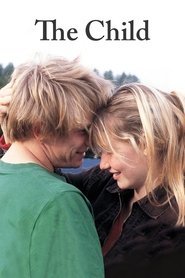
The Child (2005)
The Dardennes keep the camera a few feet behind Bruno's neck and shoulders as he moves through the post-industrial Belgian city of Seraing — never far enough ahead to read his face. No backstory, no explanation of why he is as he is. Watch the hands instead: money passed, objects traded, gestures that reveal what a face would only perform. This is Bresson's method inherited whole — moral drama built from hands and objects — and it asks you to reconstruct a whole world from what a man does.
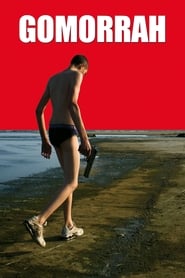
Gomorrah (2008)
Marco Onorato's camera keeps its distance even during violence — long lenses, concrete-grey palette, a roving watchfulness that treats a shooting the way the housing projects treat it: as weather. Watch the two teenagers who imitate Scarface on the beach; Garrone stages their Hollywood fantasy precisely to puncture it. Five story strands that never converge into a single hero, because the film's subject isn't a gangster's rise — it's a system with no outside.
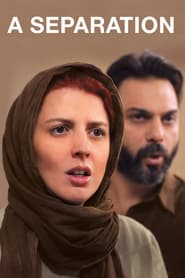
A Separation (2011)
Farhadi opens with a couple pleading their cases directly at the camera — the unseen judge sits exactly where you sit. Watch Mahmoud Kalari's compositions: constantly shooting through glass, doorways, and partitions, so that every character is framed by barriers. The handheld realism looks like documentary evidence, but Farhadi quietly voids that contract — every account is honest and partial at once. Watch the daughter, Termeh, positioned at eye level to adult moral failure. You will find yourself deliberating, and regretting it.
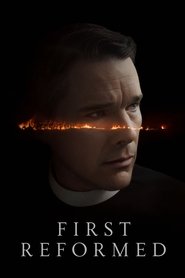
First Reformed (2018)
After eleven handheld films, here's the counter-move: Alexander Dynan's camera is almost entirely static, locked in frontal, symmetrical compositions, so that when it finally moves, the movement lands like an event. Watch the counseling scene between the pastor and the young activist — two figures in a fixed frame, no cutting away for reactions, just the argument held whole. Schrader draws on the great European cinema of clerical doubt (Bresson, Bergman) and adds ecological dread: a man who perceives everything and can act on none of it, framed by empty rooms.

Young Mothers (2025)
The Dardennes, three decades on, still start with the back of a neck: a young woman moving fast down a corridor of a Liège shelter for adolescent mothers, and you never get the wide shot that would let you stand outside. Watch how rehearsed-to-automatic the everyday actions are — feeding an infant, packing a bag — so the camera catches behavior, not performance. Watch someone wait in a hallway: nothing "happens," but the waiting is the event, the fatigue in the shoulders is the drama.
Watch these together and something recalibrates in you. You start noticing throats and hands and shoulders before you notice plot. You learn that a camera holding still — or holding close — is making an argument about what deserves attention: not the decisive act, but the person enduring, the gesture that carries a whole inheritance, the waiting that turns out to be the story. The set also forms a genuine conversation across decades and continents: Yorkshire fields, Auckland estates, Belgian corridors, Neapolitan projects, Tehran apartments, all filmed with the same underlying conviction — that ordinary, cornered lives are large enough to fill a screen, if only the camera refuses to look away. By the twelfth film, you won't be waiting for something to happen. You'll understand that it already is.