Sightlines · a mini film course
The Cinema of Waiting: Love That Watches Instead of Acts
There's a certain kind of film in which the story could be told in a sentence, yet the film runs two hours and feels bottomless. Someone loves someone. Nothing — or almost nothing — is done about it. These eleven films belong to that tradition: the cinema of the held gaze, the untaken step, the room where two people stand close enough to touch and don't. What replaces action in these films is attention. The camera watches rather than chases. Time is allowed to stretch. A staircase, a train platform, a rain-streaked window, an empty flat — spaces stop being mere settings and start carrying the feeling the characters can't speak. Watching them together, you learn a different way of seeing: not "what happens next?" but "how long can a moment hold?"
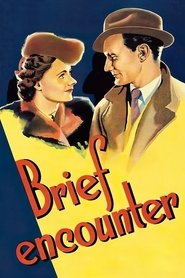
Brief Encounter (1945)
The earliest film here, and a foundation for several of the others. Watch Celia Johnson's face — the whole drama lives in the barely perceptible compression around her eyes, the effort of keeping a public mask intact while someone chatters obliviously nearby. Notice how Lean opens and closes on the same few minutes, so the film shuts its own circle, and how the cinematography splits the world in two: charged, shadowy interiors versus a harder, documentary-bright exterior world. This is renunciation treated not as timidity but as a kind of honor — and Carol, half a century later, will reprise its structure almost beat for beat.
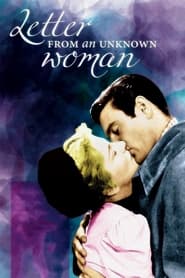
Letter from an Unknown Woman (1948)
Ophüls's camera is famously restless — gliding long takes that climb staircases and float through doorways alongside his heroine — and here the movement itself becomes the film's subject. Watch how the same staircase returns, climbed at different points in a life, the past circling back like a needle finding a worn groove. The frame is a letter read in the small hours; everything you see is being remembered, and Ophüls makes that remembering feel more present than the present. The 360-degree gliding shots that circle two bodies close together yet emotionally unreachable would become a direct model for Wong Kar-Wai.
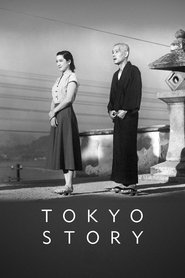
Tokyo Story (1953)
Ozu's camera sits about fifty centimeters off the floor — the sightline of someone seated on tatami — and it almost never moves. Watch for the cutaways between scenes: smoke from chimneys, laundry in still air, a train passing — shots that hold a few seconds past any narrative use, with nobody in them. They're telling you nothing, and that's the point: they let transience itself register, without commentary or consolation. Notice too how family members are often filmed separately in matched setups rather than sharing the frame — closeness and distance built into the geometry itself.
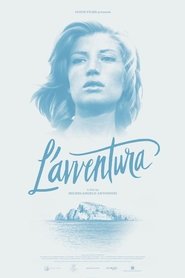
L'Avventura (1960)
Watch where the people are in the frame: drifting to its edges, obscured by walls and columns, dwarfed by rock and sea until they read as incidental marks on stone. Antonioni sets a mystery in motion — a search, on a volcanic island — and then quietly lets the engine idle, so that landscape and duration do the work confrontation usually does. Nobody says what they mean, because nobody quite knows what they mean; the film's real subject is that gap. The key image is two people near and unreachable, a flat sea behind them — held, and held, until you feel how long holding takes.
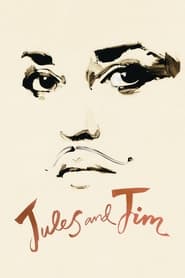
Jules and Jim (1962)
Truffaut's film has all the New Wave's speed — handheld camera, literary voice-over, decades leaping past in a sentence — but watch for the moment it stops: Catherine caught mid-laugh, frozen in the frame while the music swells, not at an ending but in the middle of happiness, for no reason except love. Notice the warmth of Coutard's photography, softer and more controlled than his rawer work with Godard, especially in the river and country-house sequences, where visual beauty deepens rather than dilutes the melancholy. A film about a freedom that love cannot institutionalize, told with the tenderness of someone who loves everyone in it.
Red Desert (1964)
Antonioni had the grass painted gray — actually painted, by hand — so nothing along the refinery road could look alive. Watch how the industrial landscape of Ravenna is authored down to the smallest detail to match the inside of a woman's head, and how Monica Vitti plays her heroine not as numb but as flooded: registering steam, sound, the throb of engines, sensation with nowhere to go. Di Palma's telephoto lenses flatten space until foreground and background press together like anxiety made visible. The environment isn't backdrop here; it's the antagonist, and possibly the truest portrait of the protagonist.
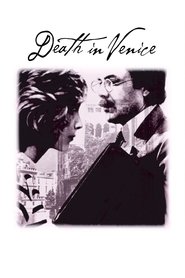
Death in Venice (1971)
Visconti's man of discipline never crosses the room — it's the camera that reaches for him, De Santis's long lens gliding slowly across the hotel dining room until a face swims close enough to touch and remains another country away. Watch that zoom: desire that has quietly given up on action, compressed into a single camera gesture. The whole film is shot through haze and milky lagoon light, an atmosphere of dissolution that mirrors both a body's decline and an unseen plague. Slowness here isn't emptiness; it's the sensation of time itself becoming visible.
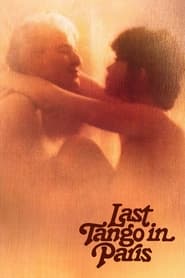
Last Tango in Paris (1972)
Start with the room: an unfurnished Paris flat the color of a bruise — amber, ochre, old varnish — a palette Bertolucci and Storaro lifted directly from Francis Bacon, whose paintings hang over the opening credits like an instruction. Watch what the space refuses: furniture, history, names — everything that would tell two strangers who they are and what to do here. The scandal was never really the sex; it's that the room declines to mean anything, giving us bodies without a situation. Storaro's low-key, painterly light makes grief look like warmth from a distance.

Happy Together (1997)
Wong Kar-Wai's queer romance in exile: Hong Kong men in Buenos Aires, Cantonese speakers in a Spanish-speaking city, two people estranged even from their own desires. Watch how Christopher Doyle's camera constricts space to the point of suffocation — the apartment, the kitchen, a corridor — with wide-angle lenses that press faces into aggressive, distorted intimacy. And watch the lamp: a cheap shade printed with the Iguazú Falls, a destination held in the hands and forever postponed, kept glowing on a kitchen table half a world from home. The film's great verb is not do but wait.
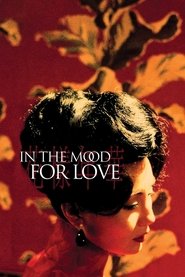
In the Mood for Love (2000)
Watch the corridors, the stairwells, the doorways — inherited from Fei Mu's Spring in a Small Town, these thresholds are positions the characters occupy instead of crossing. Watch what happens when Yumeji's Theme comes in: the image drops to a quarter speed, a dress moves before its wearer does, and a trip down for noodles becomes the film's whole event. Two cinematographers — Christopher Doyle and Mark Lee Ping-bin — shot it, not always harmoniously, and the film wears its slow, repeated, ravishing surfaces like the beautiful cage its characters have agreed to live in. Desire expressed entirely through what is withheld.
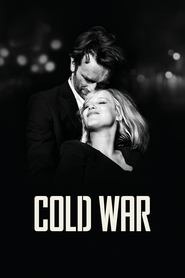
Cold War (2018)
Fifteen years, four countries, eighty-eight minutes. Watch the cuts: a scene ends, the screen goes black, and when the picture returns a year has passed and a border has been crossed — the defection, the marriage, the rupture all buried in the dark between two shots. The film's grief lives in what it refuses to film. Notice Żal's compositions in the boxy old Academy frame: figures placed low, dwarfed under looming skies, walls, and ceilings — people small inside the architecture of history. And follow the folk song as it travels from field recording to state anthem to Paris jazz ballad, changing its meaning at every border it crosses.
Watched together, these films teach you to read a second language that runs underneath dialogue and plot: the language of framing, duration, and withheld action. You'll see the lineages passing hand to hand — Ophüls's circling camera reborn in Wong's stairwell, Sirk's imprisoning windows reborn in Haynes's rain-streaked glass, Brief Encounter's circle closing again in Carol, Antonioni's dwarfing landscapes echoing in Pawlikowski's looming skies. But the deeper reward is a recalibration of your own attention. These films ask you to sit with people who can only look, wait, and endure — and they wager that looking, held long enough, is not the absence of drama but its purest form. Give them your patience. They'll give you back a way of seeing.