Sightlines · a mini film course
The Cinema of Watching: Ten Films Where Looking Becomes the Story
Most movies are engines. Someone wants something, does something, and the world answers. The cuts hurry you along from problem to solution, and the story is what happens in between. The ten films in this set run on a different fuel. In each of them, the engine of doing quietly stalls — a search stops, a plan dissolves, a man stands at a window — and what fills the space is looking itself. The camera watches rather than chases. Time is allowed to stretch until you can feel it moving through rooms, fields, and faces. Landscapes stop being backdrops and start pressing in on the people inside them. These are films about people who see everything and can act on almost none of it — and about how that condition, far from being empty, turns out to be one of the richest things cinema can show. Watch them in any order, but watch them slowly. They will teach you how.
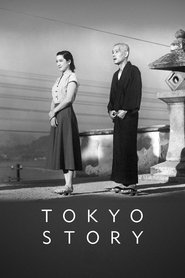
Tokyo Story (1953) — dir. Yasujirō Ozu
The earliest film here, and in some ways the quietest revolution. Ozu mounts his camera about fifty centimetres off the floor — the sightline of a person seated on a tatami mat — and almost never moves it. Watch for the shots between scenes: smoke from chimneys, laundry in still air, a train passing and then gone, the shot lingering a few seconds past any obvious use. Nobody is in them, and they aren't telling you the time or the place. They're asking you to sit with the world for a moment, and by the end you may find they've done as much emotional work as any face.
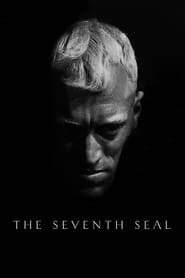
The Seventh Seal (1957) — dir. Ingmar Bergman
A knight home from the Crusades, a plague-stricken landscape, and a chess game played on a grey beach with a figure in black. Gunnar Fischer shoots it with almost punishing contrast — faces against overexposed skies, figures swallowed in shadow — drawing on the silent-era grammar of Murnau and Dreyer. Watch how much of the film is a man looking hard at the world — at a mute sky, at suffering, at faces — searching for a deed that would count, and how the film makes that searching gaze itself the drama.
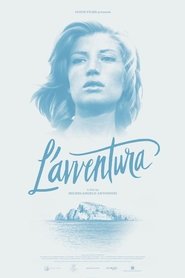
L'Avventura (1960) — dir. Michelangelo Antonioni
A woman vanishes on a volcanic island; a search begins. Then notice what the film does with that setup — and what it declines to do. Antonioni inverts the usual hierarchy of the frame: people drift to the edges, get hidden by walls and columns, or shrink against rock and sea until they're incidental marks on the landscape. Watch for shots where two people stand close enough to touch and remain somehow unreachable — the geometry of the frame doing what dialogue can't, because these characters don't know what they mean any more than they can say it.
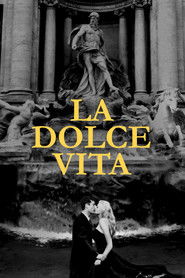
La Dolce Vita (1960) — dir. Federico Fellini
It opens with a statue of Christ dangling from a helicopter over Rome, while a journalist in a second helicopter mimes flirtation at sunbathing women — and the rotor noise swallows every word. That's your key: a man who sees everything, professionally, and converts none of it into a life. Watch Otello Martelli's widescreen photography split the film into registers — hard, bleached light that flattens celebrities into photographic surfaces on the Via Veneto — and watch Mastroianni build an entire performance out of intelligent, helpless receptivity, a face that is expressive only in reaction.
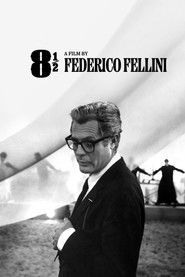
8½ (1963) — dir. Federico Fellini
A film director who can't decide what film to make, adrift among memories, fantasies, and the women in his life. The great innovation is the missing seam: Fellini cuts between present, memory, and daydream with the same hard, matter-of-fact join he'd use between two rooms of the same house — no dissolve, no misty warning, no change in Gianni Di Venanzo's continuous silver photography to tell you which world you're in. Watch for that from the very first minutes, and let yourself get lost. Being unsure whether you're inside a life or inside a head is the point, not a puzzle to solve.
Red Desert (1964) — dir. Michelangelo Antonioni
Antonioni's first color film, and he treats color as a paintbrush aimed at the world itself: he famously had the grass along a refinery road painted grey, so nothing growing could look alive. Watch how the industrial landscape of Ravenna is authored to match the inside of Monica Vitti's head — and watch Vitti play a woman who isn't numb but flooded, registering steam, sound, and engine-throb in constant micro-attention, sensation she can't discharge into any act. The gap between the world out there and the nervous system in here is the film's whole subject.
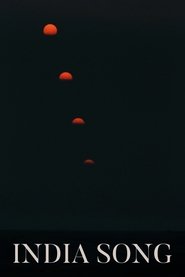
India Song (1975) — dir. Marguerite Duras
The strangest and most hypnotic experiment in the set. Nobody on screen speaks — lips stay shut while unseen voices, somewhere off, remember and mourn and half-invent the woman we're watching. Sound and image have come completely unstuck, telling two stories at once across the gap. Watch Bruno Nuytten's amber, smoky long takes, the figures held at a distance like statues, and a mirror shot in which Delphine Seyrig appears twice — body and reflection — and you can't always say which is which. Everything here is a present we are told, again and again, is already finished.
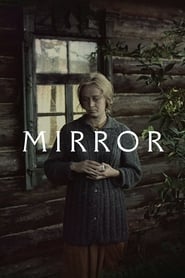
Mirror (1975) — dir. Andrei Tarkovsky
A dying man's consciousness circling his mother, his childhood, his failed marriage — with no plot, no dated flashback cards, no narrator's face (we hear him; we never see him). Watch for the wind: a long gust running through a buckwheat field toward a waiting woman, with no one near it and nothing in the story that needs it. Tarkovsky treats the past not as a filed clip to be retrieved but as something that survives whole, and Georgy Rerberg's window-and-candle light gives every remembered room the weight of the present.
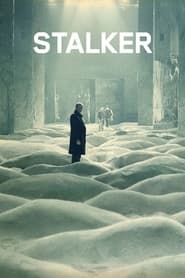
Stalker (1979) — dir. Andrei Tarkovsky
Science fiction with all the genre's usual pleasures deliberately removed — no spectacle, no explanation, no technological wonder. Three men risk everything to reach a forbidden Zone, and once inside, they mostly sit in wet grass, argue, and lie down. Watch the celebrated shot where the camera lies down in shallow water and crawls over a riverbed of submerged things — coins, a syringe, a scrap of religious painting — while a man sleeps just above the surface. You'll keep waiting for it to resolve into a clue or a symbol. It refuses, and the looking itself slowly becomes the film.
Damnation (1988) — dir. Béla Tarr
The opening shot is a thesis: coal-conveyor buckets crawling across a grey sky in a slow lateral track that seems to have no reason to end — until the camera pulls back and finds a man at his window, watching the same buckets we were just watching. That pivot tells you everything: this is a film about a watcher, in a world where everything — buildings, machines, relationships — is slowly returning to mud. Watch the rain, which falls almost cosmologically, and the way Gábor Medvigy's long takes make emptiness itself the subject rather than the background.
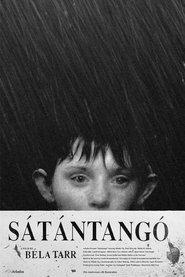
Satantango (1994) — dir. Béla Tarr
Seven hours, black and white, built from long takes that routinely run five, eight, ten minutes. It opens on cows — several unbroken minutes of a herd shuffling out of a collapsing farmyard into the grey, no words, no explanation — and by the end of that shot the film has taught you how to watch it: at the speed of an animal with nowhere to go. Watch the doctor at his window, cataloguing his neighbors in a notebook — a man whose only remaining verb is observe. Daunting on paper; on screen, once you surrender to its rhythm, strangely enveloping.
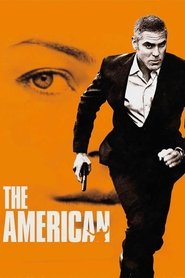
The American (2010) — dir. Anton Corbijn
Proof that this tradition is alive and can wear a Hollywood star. Corbijn takes a hitman thriller and strips out the chase: what remains is a man, an Italian hill town whose converging stone streets close on him like a vise, and the slow tightening of sightlines. Watch the long, near-wordless sequences of pure procedure — coffee, exercises, a piece of steel being filed — inherited from Melville's laconic killers, and note that the film literally screens Once Upon a Time in the West inside itself, tipping its hat to the art of stillness before the event. When action finally comes, it's over in a second. The waiting was the film.
Watched together, these films train a muscle most cinema never asks you to use. Each one, in its own idiom — Ozu's low, patient camera; Antonioni's emptied frames; Fellini's seamless slides between world and head; Duras's unstuck voices; Tarkovsky's and Tarr's rivers of unbroken time — makes the same wager: that if the film stops rushing toward the next event, you will start seeing what's actually in the frame. Weather, architecture, light on water, the back of a neck, the length of a silence. You'll notice the films talking to each other, too — Tarr openly inheriting from Antonioni and Tarkovsky, Tarkovsky borrowing Antonioni's drained landscapes, Corbijn drawing on the whole European lineage — a fifty-year conversation about what happens when a camera watches rather than chases. By the last of them, you may find your own attention has changed shape: slower, wider, more willing to hold. That's not a side effect. It's what these films are for.